

Readers of our quinoa bread keep asking the same question, and it isn’t about quinoa. What are quick oats, and will rolled oats do? “Quick oats are pre-steamed and then rolled out to make them cook faster than traditional oats,” Venny answered one of them. “They’re not ground up like oat flour.”
That difference, how thin the flake is, decides more than cooking time. It also decides how fast your body gets to the starch inside.
The short answer: steel cut oats are the whole grain chopped into pieces and take about 30 minutes. Rolled oats are the grain steamed and pressed flat and take about 10. Quick oats are rolled thinner and cook in a few minutes or less.
For blood sugar, the line falls between rolled and quick, not between steel cut and rolled. Steel cut and rolled oats score about the same on the glycemic index (how fast a food raises blood sugar), 55 and 53. Quick and instant oats score 71 and 75.
If you buy one bag, buy rolled. It’s what 17 of our 31 oat recipes use, from oatmeal to soup.
We use oats in 31 recipes: breakfast bowls, overnight oats, cookies, cakes, nuggets, burgers and meatballs, oat balls for soup, two creamy soups and a loaf of bread. Not one of them uses steel cut.
What Steel Cut, Rolled and Quick Oats Are
Every kind starts as an oat groat, the whole kernel with only the inedible hull removed. After hulling, all oats are heat-treated with steam and dried, which deactivates enzymes in the grain and gives oats their toasted flavor. Then the cuts part ways.
- Steel cut oats (also sold as Irish oats) are groats cut into a few pieces with a steel blade. They’re never rolled flat.
- Rolled oats (old-fashioned oats) are groats steamed, rolled flat into flakes and dried.
- Quick and instant oats are steamed longer and rolled thinner, so water gets in fast. Instant oats are often sold sweetened and flavored.
None of these steps removes the bran or the germ, so all three are whole grain. USDA’s reference database gives rolled and quick oats one shared entry, “oats, regular and quick,” with 10 grams of fiber per 100 grams.
Rolled Oats vs Steel Cut Oats: Time and Our Recipes
| Steel cut | Rolled | Quick | |
|---|---|---|---|
| Made by | Cutting the groat into pieces | Steaming the groat and pressing it flat | Steaming longer, rolling thinner |
| Water to oats | 4 to 1 | 2 to 1 | Follow the package |
| Stovetop time | About 30 minutes | About 10 minutes | A few minutes or less |
| Glycemic index | 55 | 53 | 71 (instant: 75) |
| Our recipes | 0 | 17 | 14 |
Between steel cut and rolled, you’re choosing a cooking time and a texture; the next section shows why blood sugar barely comes into it. Rolled oats cook in a third of the time, and they also go into baking, overnight oats and anything you blend.
Oats and Blood Sugar: Why the Cut Matters
Harvard’s Nutrition Source, for one, says steel cut oats have a lower glycemic index than rolled. The measurements show a much smaller gap than that suggests. In a 2015 review of 72 glycemic index measurements on oats, steel cut scored 55 and large-flake rolled oats 53. Quick oats scored 71 and instant oatmeal 75. The glycemic index compares how much a food raises blood sugar over two hours with pure glucose, which scores 100.
A 2021 meta-analysis of 10 studies found the same split. Compared with refined grains, whole oat kernels and thick flakes (thicker than 0.6 mm) lowered blood sugar and insulin after a meal, with whole kernels showing the biggest drop, though with wide uncertainty. Thin, quick and instant flakes showed no significant effect.
The reason is speed, not nutrients. A thinner flake has more surface for digestive enzymes to work on, and more of its starch has already been cooked by the longer steaming.
Two caveats. The steel cut figure rests on only two measurements, and statistically, steel cut beat only instant oatmeal, not rolled or quick. And both reviews were co-written by scientists at the Quaker Oats Center of Excellence, part of PepsiCo, which paid for the 2021 one. Their own data put instant oatmeal, which Quaker sells, at the bottom.
If blood sugar matters to you, the swap that counts is from quick or instant oats to rolled. Going from rolled to steel cut barely changes the number in the data we have.
Quick Oats vs Rolled Oats for Baking and Binding
Our 31 oat recipes, by what they make:
| What we make | Rolled | Quick |
|---|---|---|
| Oatmeal and breakfast bowls | 4 | 0 |
| Overnight oats | 1 | 1 |
| Baked oatmeal | 2 | 0 |
| Granola | 1 | 0 |
| Cookies | 2 | 3 |
| Cakes, pies and desserts | 3 | 3 |
| No-bake bites | 1 | 2 |
| Nuggets, burgers, meatballs and oat balls | 1 | 4 |
| Soups | 2 | 0 |
| Bread | 0 | 1 |

Rolled oats do almost everything: oatmeal, baked oatmeal, granola, and blended into soups and breakfast bowls. Quick oats show up most in mixtures that have to hold a shape: four of our five nuggets, burgers, meatballs and oat balls, and three of our five cookies.
Both work for overnight oats. Our strawberry overnight oats use rolled oats and our chocolate overnight oats use quick, and both soak in the fridge overnight, or for at least 2 hours. Thinner flakes soak up liquid faster, which is the likely reason our shaped mixtures use quick oats.
No quick oats? Venny’s answer to readers who asked on our quinoa bread: pulse rolled oats a few times in a food processor until they look like quick oats.
Oats as a Binder, a Thickener and a Bread
Eight of our oat recipes aren’t sweet. In all of them the oats are doing a structural job.
Oats as a Binder
- Easy vegan nuggets: 1¼ cups quick oats, ground with cashews and sunflower seeds. The mixture rests 10 minutes so the oats can soak up the water. Out of the oven the nuggets are soft, and they firm up as they cool.
- White bean nuggets: ½ cup rolled oats with 2 cups of white beans and 2 tablespoons of ground flax.
- Sweet potato black bean burgers: ½ cup quick oats, the only grain in the mix.
- Lentil meatballs in tomato sauce: ⅔ cup quick oats pulsed with cooked lentils and onion until combined but not puréed, baked for 12 minutes, then served in the sauce.
- Oat balls soup: 1⅓ cups quick oats blended with carrot, onion and 3 tablespoons of chickpea flour, rolled into teaspoon-size balls and simmered in the soup for about 20 minutes.

Our guide to what holds vegan patties together goes further into oats, flax and the other binders, and our flax, chia and psyllium guide covers flax itself.
Oats as a Soup Thickener
- Broccoli cream soup: ½ cup rolled oats blended with the cooked broccoli, potatoes, onion and carrots.
- Creamy mushroom soup: an “oat cream” of ¼ cup rolled oats, ¼ cup sunflower seeds and a cup of water, blended and stirred in for the last 5 minutes.
Our mushroom soup’s page notes that it thickens in storage, so add a splash of water when you reheat an oat-thickened soup.
Oats in Flourless Bread
Our no-yeast quinoa bread has no flour at all: soaked quinoa blended with water, 1½ cups of quick oats and baking powder, baked for about an hour. The oats do the binding there, which is why that loaf, unlike our others, needs no psyllium. Our bread without flour guide explains the rest.
Oats and Cholesterol: How Much Beta-Glucan Counts
Oats carry a soluble fiber called beta-glucan, which turns thick and gel-like in the gut. It’s why oats are one of the few foods with their own FDA heart-health claim: 3 grams of beta-glucan a day from whole oats or barley. That’s roughly a cup of dry rolled oats (about 80 grams) a day, and it can be spread across meals.
The gel works on bile acids, which the liver makes from cholesterol. It holds them in the gut so they leave the body, and the liver replaces them by making new ones from cholesterol. In a small Swedish study of 9 people with ileostomies, oat bran with its gel intact raised bile acid excretion by 144%, compared with the same oat bran with its beta-glucan broken down.
What that buys you: in a 2014 meta-analysis of 28 trials, 3 grams a day or more lowered LDL cholesterol by about 10 mg/dL (0.25 mmol/L), and the drop was larger in people who started with higher LDL. That review was funded by DSM Nutritional Products, which at the time sold an oat beta-glucan ingredient.
Most of those trials used oat bran, but the review notes that cooking oatmeal doesn’t greatly affect beta-glucan. So the cut of oat matters for blood sugar, which depends on how fast the starch is reached, and much less for cholesterol, which depends on the gel.
Are Oats Gluten-Free?
Oats aren’t wheat, barley or rye, so the grain itself is fine for most people who avoid gluten. The bag is the problem. Oats are grown, stored and milled alongside other grains, and the contamination is common.
In a 2011 Health Canada survey, 124 of 133 samples of commercial oats (93%) contained more than 20 parts per million of gluten. That’s the cutoff for a “gluten-free” label in both Canada and the US. The one gluten-free oat product in the survey tested clean every time.
So if you avoid gluten for medical reasons, buy oats labeled gluten-free. Our white bean nuggets recipe says the same: use certified gluten-free oats.
The evidence on truly pure oats is mostly reassuring. A 2017 meta-analysis included 8 controlled trials with 661 people with celiac disease, and every randomized trial among them used pure, uncontaminated oats. Over 12 months it found no evidence that oats changed symptoms, the gut lining or blood tests, though some of those results were very imprecise and the authors rated the evidence low quality.
From Venny, a medical doctor and a specialist in Nutrition and Dietetics: for people with celiac disease, a gluten-free label answers only half the question. The other half is the oat itself.
Most people with celiac disease tolerate pure oats well. A few don’t. In a 2003 Norwegian study, 19 adults with celiac disease started on 50 grams a day of specially grown, uncontaminated oats for 12 weeks. Most did well, though several had bloating at first and one dropped out after two weeks with stomach symptoms. One woman developed damage to her gut lining and a rash, and it came back worse when she tried oats again.
So if you have celiac disease, add oats deliberately rather than casually. Tell your doctor you’re starting, and keep your planned follow-up tests: in celiac disease, damage to the gut lining doesn’t always announce itself. If your symptoms come back, take the oats out first.
Venny is a medical doctor and a specialist in Nutrition and Dietetics; Andy holds a master’s degree in psychology. This is general information rather than medical advice.
Instant Oatmeal Packets: Where the Sugar Is
Plain rolled and quick oats carry almost no sugar, about 1 gram per 100 grams. The flavored packets are a different food.
According to USDA, one packet of maple and brown sugar instant oatmeal (43 grams) carries about 13 grams of sugar, roughly 3 teaspoons, and about 220 mg of sodium. The same weight of plain rolled oats carries under half a gram of sugar and about 3 mg of sodium. And instant oats had the highest glycemic index in the 2015 review.
That doesn’t make sugar on oatmeal the problem. A teaspoon of brown sugar or a few chopped dates you add yourself is a condiment that gets a whole grain eaten. Three teaspoons already mixed into fast-digesting flakes is closer to dessert.
Which Oats to Buy for What
| What you’re making | Buy | Why |
|---|---|---|
| Everyday oatmeal | Rolled | About 10 minutes, and a glycemic index of 53 |
| Oatmeal, when you have half an hour | Steel cut | About 30 minutes, and about the same blood sugar effect as rolled |
| Overnight oats | Rolled or quick | We’ve made it both ways |
| Baked oatmeal and granola | Rolled | All three of ours use rolled |
| Cookies and cakes | Rolled or quick | We use both; see the note above |
| Nuggets, burgers, meatballs, oat balls | Quick | Four of our five use quick |
| Creamy soup | Rolled, blended | Both of our soups |
| Bread without flour | Quick | Our quinoa bread |
| Steadier blood sugar | Rolled or steel cut | 53 to 55, against 71 to 75 for quick and instant |
Where to Start With Oats
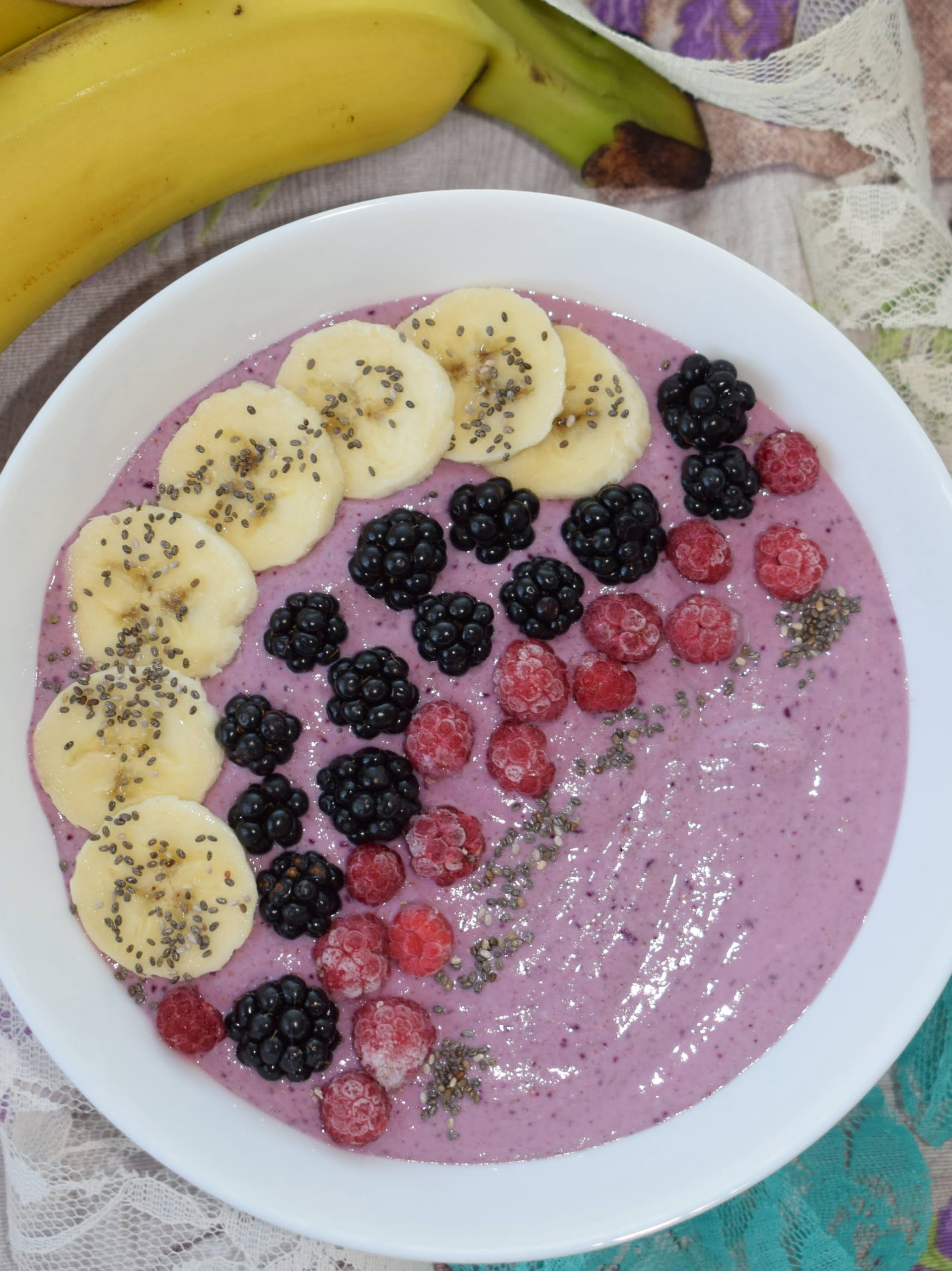
If your oats come in flavored packets, switch to a bag of plain rolled oats and add your own fruit, the way our berry breakfast oat bowl does. Then use the same bag for something that isn’t breakfast: blend half a cup into our broccoli cream soup and see what it does to the texture.
Andy: Swapping packets for a plain bag is a habit change, and breakfast suits one: same time, same place, every day. In a University College London study, volunteers took on one new daily habit, like eating fruit with lunch. About half didn’t repeat it often enough for it to stick. For those who did, it took 18 to 254 days to feel automatic, and missing a single day made no real difference. A packet on a rushed morning doesn’t undo the habit.
And, always, seek health consciously.
Read Next
- Bread Without Flour: How It Works, and Which Loaf to Make
- Vegan Meatballs, Patties and Burgers: What Holds Them Together
- Egg Substitutes for Baking: Which Binder Works for What
- 20 No-Bake Energy Bites, Fewest Ingredients First
- 30 Vegan Desserts, Fruit-Sweetened First
Sources (13)
- Harvard T.H. Chan School of Public Health. Oats. The Nutrition Source. View
- Whole Grains Council. Cooking oats. View
- U.S. Department of Agriculture. Cereals, oats, regular and quick, not fortified, dry (FDC 173904); Cereals, oats, instant, fortified, maple and brown sugar, dry (FDC 173920). FoodData Central, SR Legacy. View
- Tosh SM, Chu Y. Systematic review of the effect of processing of whole-grain oat cereals on glycaemic response. British Journal of Nutrition. 2015;114(8):1256-1262. View
- Musa-Veloso K, Noori D, Venditti C, et al. A systematic review and meta-analysis of randomized controlled trials on the effects of oats and oat processing on postprandial blood glucose and insulin responses. Journal of Nutrition. 2021;151(2):341-351. View
- U.S. Code of Federal Regulations. 21 CFR 101.81, Health claims: soluble fiber from certain foods and risk of coronary heart disease. View
- Whitehead A, Beck EJ, Tosh S, Wolever TM. Cholesterol-lowering effects of oat β-glucan: a meta-analysis of randomized controlled trials. American Journal of Clinical Nutrition. 2014;100(6):1413-1421. View
- Koerner TB, Cléroux C, Poirier C, et al. Gluten contamination in the Canadian commercial oat supply. Food Additives and Contaminants Part A. 2011;28(6):705-710. View
- U.S. Code of Federal Regulations. 21 CFR 101.91, Gluten-free labeling of food. View
- Pinto-Sánchez MI, Causada-Calo N, Bercik P, et al. Safety of adding oats to a gluten-free diet for patients with celiac disease: systematic review and meta-analysis of clinical and observational studies. Gastroenterology. 2017;153(2):395-409.e3. View
- Lundin KE, Nilsen EM, Scott HG, et al. Oats induced villous atrophy in coeliac disease. Gut. 2003;52(11):1649-1652. View
- Lally P, van Jaarsveld CHM, Potts HWW, Wardle J. How are habits formed: modelling habit formation in the real world. European Journal of Social Psychology. 2010;40(6):998-1009. View
- Ellegård L, Andersson H. Oat bran rapidly increases bile acid excretion and bile acid synthesis: an ileostomy study. European Journal of Clinical Nutrition. 2007;61(8):938-945. View