

Most grocery lists on the internet are aspirational. They run to forty items, four of which you’ve never cooked with, and they assume a store you don’t have anywhere near you.
This isn’t that kind of list. This is what’s in our cart most weeks, from an ordinary supermarket. It’s short, it’s repetitive, and the repetition is the point.
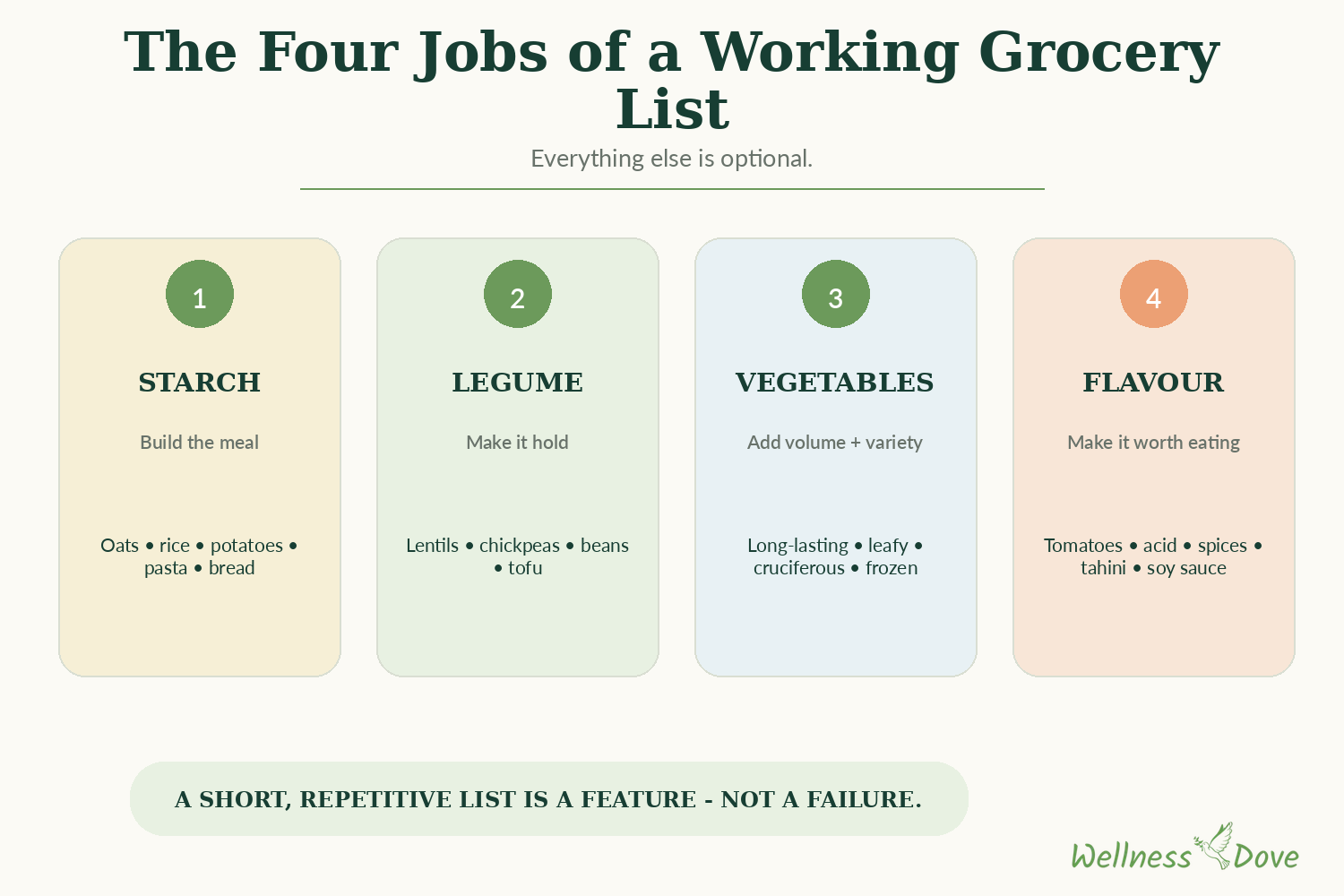
The short answer: A working plant-based grocery list has four jobs to fill. Something starchy to build the meal on, a legume, vegetables, and enough seasoning to make it all taste of something. Everything else is optional. Most of us rotate a small handful of breakfasts, lunches and dinners, so the list stays roughly the same from one week to the next.
The Grocery List, by What Each Thing Is For
Starches, which are the meal itself
Cooked, these carry roughly 300 to 700 calories a pound (about 400 for potatoes and 550 for brown rice), where most vegetables carry 100 to 200. That difference is the whole reason a plate of vegetables leaves you hungry at nine o’clock and a plate built on one of these doesn’t.
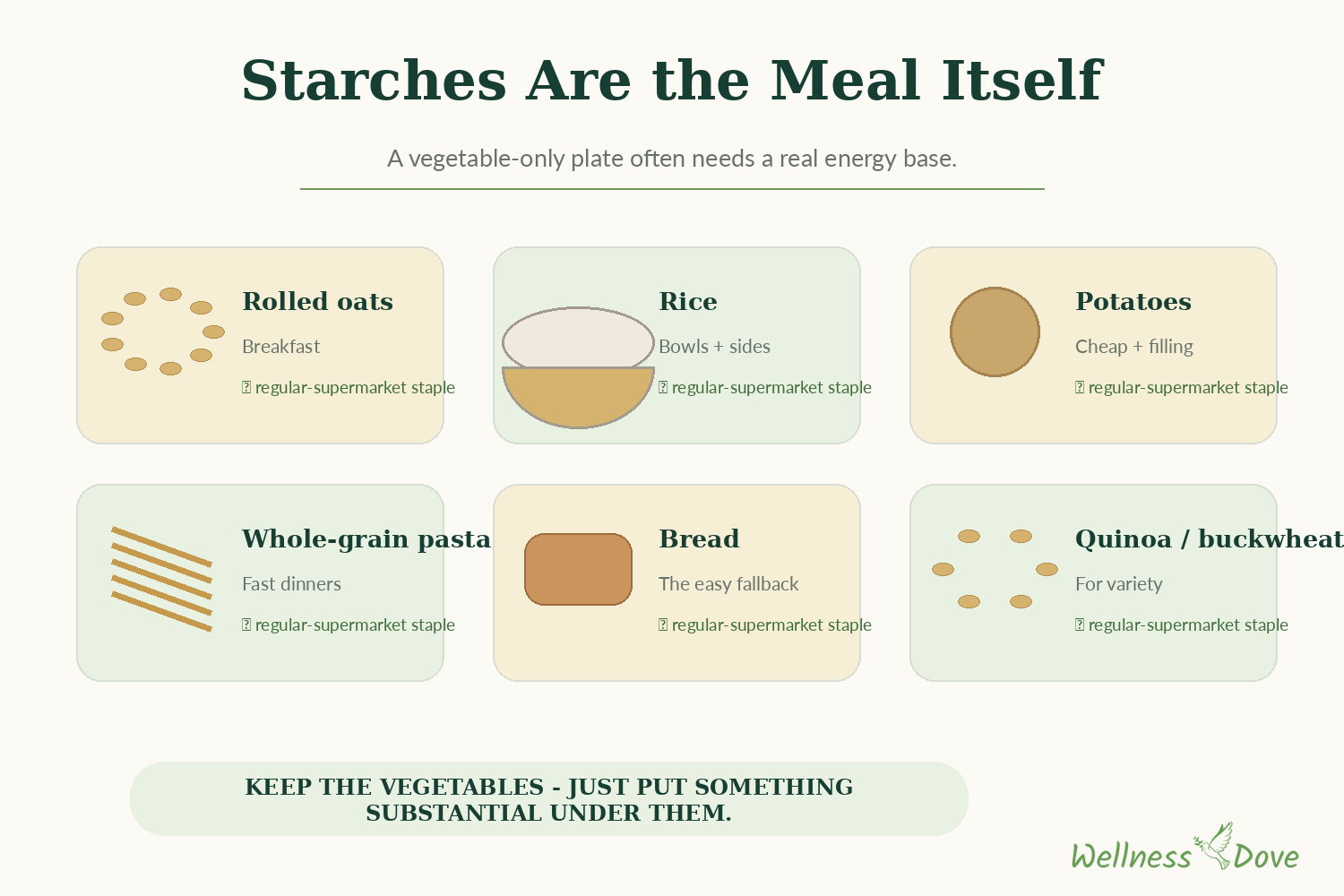
- Rolled oats
- Rice, whichever whole variety is cheapest that week
- Potatoes and sweet potatoes
- Whole grain pasta
- Whole grain or sourdough bread
- Quinoa or buckwheat when we feel like a change
The four numbers behind that are here, and they’re the most useful thing we’ve ever learned about eating.
Legumes, which are the reason it holds
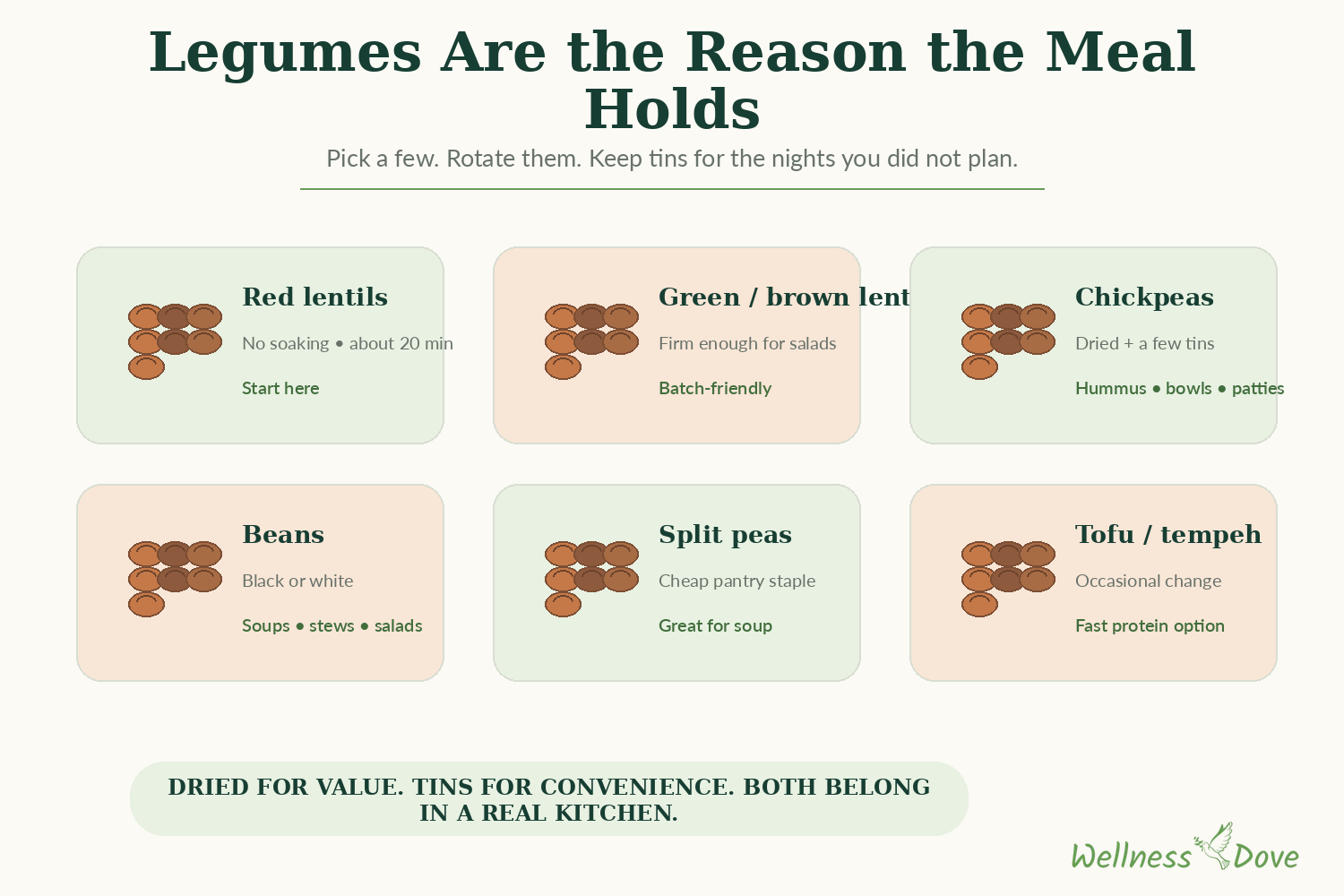
- Red lentils. No soaking, twenty minutes on the stove. If beans are new to you, start here.
- Green or brown lentils
- Chickpeas, dried and a few cans for the days we didn’t plan ahead
- Black beans or white beans
- Split peas
- Tofu, and tempeh now and then
In a study of 785 people over 70 in Japan, Sweden, Greece and Australia, every extra two tablespoons of beans a day was associated with a 7 to 8 percent lower death rate. If there’s one line on this list worth acting on, it’s this one.
Vegetables, chosen for how long they last
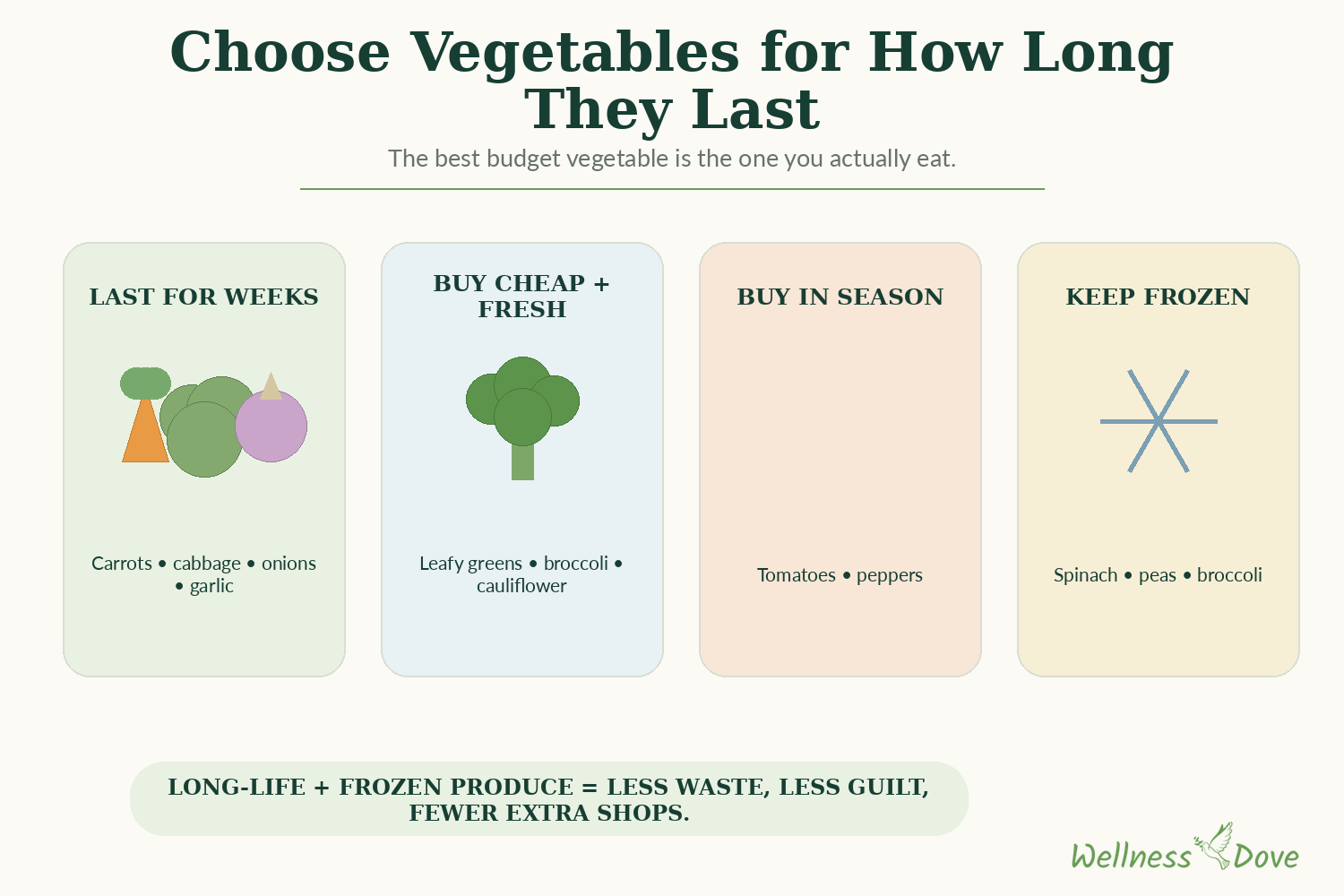
- Onions and garlic. Chop or crush them and let them sit for about ten minutes before they go in the pan. The sulfur compounds garlic is studied for only form once the cells are broken open, and heat stops the enzyme that makes them, so give it a head start.
- Carrots and cabbage, which keep for weeks in the fridge
- Whatever leafy green is cheap that week: kale, chard, spinach, collards
- Something cruciferous: broccoli, cauliflower, Brussels sprouts
- Tomatoes and peppers when they’re in season and cheap
- Mushrooms
- Frozen spinach, peas and broccoli, which never spoil and never sit there making you feel guilty
The cruciferous line deserves a sentence of its own. In a Seattle study of men under 65, three or more servings a week of cruciferous vegetables was associated with a 41 percent lower prostate cancer risk, while twenty-eight or more servings a week of vegetables in general was associated with 35 percent. In other words, which vegetables you buy matters as much as how many of them you buy.
Fruit, kept for between meals
- Bananas
- Apples. Dutch researchers followed 20,069 people for ten years and found that white-fleshed fruits and vegetables stood out for lower stroke risk, and apples and pears made up more than half of what people ate from that group.
- Oranges, or whatever citrus is in season
- Frozen berries, which are usually cheaper than fresh and no worse for you
- Dates, in small quantities, for sweetening things
The pantry, which is what makes it taste of something
This is the section people under-buy, and in our experience it’s the reason a lot of plant-based cooking tastes of nothing for the first two weeks.

- Canned tomatoes, both chopped and pureed
- Vegetable stock
- Tahini, and peanut butter with nothing in it but peanuts
- Soy sauce or tamari
- Lemons, and apple cider vinegar. Acid at the end of cooking does much of what salt does, from a different direction.
- Nutritional yeast
- More spices than feel reasonable. Cumin, paprika, turmeric, garlic powder, cinnamon, chili. If a dish tastes flat, double the spices before you reach for the salt.
- Ground flaxseed or chia
The Aisles We Walk Past
A grocery list is defined as much by what’s missing from it as by what’s on it, so here’s what we don’t buy.
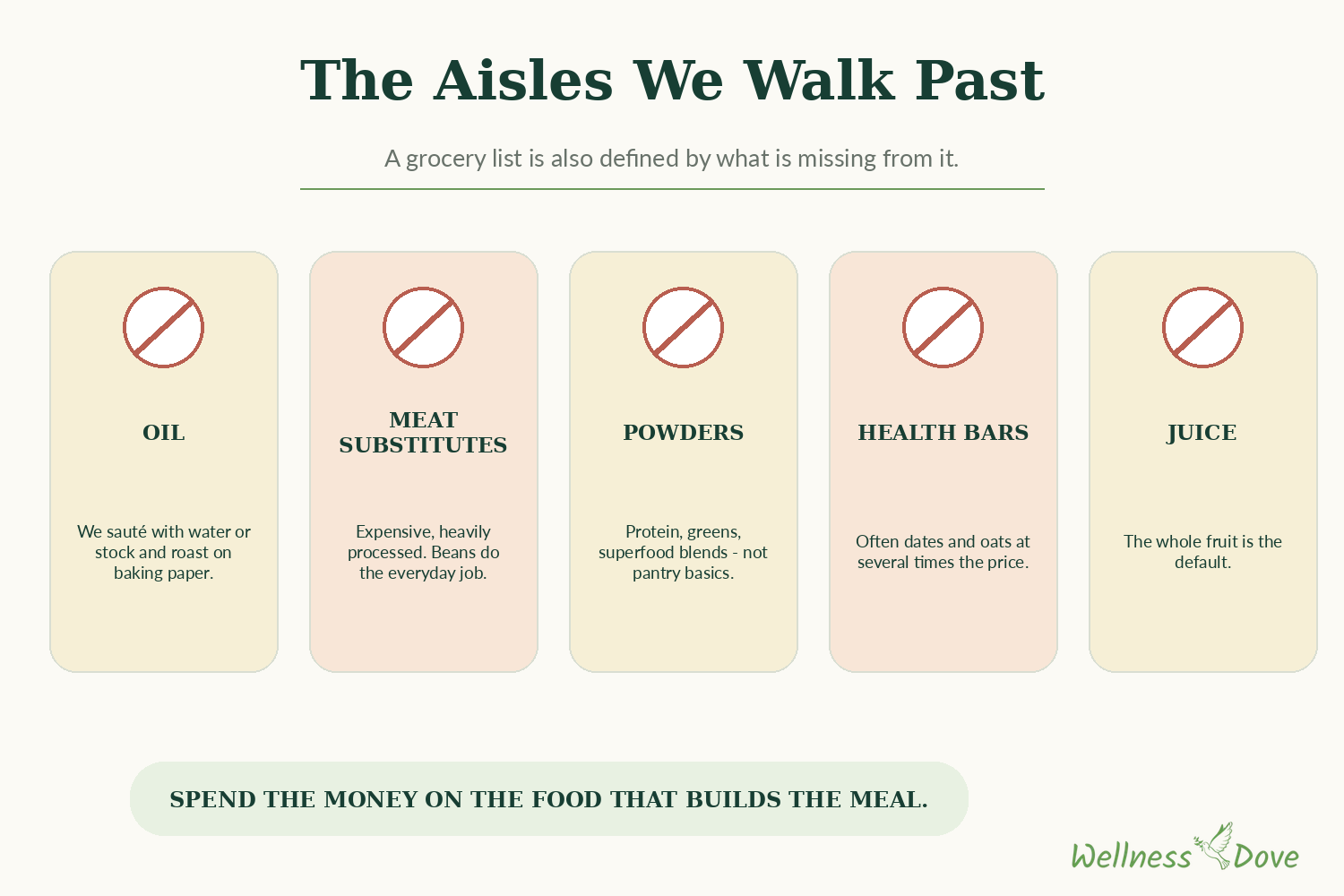
- Oil. This is the one that surprises people, and for us it’s a health position rather than a budget one. Our reasoning is here. We sauté in water or stock, and we roast on parchment paper.
- Meat substitutes. Expensive and heavily processed, and beans do the same job for a fraction of the price.
- Powders. Protein, greens, superfood blends. We wrote about the protein ones specifically.
- Health bars. Dates and oats in a wrapper, at several times the price of dates and oats.
- Juice. The fiber is what makes fruit behave like fruit, and juicing takes it out.
Two Things Worth Buying That Are Not Food
Vitamin B12. Not optional, not negotiable, and not expensive. Anybody eating exclusively plants needs it, and so does anybody over 50 whatever they eat, because absorption declines with age.
Vitamin D, but by test rather than by default. Anybody can run low, especially in winter, and in the largest British comparison vegans ran lower than meat eaters, so get the number before you decide.
Venny here. Those two are the only supplements I’d put on a general grocery list. Multivitamins are a separate conversation, and often not a helpful one. Even if you take one, you’re still better off getting your folate from greens and beans than from a tablet, because that way it comes with everything else. The one clear exception is anyone who is pregnant or could become pregnant. For them, a daily folic acid supplement is settled medicine, and it’s worth raising with your doctor.
What We Do With It When We Get Home
Almost nothing, and that’s deliberate. We cook one pot of something, and we cook more of it than we need. A cooked grain, a cooked legume and something roasted go in the fridge, and the rest of the week runs off those three.
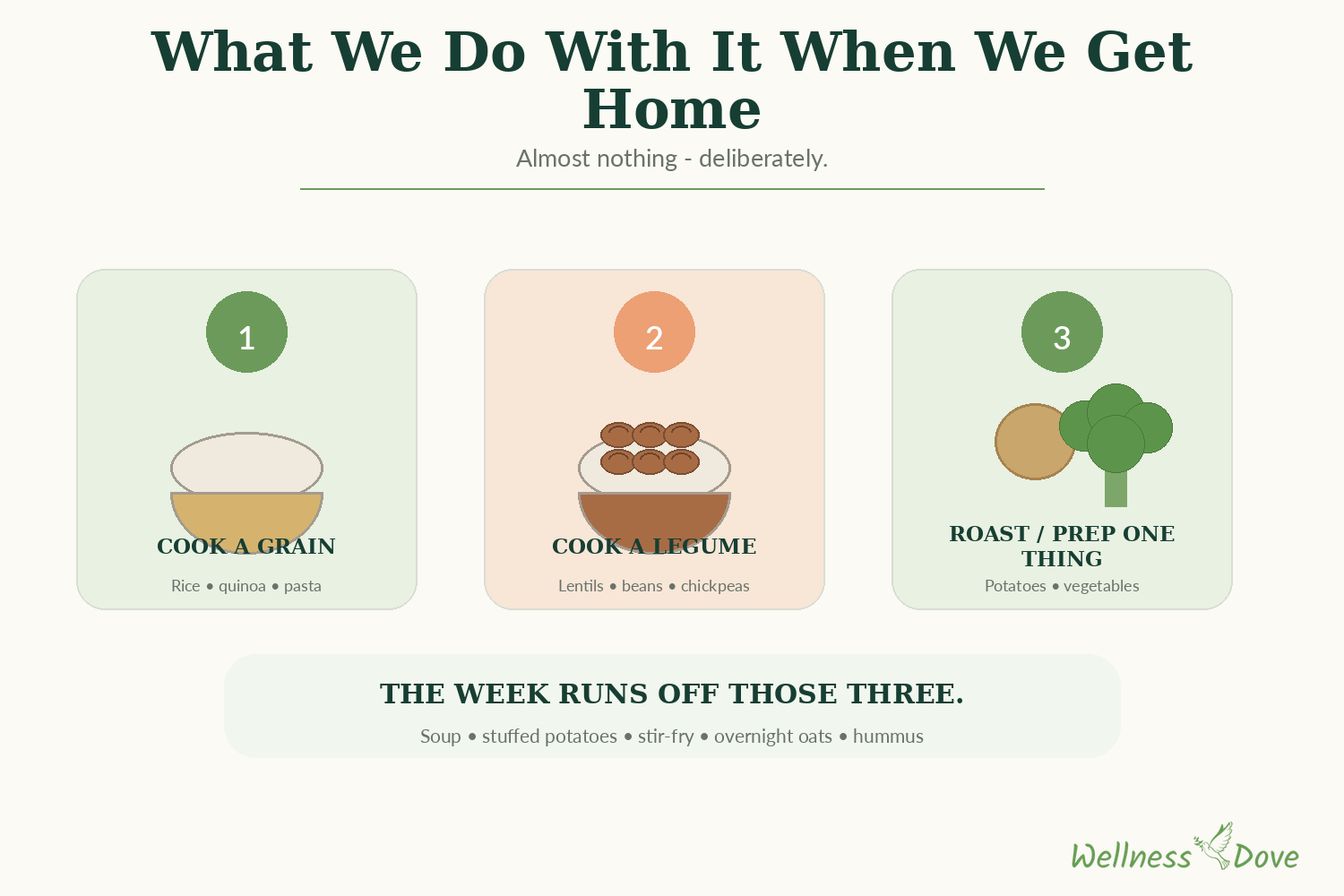
That’s the whole system, and it’s the reason the list above never gets any more complicated than it is. A few of the things it turns into most weeks:
- Easy Red Lentil Soup
- Bean Stuffed Sweet Potatoes
- Quick and Easy Stir-Fry Noodles
- Chocolate Overnight Oats
- Five-Ingredient Hummus
Venny is a medical doctor and a specialist in Nutrition and Dietetics; Andy holds a master’s degree in psychology. This is general information rather than medical advice, and anyone taking medication should involve their own doctor in any dietary changes.
And, always, seek health consciously.
Read Next
- Healthy Eating on a Budget: What It Actually Costs Us
- Breakfast Is the Easiest Meal to Fix
- Lunch Is Where Plant-Based Eating Falls Apart
- What Actually Happens When You Switch to a Plant-Based Diet
Sources (9)
- US Preventive Services Task Force. Folic acid supplementation to prevent neural tube defects: US Preventive Services Task Force reaffirmation recommendation statement. JAMA. 2023;330:454-9. View
- Crowe FL, Steur M, Allen NE, et al. Plasma concentrations of 25-hydroxyvitamin D in meat eaters, fish eaters, vegetarians and vegans: results from the EPIC-Oxford study. Public Health Nutr. 2011;14:340-6. View
- Cohen JH, Kristal AR, Stanford JL. Fruit and vegetable intakes and prostate cancer risk. J Natl Cancer Inst. 2000;92:61-8. View
- Darmadi-Blackberry I, Wahlqvist ML, Kouris-Blazos A, et al. Legumes: the most important dietary predictor of survival in older people of different ethnicities. Asia Pac J Clin Nutr. 2004;13:217-20. View
- Oude Griep LM, Verschuren WM, Kromhout D, et al. Colors of fruit and vegetables and 10-year incidence of stroke. Stroke. 2011;42:3190-5. View
- Song K, Milner JA. The influence of heating on the anticancer properties of garlic. J Nutr. 2001;131:1054S-7S. View
- NIH Office of Dietary Supplements. Vitamin B12: fact sheet for health professionals. View
- U.S. Department of Agriculture. FoodData Central, SR Legacy. View
- U.S. Department of Agriculture, Economic Research Service. Fruit and vegetable prices. View