


Every plan to eat better assumes a version of you who isn’t tired. That version does the shopping on Saturday, cooks properly on Wednesday and doesn’t mind doing the dishes at ten at night. That version shows up for about nine days! After that the real you arrives, and the real you is tired, running late, and would like to eat within the next four minutes.
We think almost every system for healthy eating is designed for the first person and then abandoned by the second, and we don’t think that’s the second person’s fault.
Motivation is a poor building material
We’re not against motivation. It’s useful for starting things. It’s what gets the pantry cleared out and the first grocery run done, and there’s nothing wrong with enjoying that part while it lasts. The trouble is that motivation behaves like weather. It arrives, it’s pleasant, and then one Wednesday it’s just not there anymore.
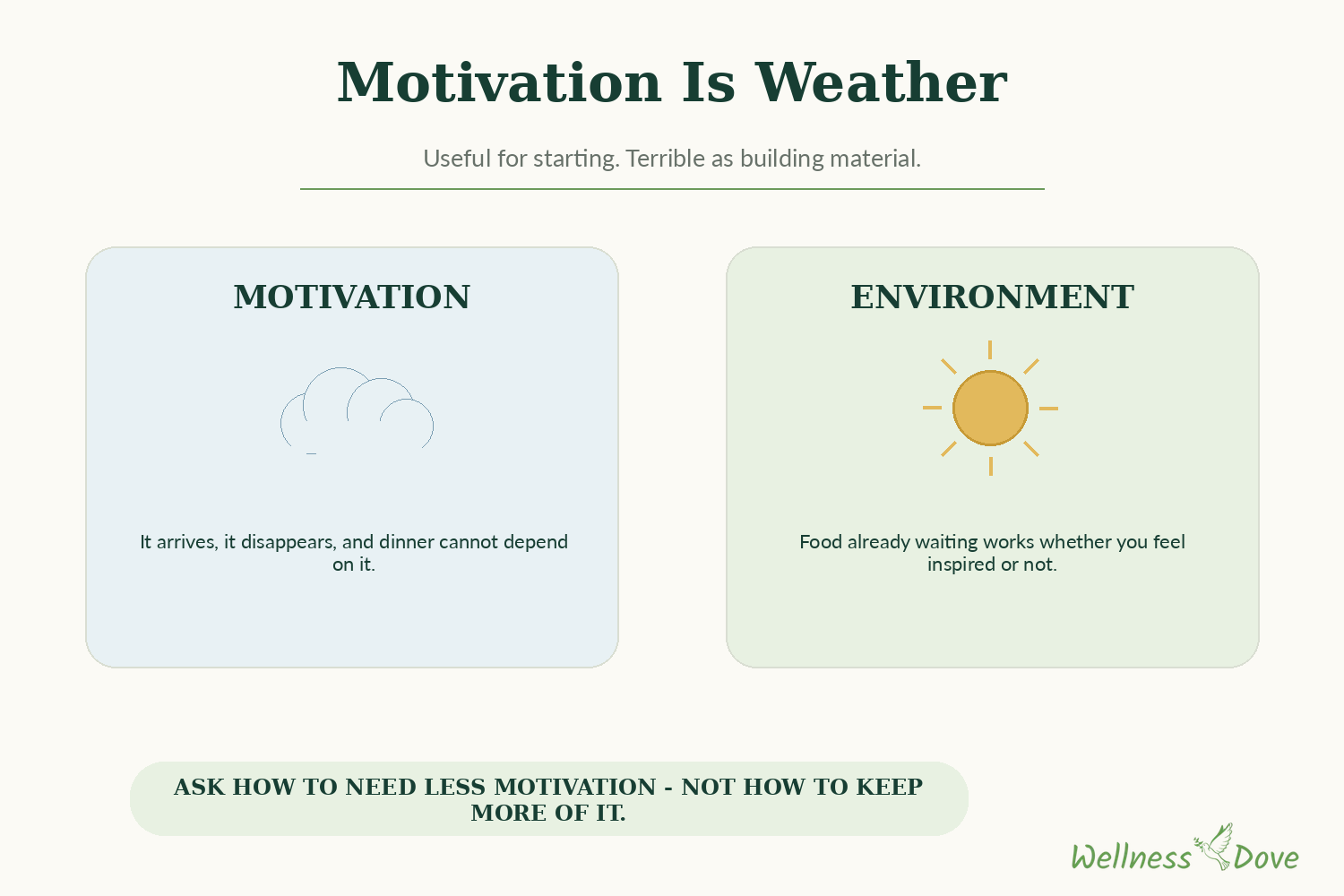
If your dinner depends on it being there, your dinner doesn’t happen. So the question we keep coming back to isn’t how to stay motivated, but how to need less of it in the first place!
The whole of our system
We cook more than we need. That’s it. There’s no second part to it, and we’ve been doing it this way for years.
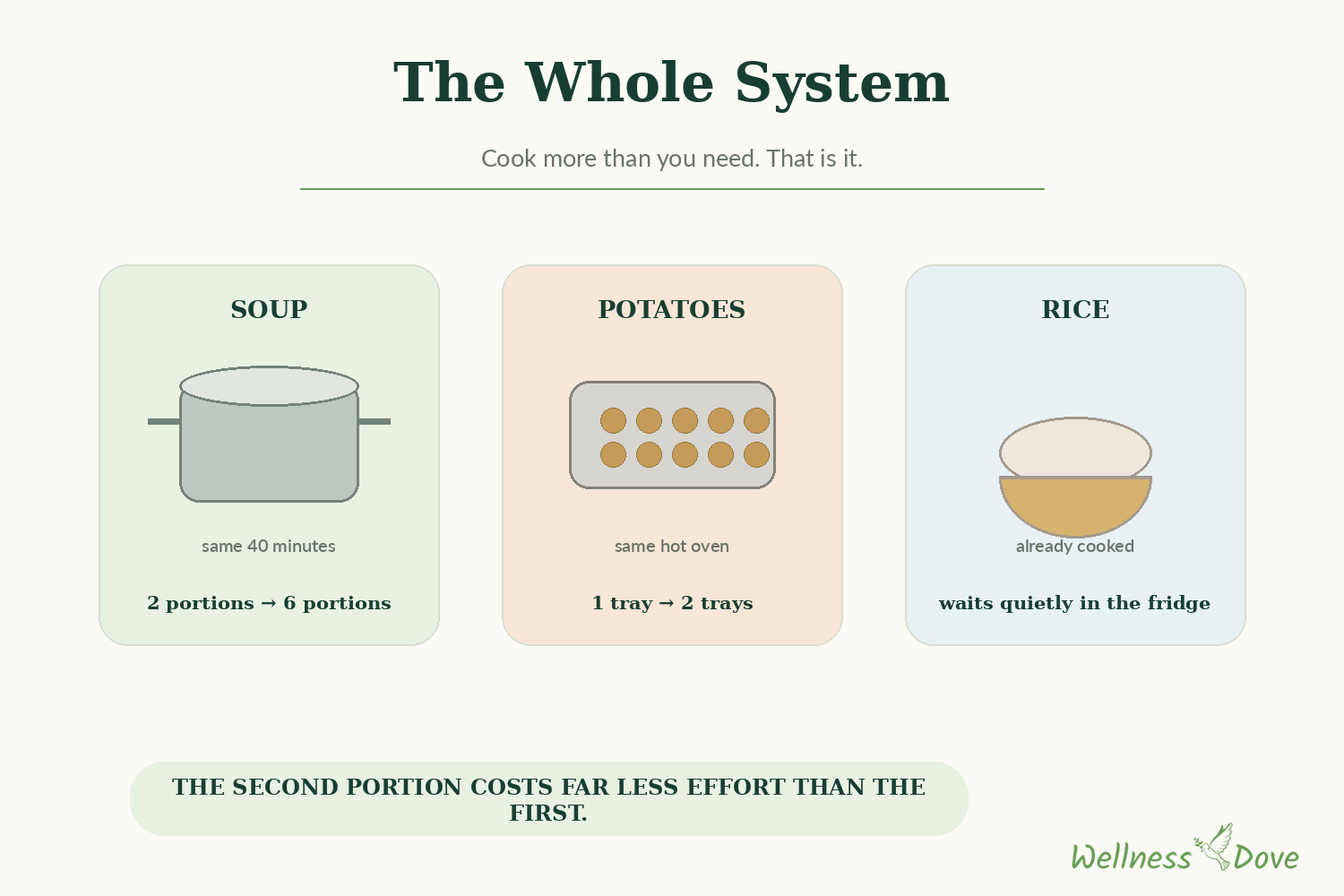
A pot of lentil soup takes the same forty minutes whether it feeds two people or six, and a tray of potatoes takes the same time in the oven either way. Cooked rice sits in the fridge for three days and asks nothing of you while it waits. Cool it quickly and reheat it only once, and that’s the only real rule with rice.
The reason this works isn’t that cooking is hard. The cooking was never the expensive part. The deciding was.
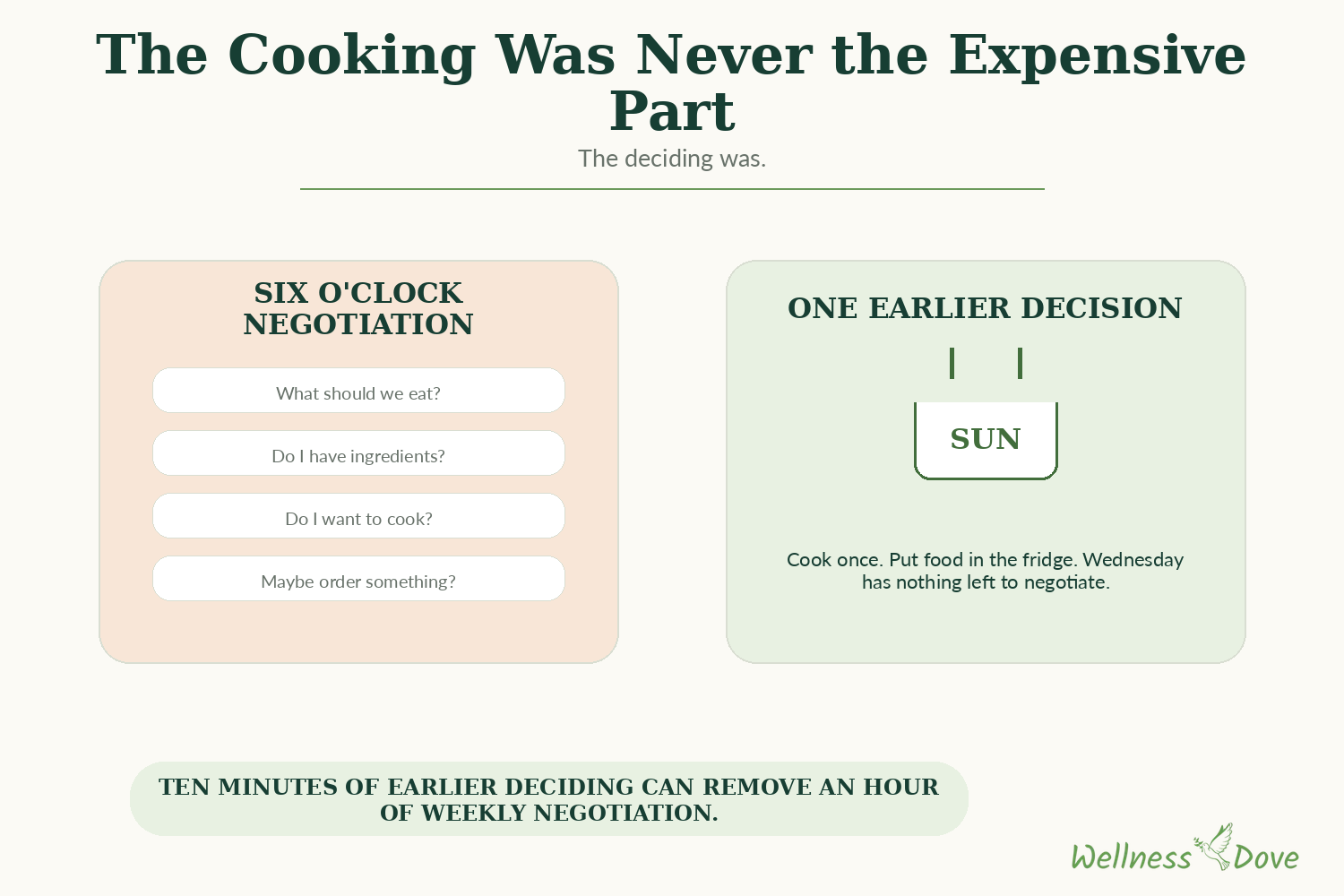
A few minutes of deciding on Sunday saves you a week of six o’clock negotiations, and in our experience it’s the negotiation that wears people down, not the time at the stove.
Why Sunday decides Wednesday
There’s a decent piece of research behind this. In a British study of 248 students, about 35 percent of those who were simply motivated to exercise actually did it the following week. Among those who also wrote down exactly when and where they would exercise, 91 percent did.
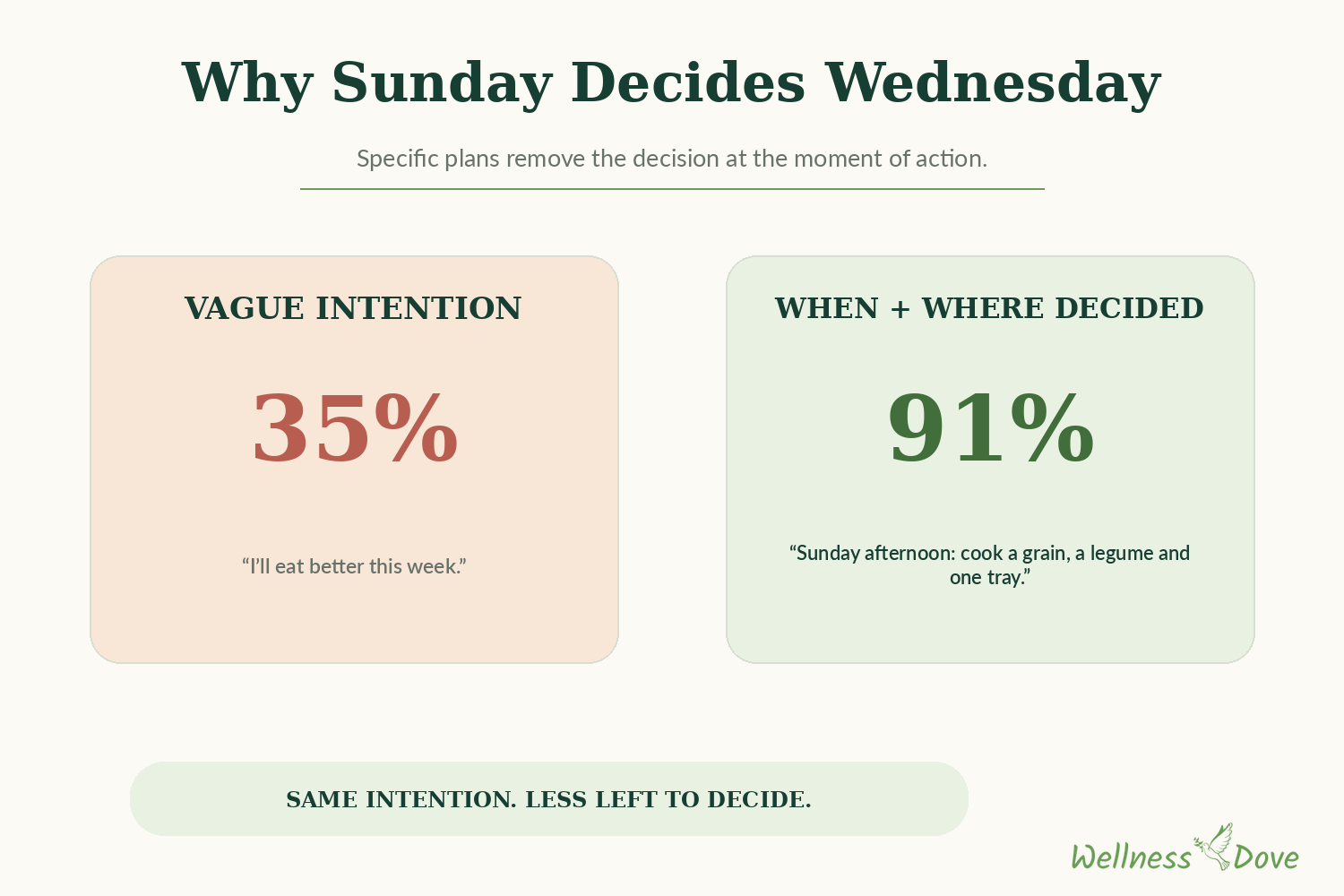
Same motivation, a different plan. The difference is that at the moment of action there’s nothing left to decide, only something to retrieve, and that’s the whole argument for cooking on Sunday. Sunday-you is the only person in the house who isn’t tired. Let them make the decisions for everyone else.
The same logic applies to the oven. When it’s already on for one thing, something else goes in beside it, because the oven is hot anyway and the second tray costs you almost nothing in time or attention.
What this does to a Wednesday
On the tired Wednesday, the decision you were dreading never gets taken at all. There’s nothing to decide, because there’s already food in the fridge.
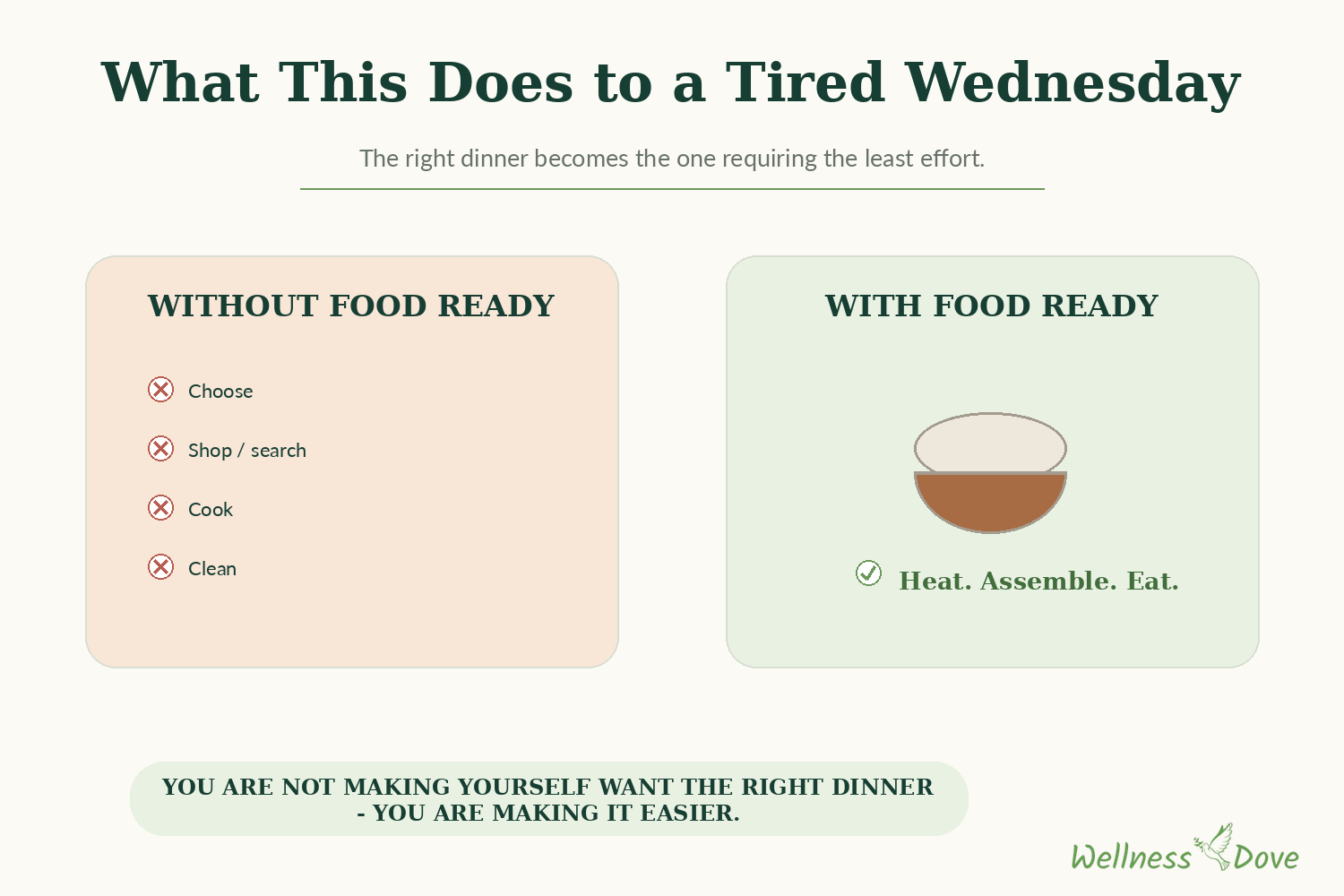
This is a much smaller thing than motivation and a much more reliable one. You’re not making yourself want the right dinner so much as arranging things so that the right dinner is the one that takes the least effort, and we want to say that plainly, because it’s the opposite of how most advice is written.
The food environment you live in decides most of what you eat, far more than your intentions do. Change the environment and your intentions stop having to work so hard.
Three things worth having ready
We’re not going to give you a system with containers and color coding, because we’ve never used one. In practice we keep three things in the fridge, and those three are what make the week work.
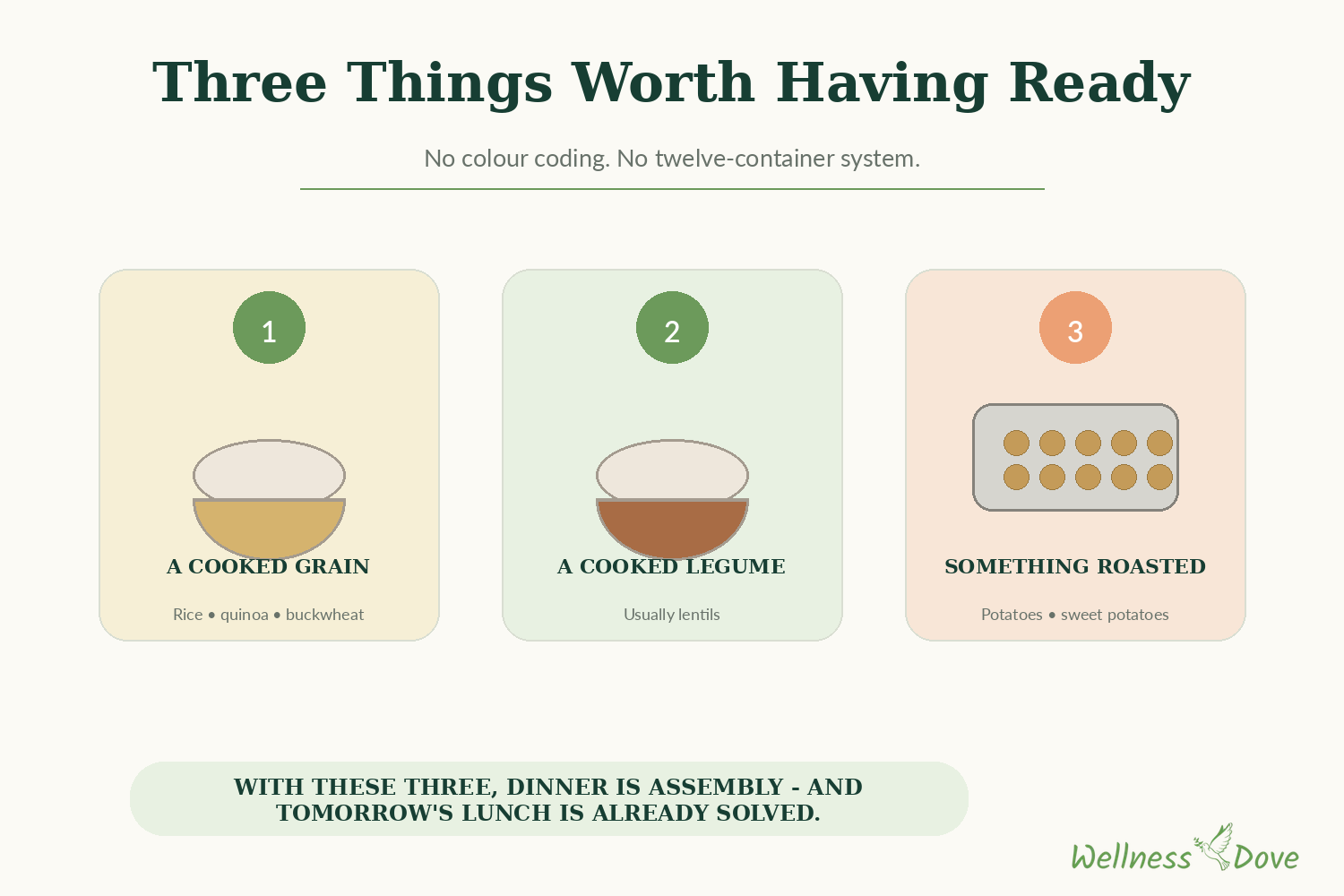
A cooked grain, which is rice or quinoa or buckwheat, whichever you happen to have. A cooked legume, which for us is usually lentils because they need no soaking. And something roasted, most often potatoes or sweet potatoes.
With those three in the fridge, dinner is an assembly job rather than a cooking job, and tomorrow’s lunch is already solved before you’ve thought about it.
Where the effort really goes
None of this asks for more time in the kitchen. It asks for the time you already spend there to be spent a little differently, in larger quantities and less often.
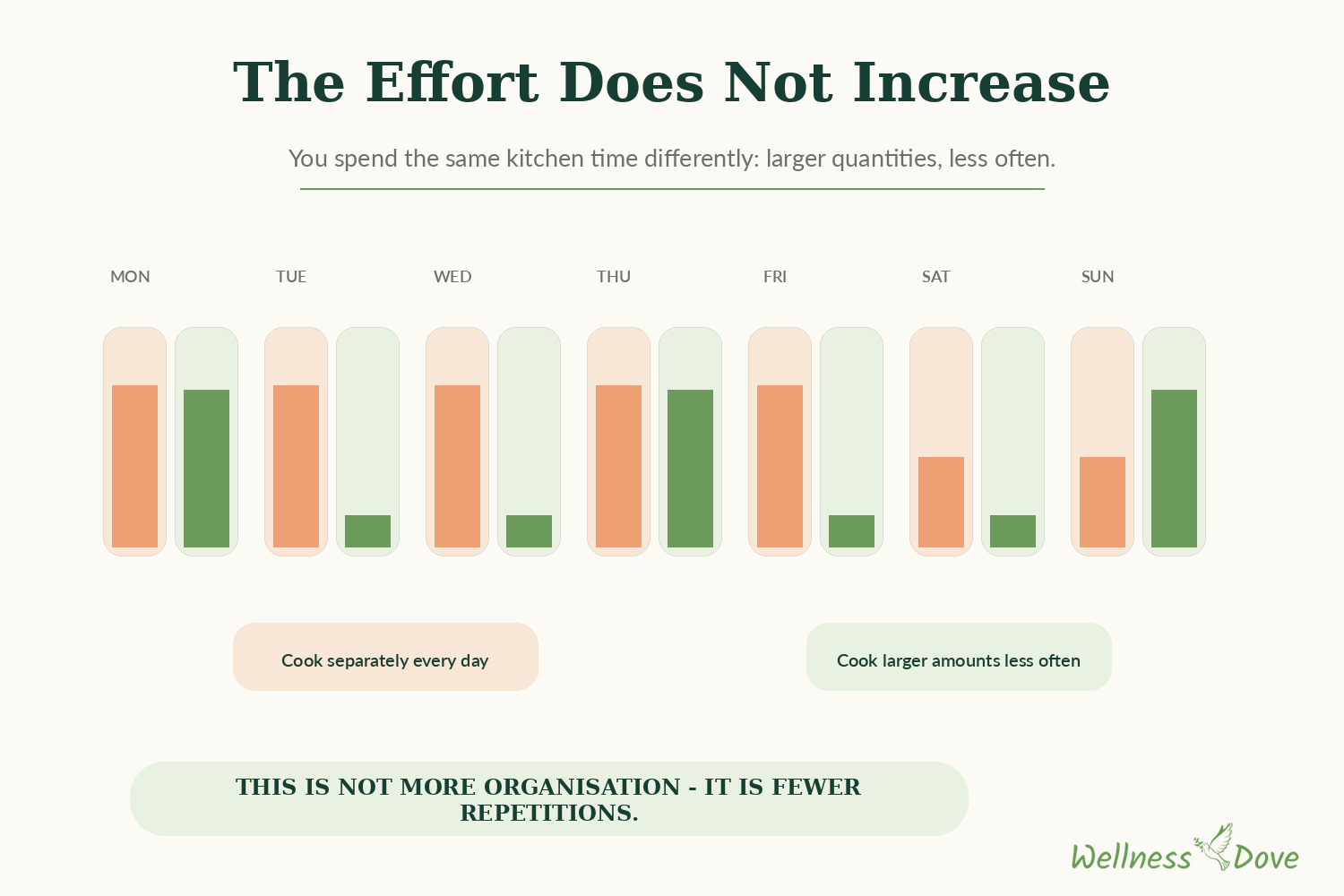
We didn’t arrive at this because we’re organized people. We arrived at it because cooking a separate meal every single evening isn’t something most people can keep up for long, and we couldn’t either.
The next thing to understand is what happens when you’re not tired at all, and you still want the thing you said you wouldn’t eat.
And, always, seek health consciously.