

Eating well is supposed to be expensive. It’s the second most common objection we hear, after protein, and unlike most objections it comes with a real number attached, and the number points the other way.
In a randomized trial published in JAMA Network Open in 2024, the estimated food costs of adults who switched to a low-fat vegan diet fell by 19 percent, about .80 per person per day, worked out from their food diaries at USDA prices. For two adults that adds up to roughly ,300 a year. The trial was run by the Physicians Committee for Responsible Medicine, which promotes plant-based eating, so it’s worth knowing who did the counting, but nearly all of the savings came from no longer buying meat.
The short answer: The foods this way of eating is built on are the cheapest things in the grocery store: dried lentils, rice, oats, potatoes, cabbage, onions, frozen vegetables. What makes healthy eating expensive isn’t the food. It’s the specialty version of everything, bought because it has a health word on the package.
Why Healthy Eating on a Budget Feels Impossible
Almost everybody makes this mistake at the start, so none of this is a criticism of anybody. When you change how you eat, the instinct is to replace each thing you’ve taken out with a purpose-built substitute. Meat becomes a package of something that looks like meat. Milk becomes a carton that costs three times what milk did. Snacks become bars with a leaf on the wrapper.
Every one of those substitutions is a processed food at a premium price, and none of them is what makes this way of eating work.
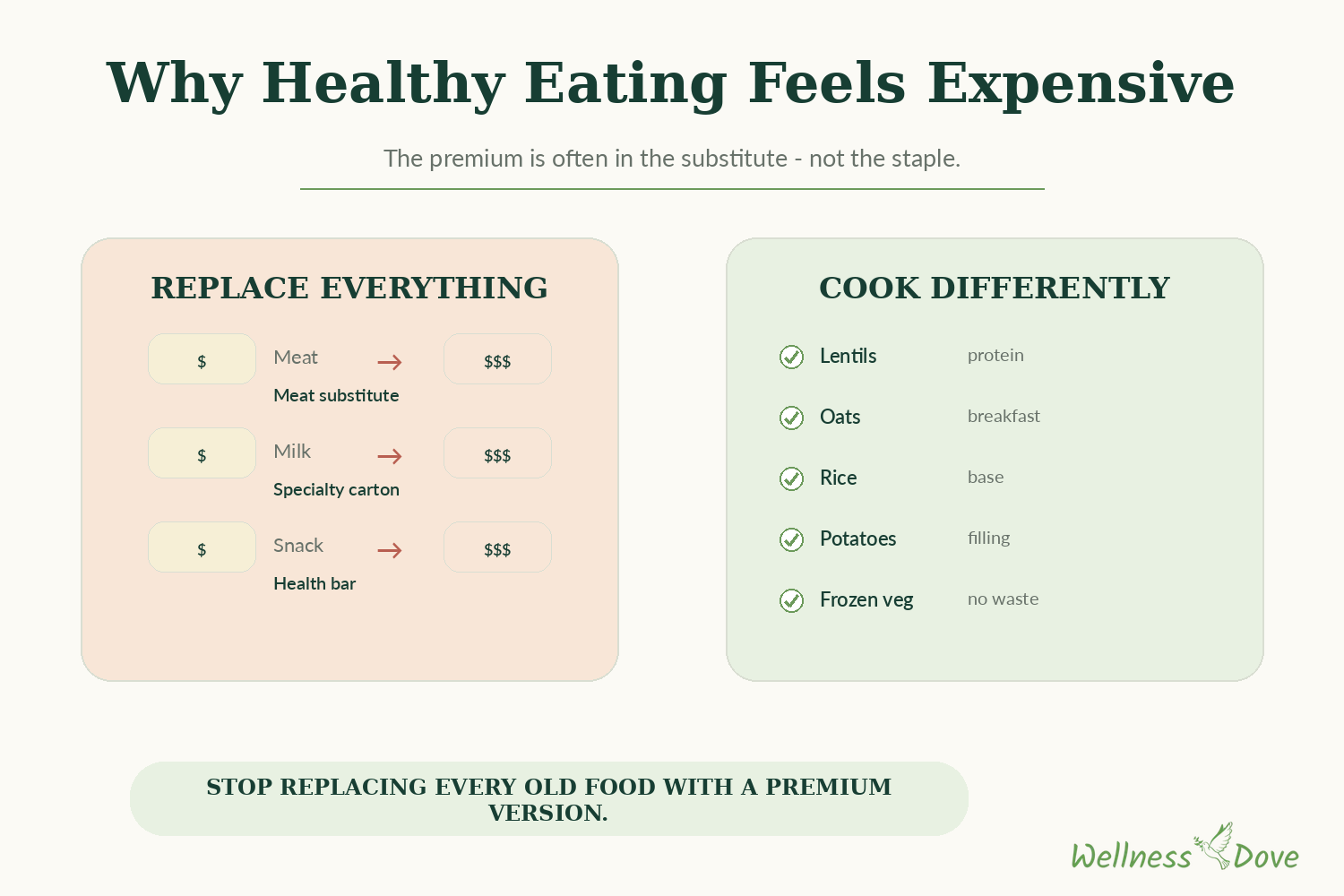
Grocery bills drop when you stop replacing things and start cooking differently instead.
The Cheap Foods That Do the Work
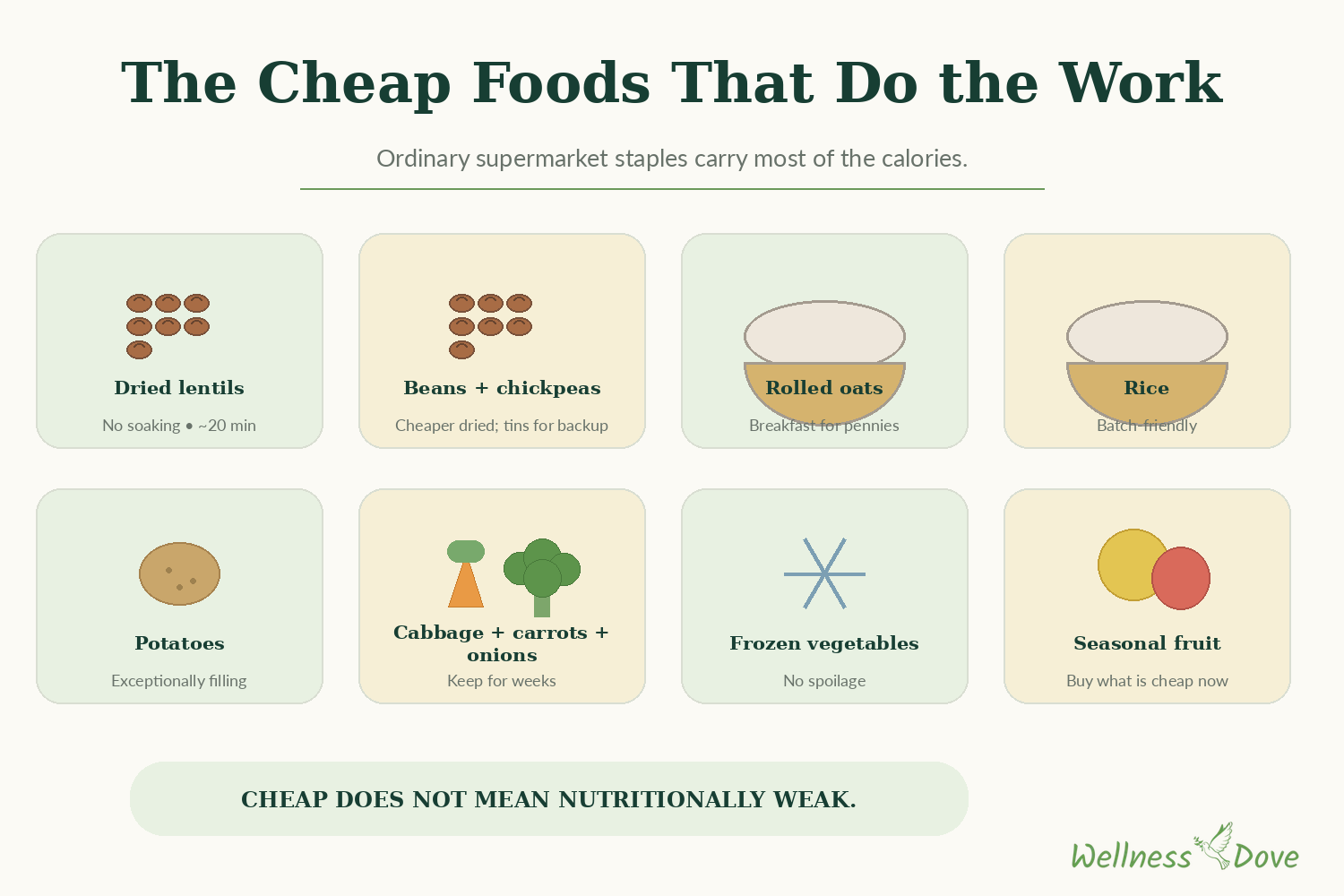
These are the things that turn up in our cart nearly every week, and between them they carry most of the calories we eat.
| What | Why it earns its place |
|---|---|
| Dried lentils | No soaking, twenty minutes, and one of the cheapest proteins in the store |
| Dried beans and chickpeas | Roughly a third the price of canned once they’re cooked |
| Rolled oats | Breakfast solved for pennies a bowl |
| Rice, any whole variety | Keeps three days cooked, reheats without complaint |
| Potatoes and sweet potatoes | Boiled potatoes were the most filling of 38 foods in the study that ranked them |
| Cabbage, carrots, onions | Weeks in the fridge, and the cheapest vegetables on the shelf |
| Frozen spinach, peas, broccoli | Frozen at picking, no spoilage, no waste |
| Bananas, apples, whatever is in season | The fruit that’s cheap this month is the fruit to buy |
Beans deserve a note of their own. Across five separate populations on different continents, legumes were the single most reliable dietary predictor of survival in older people: a 7 to 8 percent lower death rate for every 20 grams eaten daily. Twenty grams is two tablespoons, and we know of nothing else in nutrition that cheap with a number that good attached to it.
What We Deliberately Don’t Buy
This list saves more money than any of the tips do.
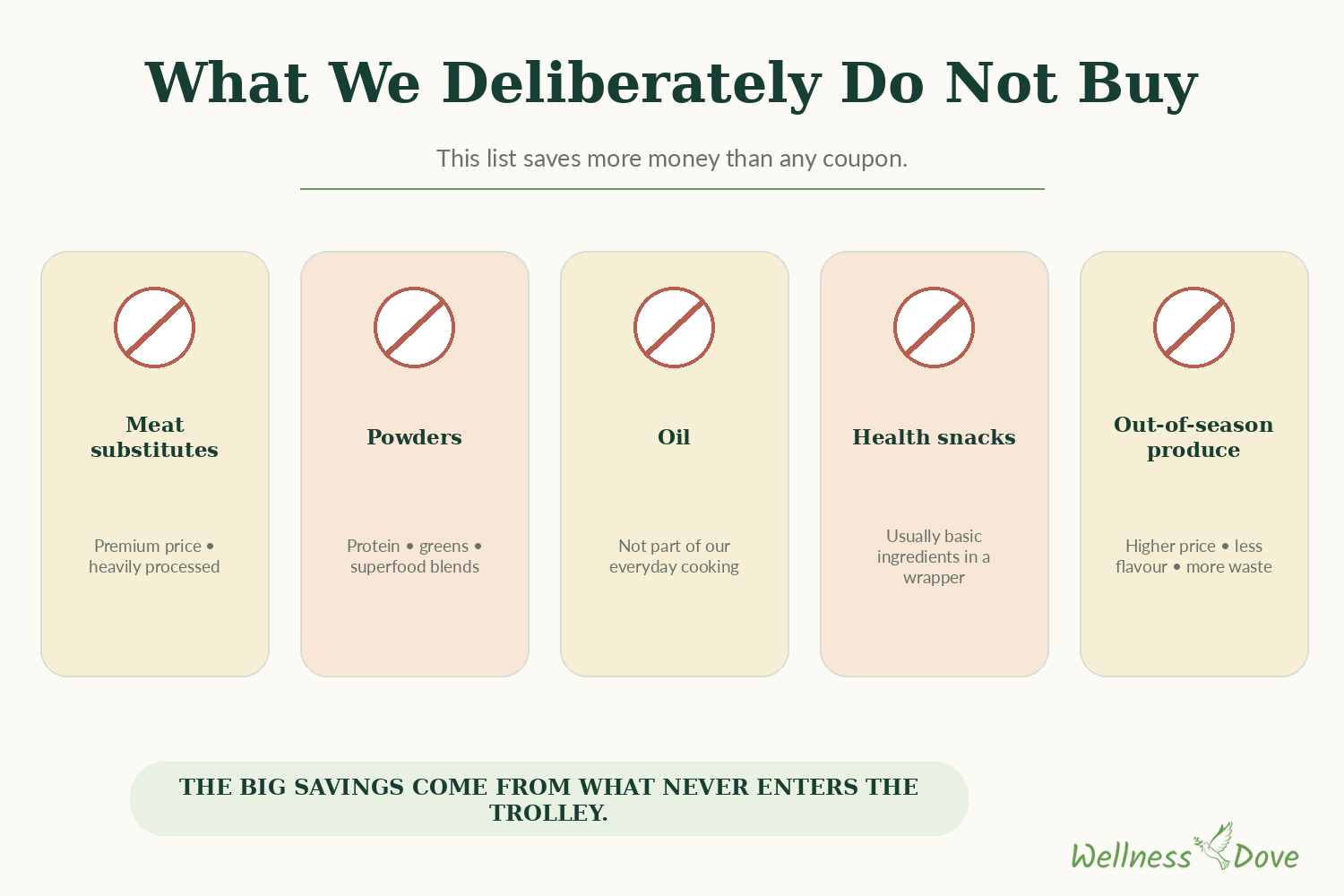
- Meat substitutes. Expensive, heavily processed, and not the thing that makes anybody healthier.
- Powders of any description. Protein, greens, superfood. We wrote about why the protein ones are unnecessary.
- Oil. That one’s on health grounds rather than cost, though it happens to save money too. Our reasoning is here.
- Anything marketed as a health snack. A bar with dates and oats in it costs several times what dates and oats cost.
- Out-of-season produce that’s traveled a long way. It usually costs more, tastes of less, and has used up much of its shelf life before you buy it.
We go to a health food store about once a month, and usually it’s for one item.
The Habit That Cuts a Food Budget Most
It isn’t couponing, and it isn’t a spreadsheet. It’s cooking more than you need.
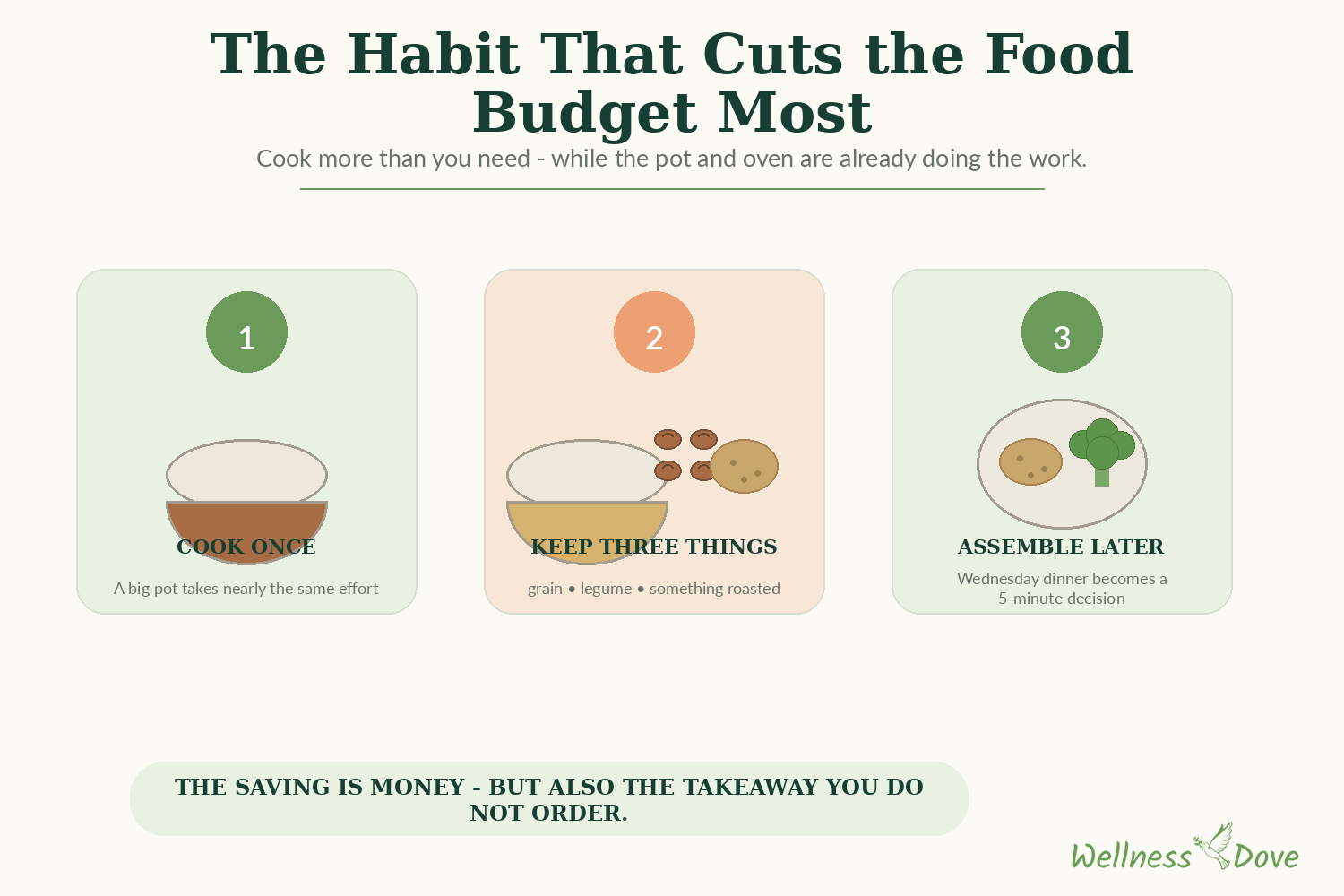
A pot of lentil soup takes the same forty minutes whether it feeds two people or six, and a tray of potatoes takes the same time in the oven either way. When the oven’s already hot, the second tray costs almost nothing. And what you get out of it is more than money. It’s the tired Wednesday, when there’s already food in the fridge, so there’s nothing to decide and no reason to pay for something delivered.
We keep three things in the fridge and the week runs on them:
- A cooked grain: rice, quinoa or buckwheat, whichever was cheapest.
- A cooked legume, usually lentils, because they don’t need soaking.
- Something roasted, most often potatoes or sweet potatoes.
With those three in there, dinner is assembly rather than cooking, and tomorrow’s lunch is already taken care of. The longer version of that argument is here.
Cheap Meals We Really Do Make
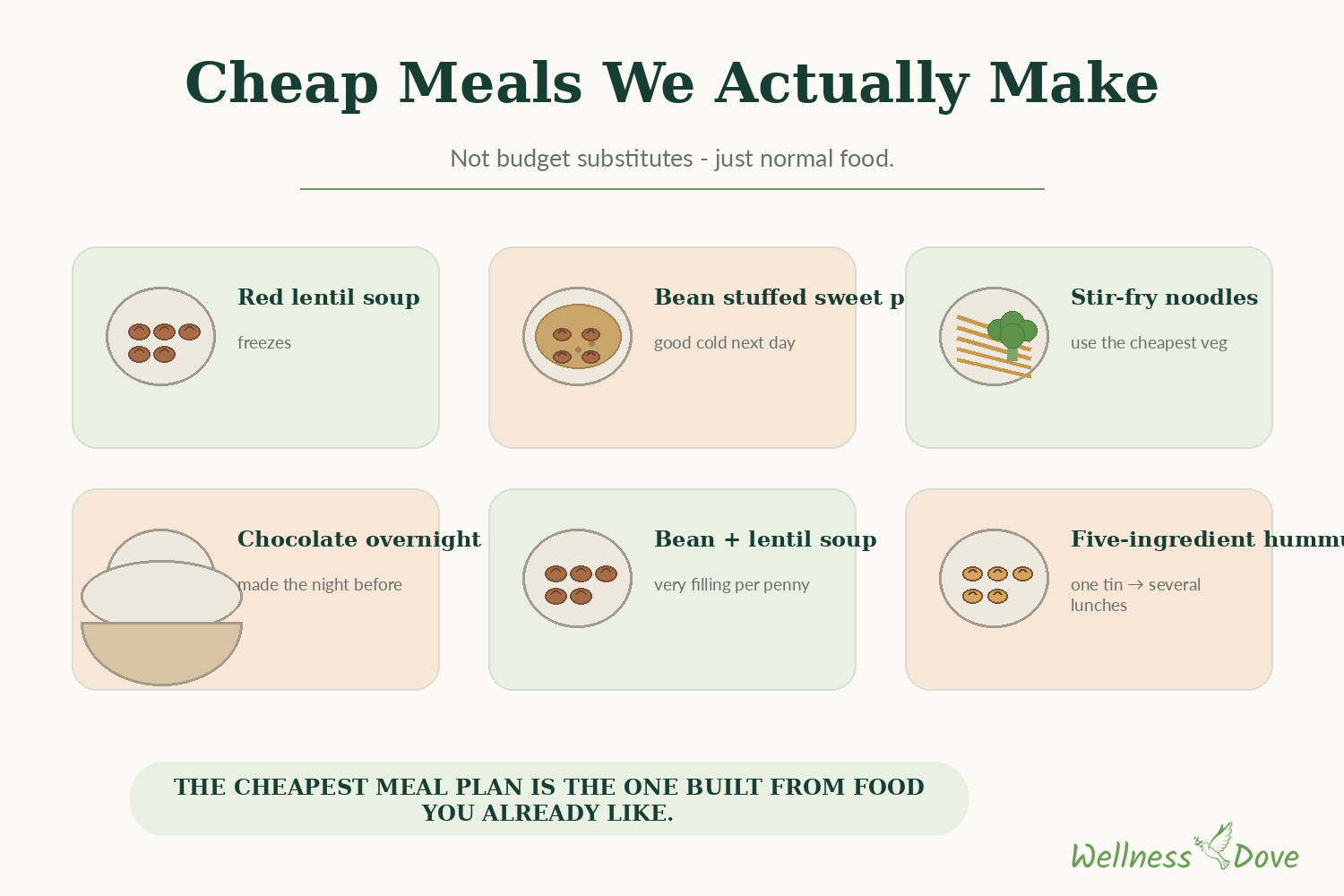
None of these is a budget version of something better. They’re what we eat, week in and week out.
- Easy Red Lentil Soup: the one we make most often, and it freezes well.
- Bean Stuffed Sweet Potatoes: two cheap ingredients, one tray, and good cold the next day.
- Quick Stir-Fry Noodles: whatever vegetables are cheapest that week go in.
- Chocolate Overnight Oats: made the night before, and it costs pennies.
- Bean and Lentil Soup: the most filling thing per penny on this list.
- Five-Ingredient Hummus: one can of chickpeas becomes a week of sandwiches.
The Part Nobody Puts in a Budget Post
Dried beans are cheaper than canned by a wide margin, and we still buy canned some weeks.

A system that only works on the weeks when you’re organized isn’t a system. If canned chickpeas are the difference between cooking and not cooking on a Tuesday night, buy the can. The same goes for frozen vegetables, which people treat as the compromise option, when in fact they’re picked and frozen at ripeness rather than shipped green.
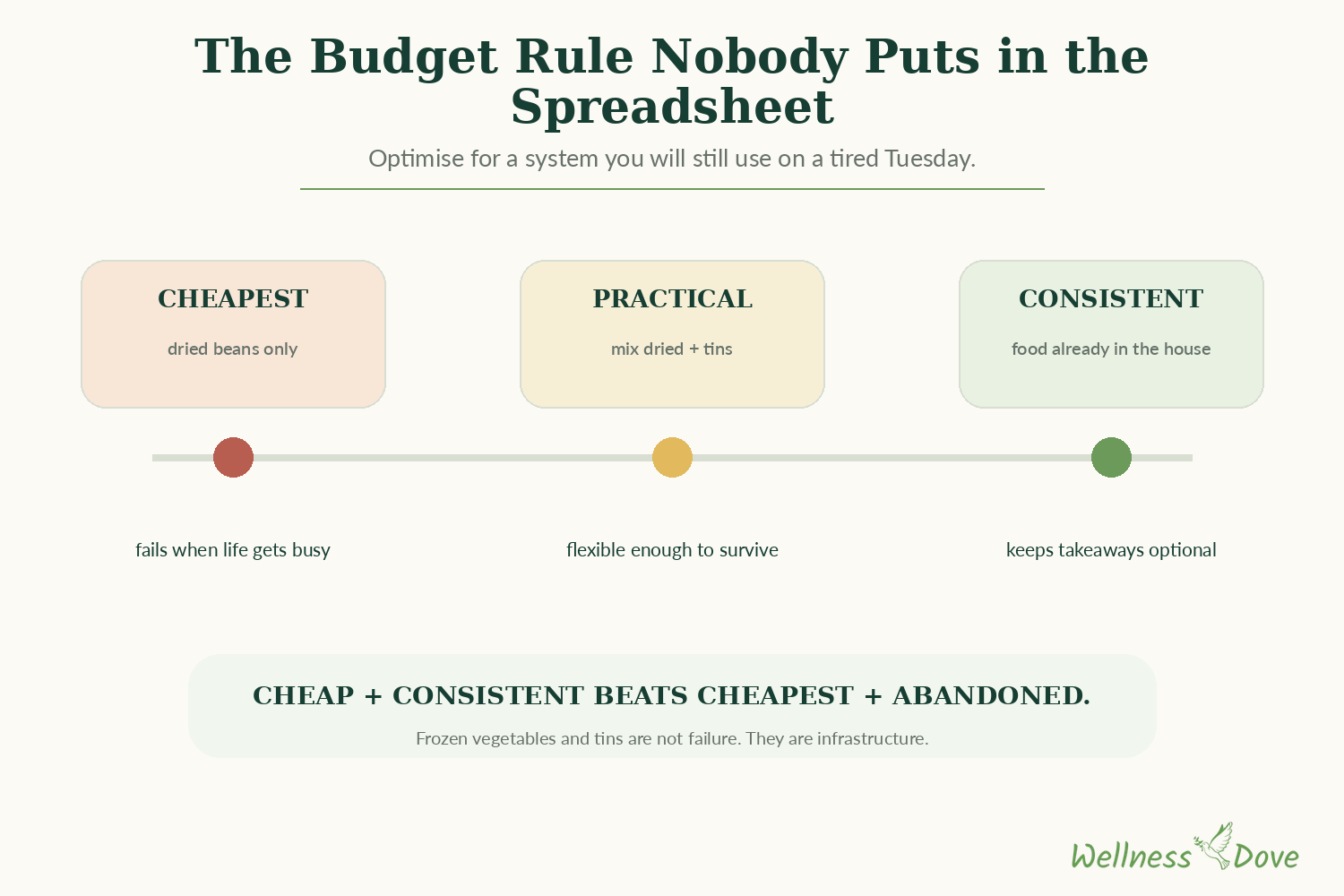
In our kitchen, cheap and consistent beats cheapest and abandoned, every single time.
Venny is a medical doctor and a specialist in Nutrition and Dietetics; Andy holds a master’s degree in psychology. This is general information rather than medical advice.
And, always, seek health consciously.

Loved these smart tips for healthy eating on a budget! Simple changes really can make a big impact.