


Breakfast is the meal most people are least attached to. Lunch and dinner carry the social weight, because those are the meals we eat with other people and the ones that turn into occasions. Breakfast is usually the same thing every day, eaten alone and in a hurry.
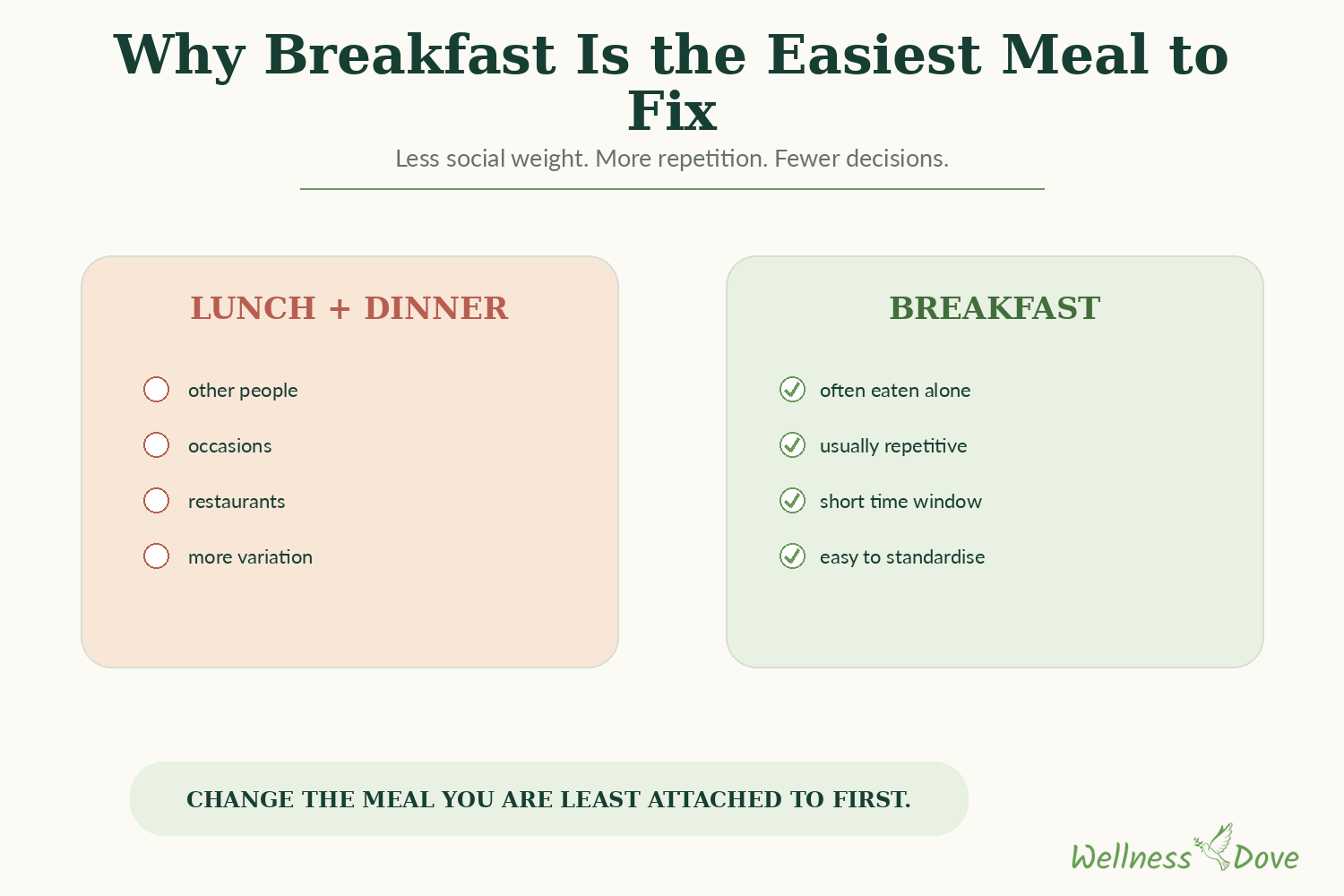
That’s exactly what makes it the cheapest habit in the day to change, and the one that pays you back every single morning without any further thought.
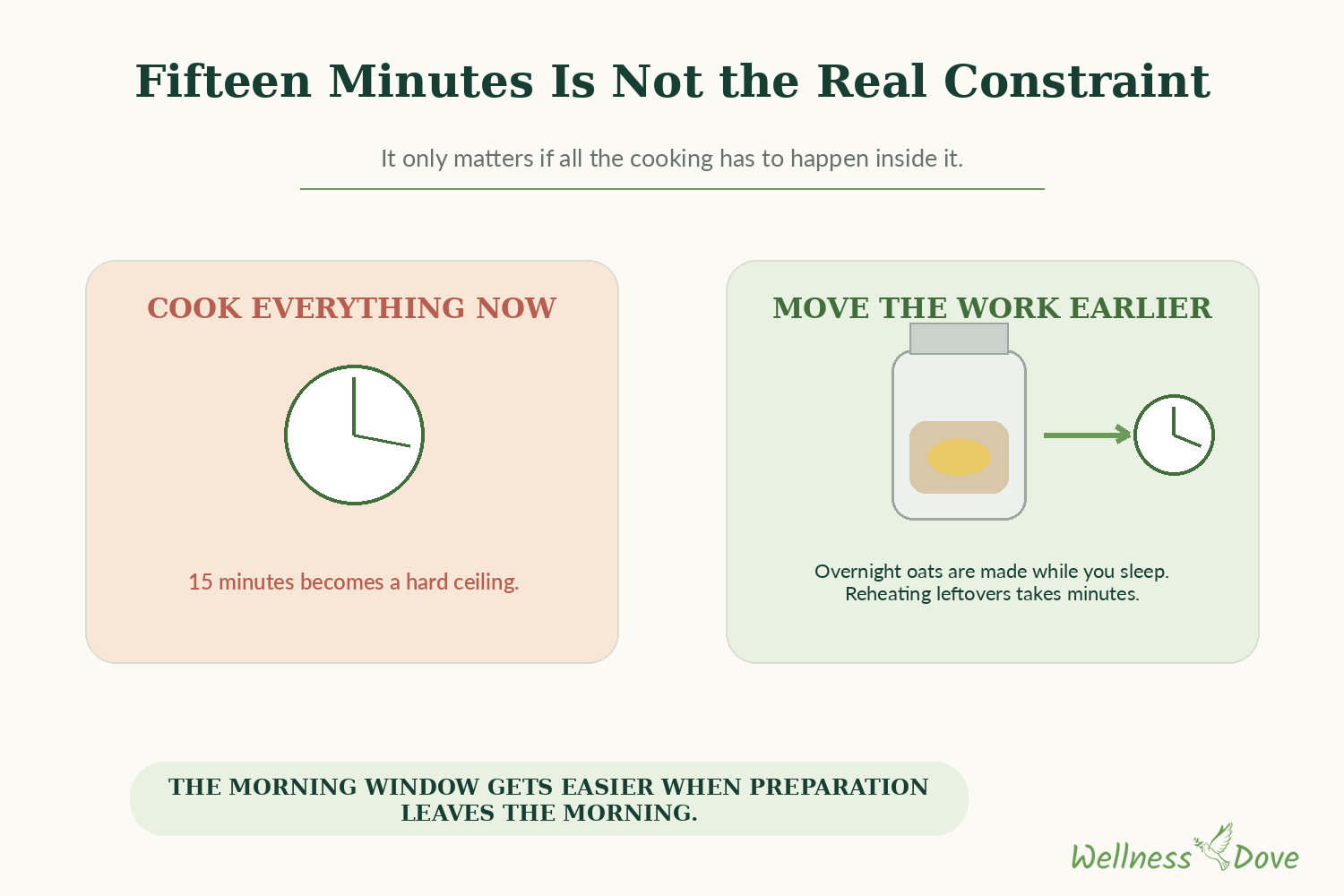
A friend asked us once how he could possibly eat well with fifteen minutes in the morning to make and eat his food. We gave him the practical answers at the time. Later it occurred to us that fifteen minutes isn’t really the constraint people think it is. It’s only a constraint if the cooking has to happen inside it, and in our kitchen it mostly doesn’t.
Oats do most of the work
We eat oats more mornings than not, and the reason is arithmetic rather than affection. Oats are the exception in the starch band: cooked with water they land nearer 320 calories a pound, and that’s why we add dates, banana and a spoon of seeds rather than eating them plain. It’s four minutes on the stove, and built that way a bowl holds you until lunch.
Cooked with water or plant milk, with a banana or a few dates for sweetness and a spoon of seeds over the top, that’s a complete breakfast made from four things. None of them needs to come from a health food store, either. We go to ours once a month at most.
Why what goes on top matters
The toppings have a real job to do here, so don’t think of them as decoration.
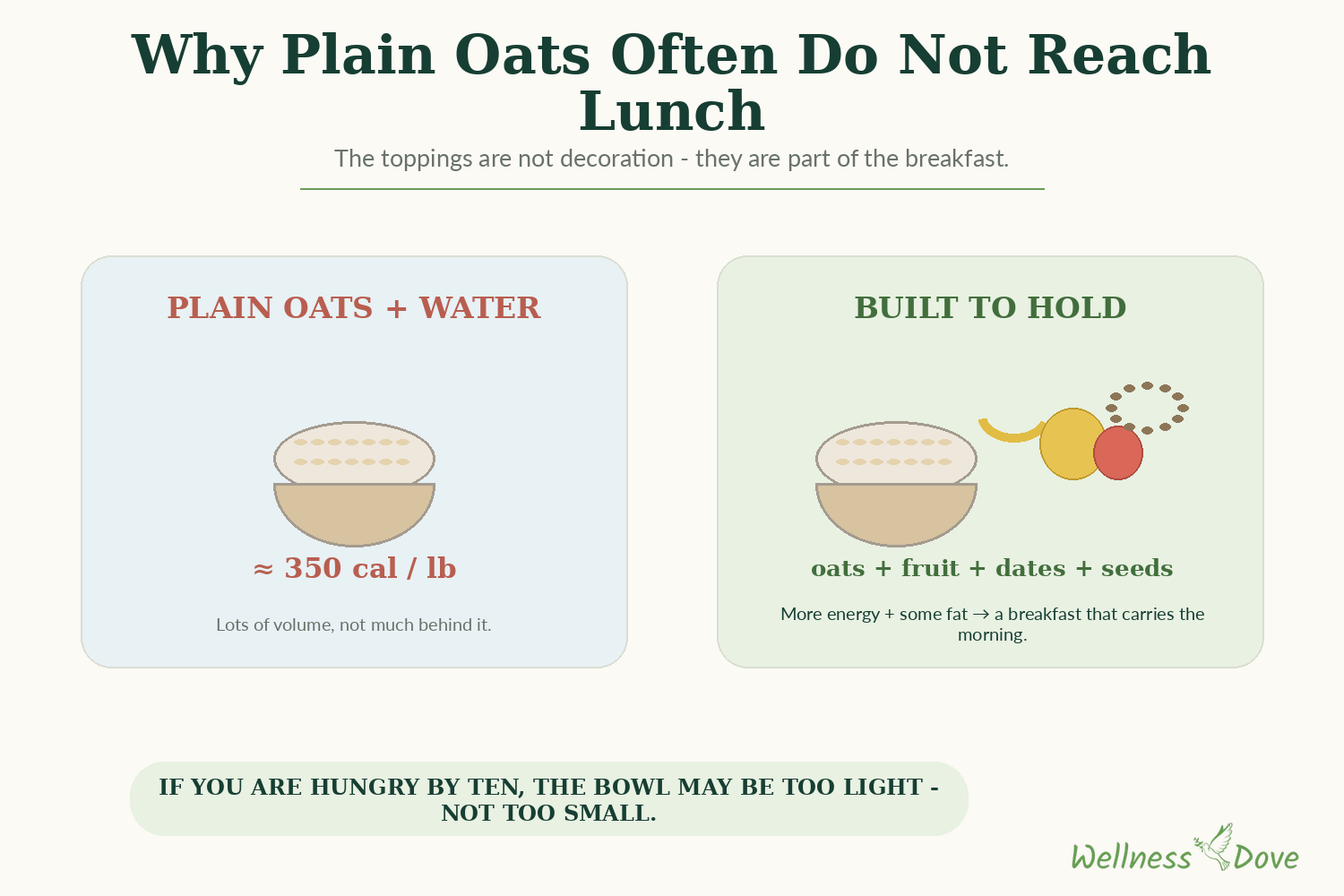
Dates and banana raise the calories in the bowl so it carries a whole morning, and a spoon of seeds adds flavor and crunch. The usual mistake is a small bowl of oats made thin with water, which is mostly volume, and that’s why people eat it, feel virtuous, and are hungry again by ten.
The part you get for free
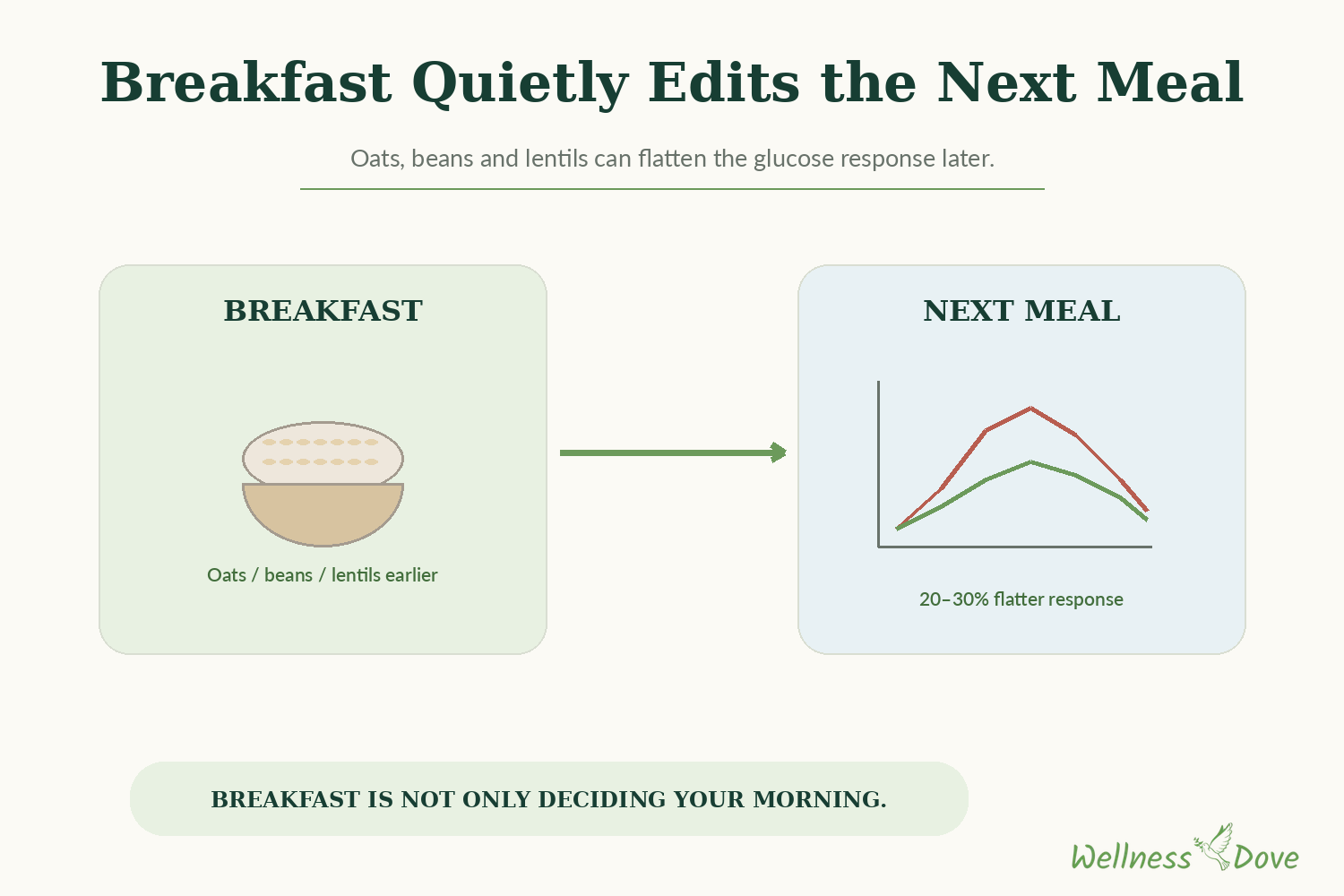
There’s a second thing happening here, and you get it for free. Lentils and beans eaten earlier in the day can flatten the blood sugar rise after your next meal. In the first study, back in 1982, a lentil breakfast made the rise after a standard lunch 38 percent smaller than a bread breakfast did, and the effect has been known ever since as the second-meal effect. So breakfast isn’t only deciding how your morning goes. It has a say in your afternoon as well.
If four minutes is somehow too long, the same ingredients left in a jar overnight will be ready when you wake up. It’s the same breakfast, made while you were asleep!
What happens to the sweetness
The usual objection is that this sounds dull compared to whatever you were eating before. Often it is at first, and we should be straight with you about why. A pastry is engineered. Sugar, fat and white flour in a combination that occurs nowhere in nature, arranged to be about as close to impossible to refuse as food can be made. Oats aren’t competing on those terms and they never will.
What can happen instead is that your sense of sweetness moves.
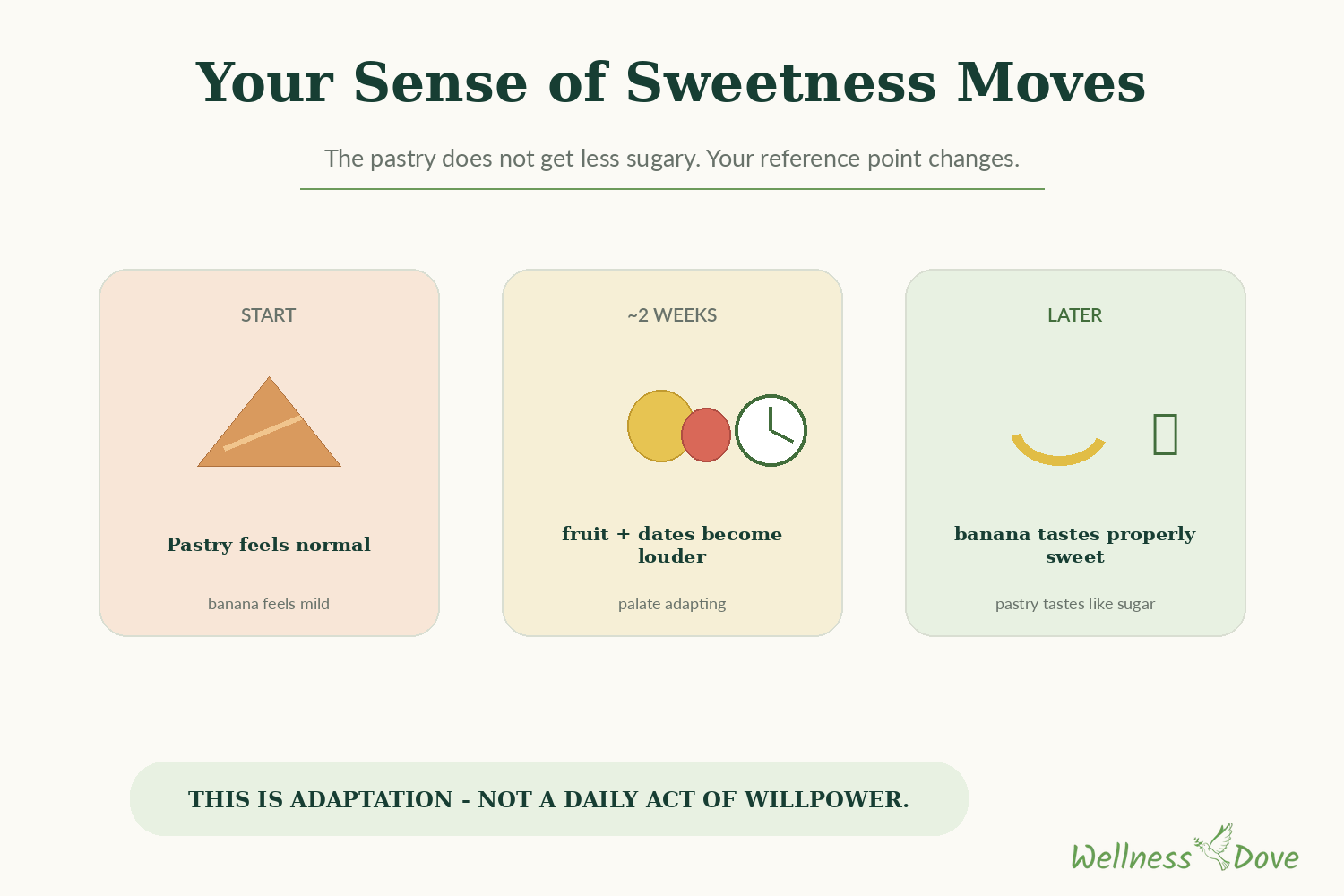
In one study, people who cut back on sugar for three months rated sweet foods about 40 percent sweeter than before. A larger trial found no such change, so it varies from person to person. When it does happen, a banana starts to taste properly sweet, and the pastry starts to taste like sugar rather than like breakfast. It isn’t willpower. It’s adaptation, and it takes a couple of months, not a couple of days.
Savory mornings work too

Not everybody wants something sweet in the morning, and there’s no rule anywhere that says you must. Beans on toast is a perfectly good breakfast. So is a tofu scramble, or last night’s soup, or yesterday’s potatoes with some greens on them. Any of those removes a decision from the morning, and there’s nothing odd about eating dinner food at eight.
The part that really matters
Whatever you choose, the important thing is that you choose it once.
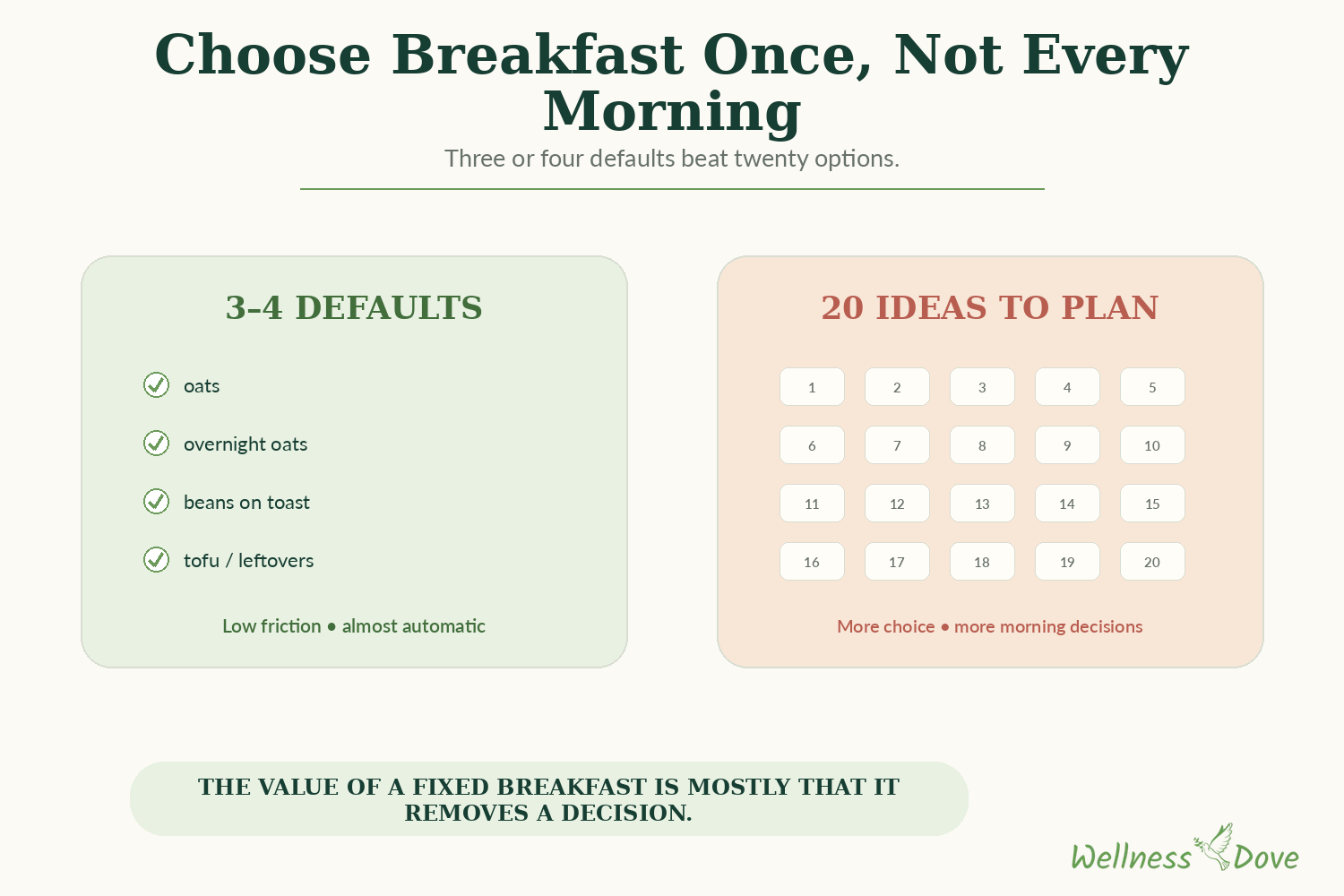
The value in a fixed breakfast isn’t really nutritional. A decision made on Sunday costs you almost nothing, while the same decision made at seven in the morning, half awake, costs you a great deal. Three or four breakfasts you can make without thinking will carry you further than twenty that you have to plan.
That principle isn’t really about breakfast at all; it applies to the rest of the day just as well, and that’s where we go next.