

Calorie density is the amount of energy a food carries for its weight. It isn’t a fashionable idea, and we’ve never seen anybody build a diet brand around it. It’s also the most useful thing we ever learned about eating, and it explains almost every plant-based meal that has ever left somebody hungry.
Your stomach reports on volume. Your small intestine reports on what arrived.
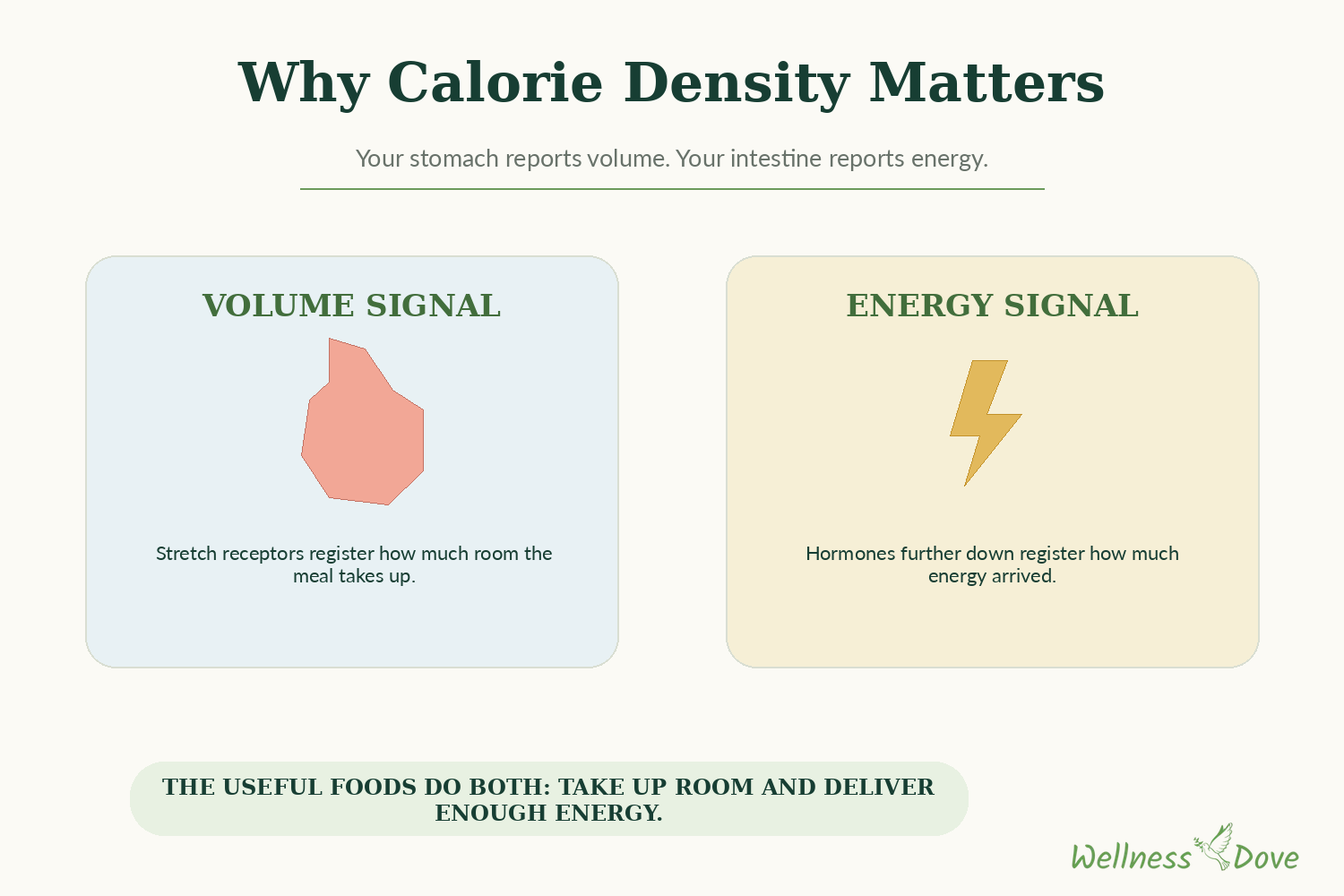
Stretch receptors in the stomach wall register bulk, and hormones released further down register energy. You need both signals, so a food has to be good at both things to keep you satisfied.
And the stomach is a small container. It holds about a liter. That one constraint is why any of this matters: you don’t get to solve hunger by eating more of something, because there’s a hard ceiling on how much will physically fit.
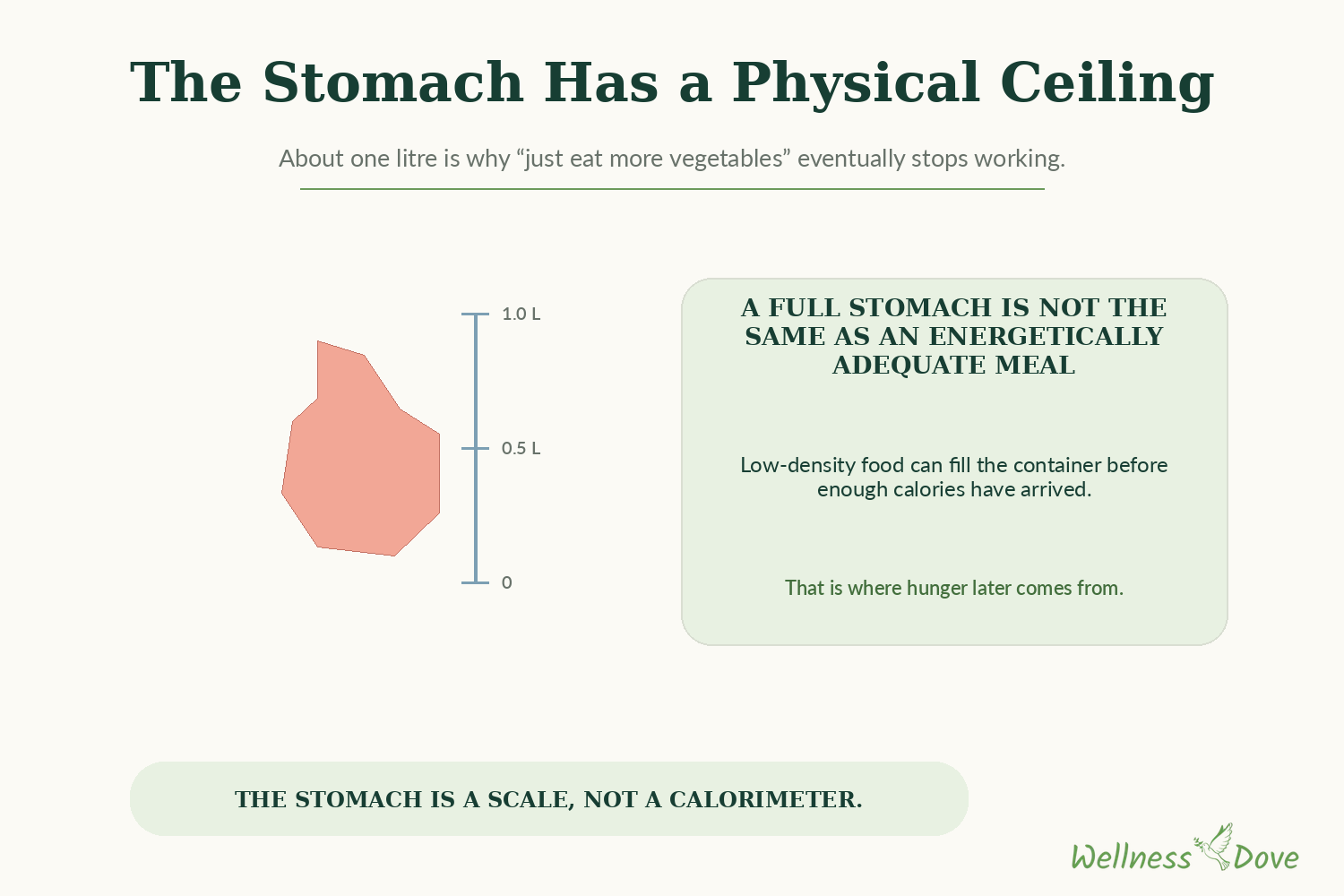
The stomach is a scale, not a calorimeter.
So whether a meal fills you depends on how much room it takes up, and whether it keeps you full depends on how much energy arrived along with it. Most foods are good at one of those two things. The useful ones are good at both.
The calorie density chart
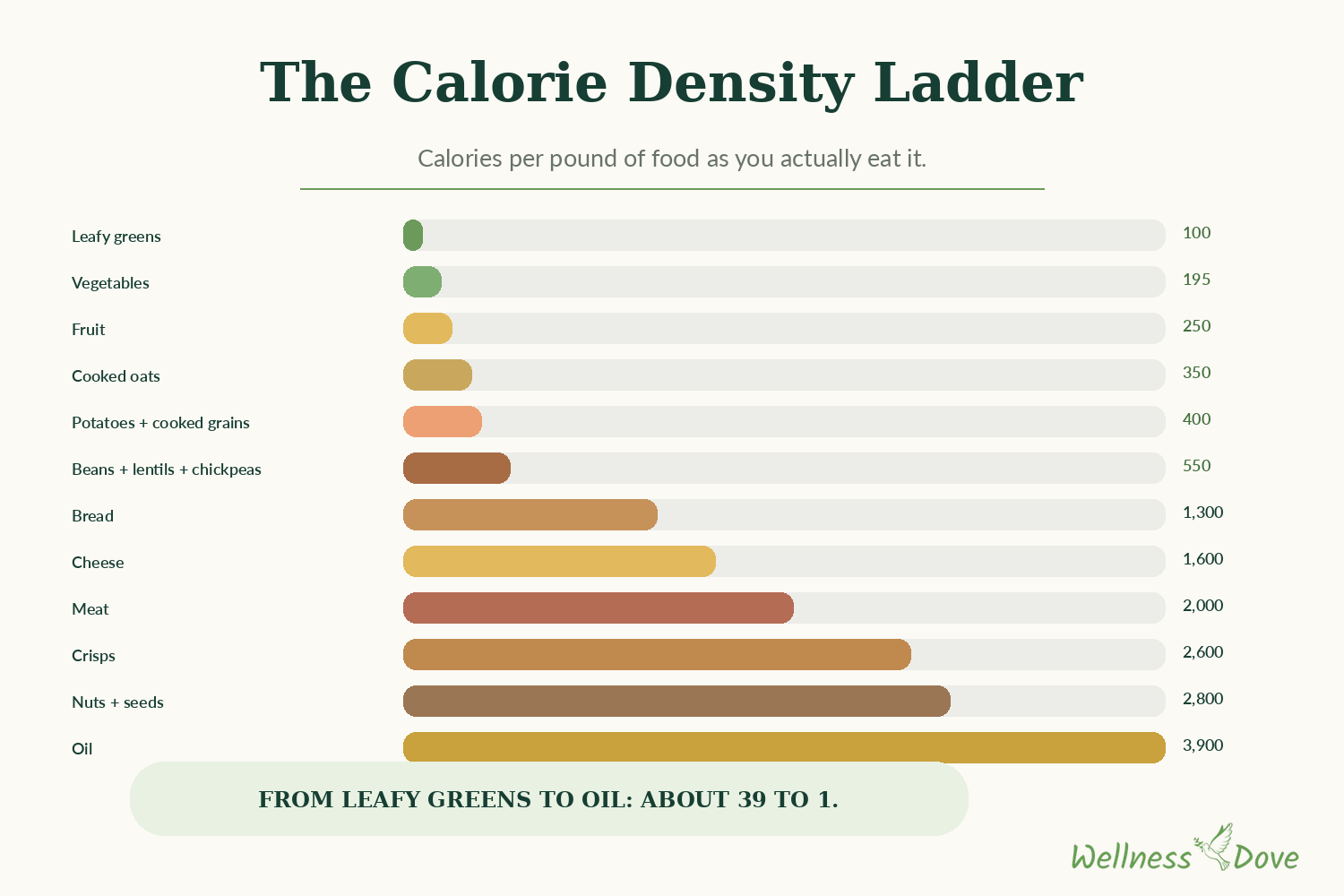
Here’s the whole ladder in one place. Every figure is calories per pound of food as you eat it, cooked and on the plate.
| Food | Calories per pound |
|---|---|
| Leafy greens | 100 |
| Other vegetables | 195 |
| Fruit | 250 |
| Cooked oats | 350 |
| Potatoes and cooked grains | 400 |
| Beans, lentils and chickpeas | 500 to 600 |
| Bread | 1,300 |
| Cheese | 1,600 |
| Meat | 2,000 |
| Potato chips | 2,600 |
| Nuts and seeds | 2,800 |
| Oil | 3,900 |
The four bands that matter are the first six rows, and here’s what each one is for.
Vegetables, a hundred a pound
Vegetables are the most nutrient-rich food available to you, and they’re also almost entirely water and fiber. You could eat two pounds of them, feel pleasantly full, and have taken in two hundred calories.
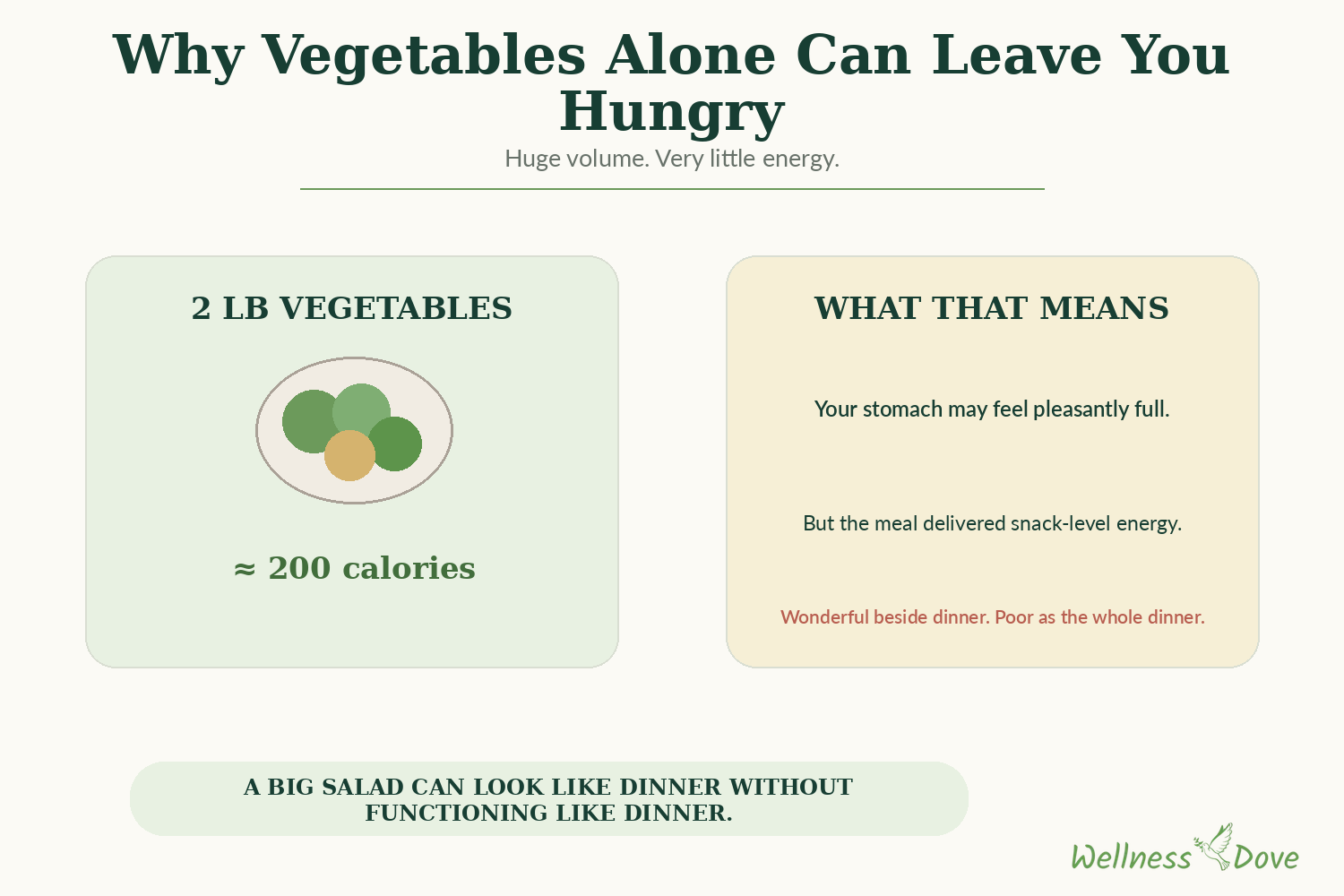
That’s a snack arriving in the shape of a meal, and it’s why we treat a plate of vegetables as a wonderful thing to eat alongside dinner and a poor thing to eat as dinner on its own.
Fruit, two to three hundred a pound
Fruit carries two or three times what vegetables carry.
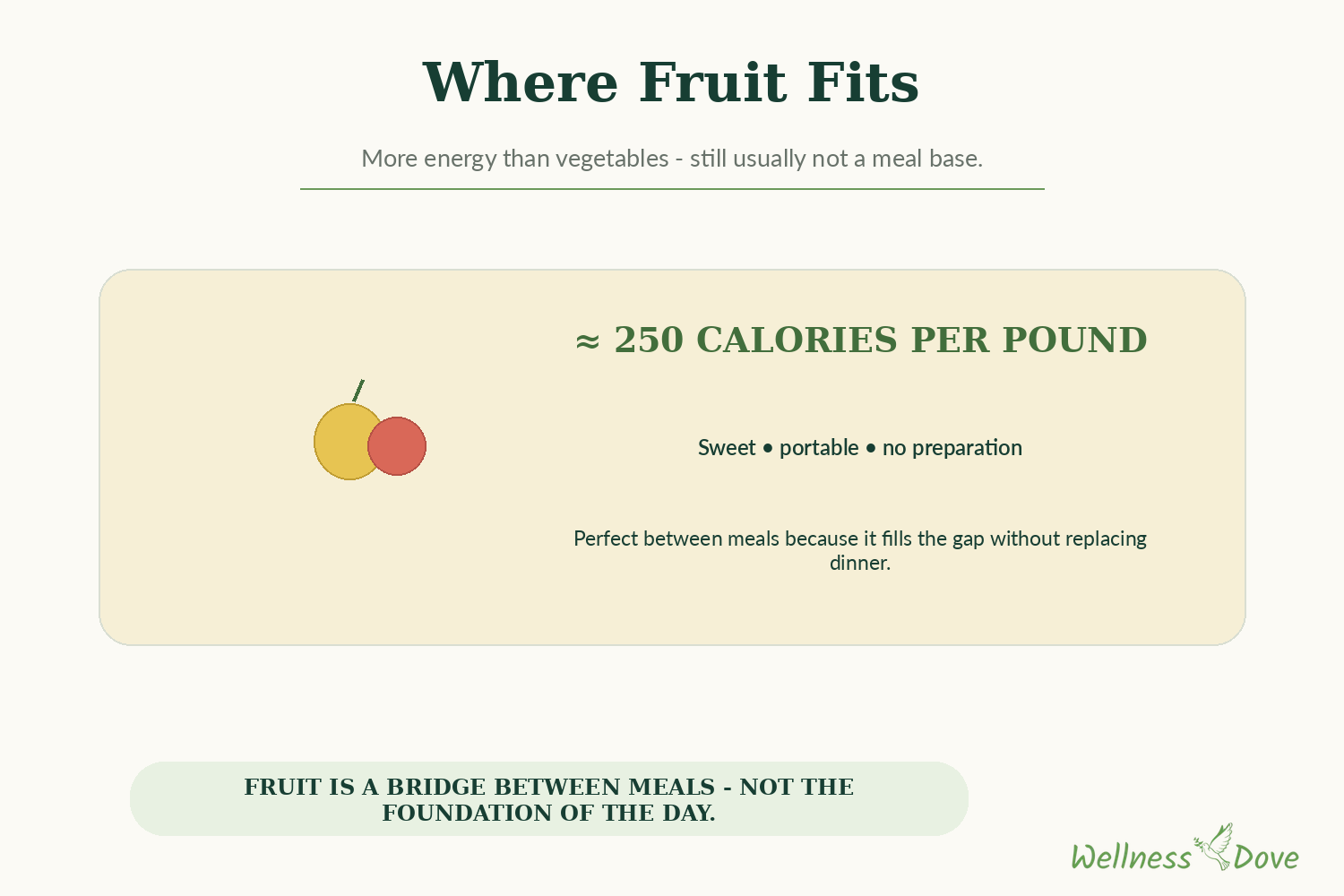
That’s still not enough to run a whole day on, unless you eat a quantity that becomes impractical rather quickly. We keep fruit for between meals for exactly that reason. It’s sweet, it needs no preparation, and it fills a gap without ruining dinner.
Starches and legumes, four to six hundred a pound
Potatoes and sweet potatoes. Beans, lentils and chickpeas. Rice, oats, quinoa, buckwheat and corn. These carry roughly four to six times what vegetables carry, in a form that still takes up real room in the stomach.
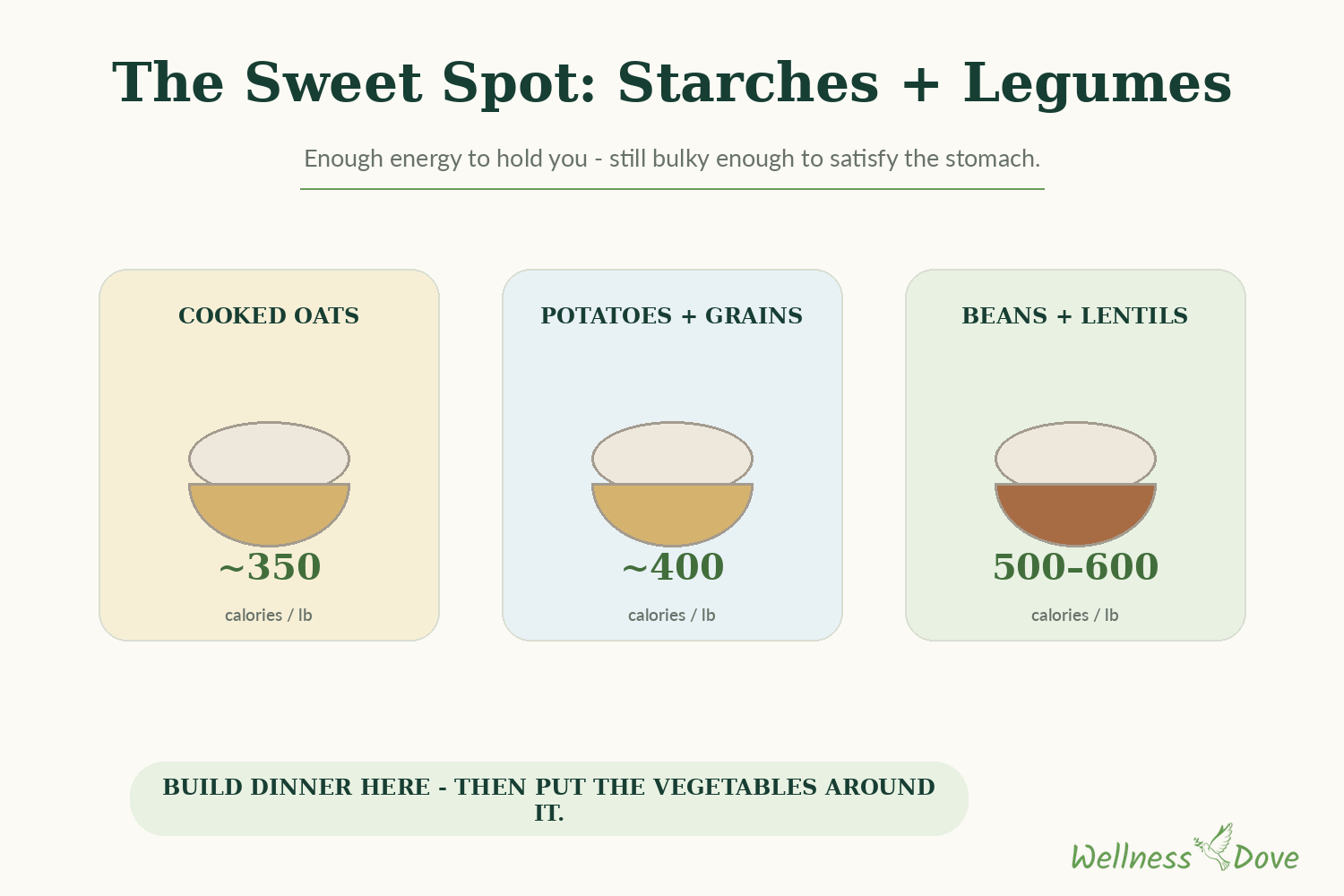
The spread inside the band matters. Beans and lentils sit at the top of it, around 500 to 600. Potatoes and cooked grains sit nearer 400. Cooked oats are lower still, closer to 350, and that’s exactly why we never eat them plain and always put dates, banana or seeds through them. That combination is what makes a meal hold.
It’s no accident that these are the foods people lived on for thousands of years: rice across Asia, potatoes across Europe, corn and beans across the Americas. Not because anybody had worked out the numbers, but because these were the foods that let a person finish a day of work without thinking about food during it.
Nuts and seeds, around 2800 a pound
Nuts are the opposite problem. They carry enormous energy in almost no volume, and that’s why a handful of them disappears without ever registering as food.
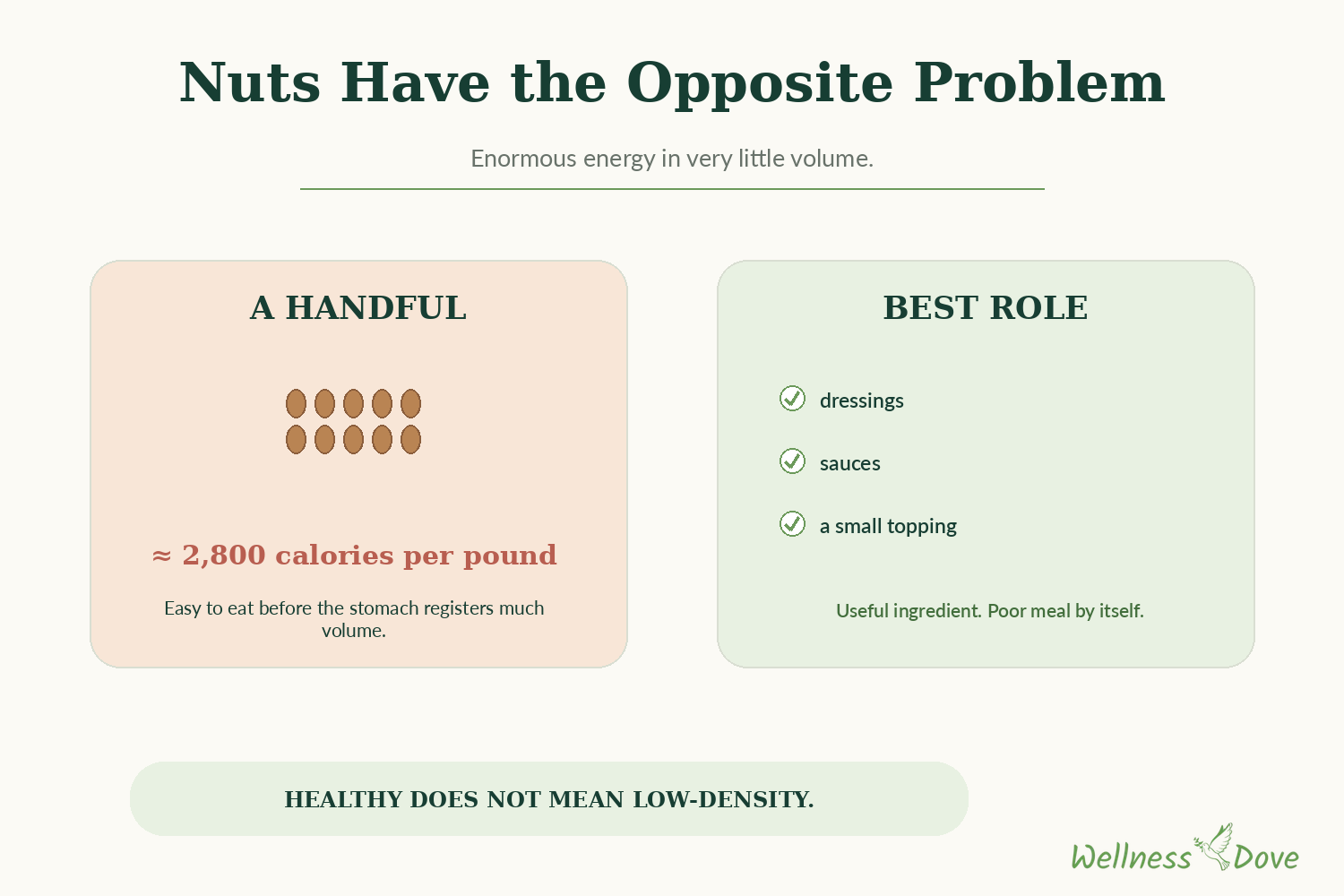
They’re good for you and we eat them every day. They belong in a dressing, in a sauce, or scattered over something else. But a bowl of nuts isn’t dinner and it will never feel like dinner, whatever the calories say!
What to do with four numbers
There’s a fifth number, and it’s the one that changed how we cook. Oil is about 3,900 calories a pound. Nothing else you can buy comes close. A tablespoon disappears into a pan and takes 120 calories with it, contributing no bulk at all, so it’s the one ingredient that can add a meal’s worth of energy to your day without your stomach registering that anything happened.
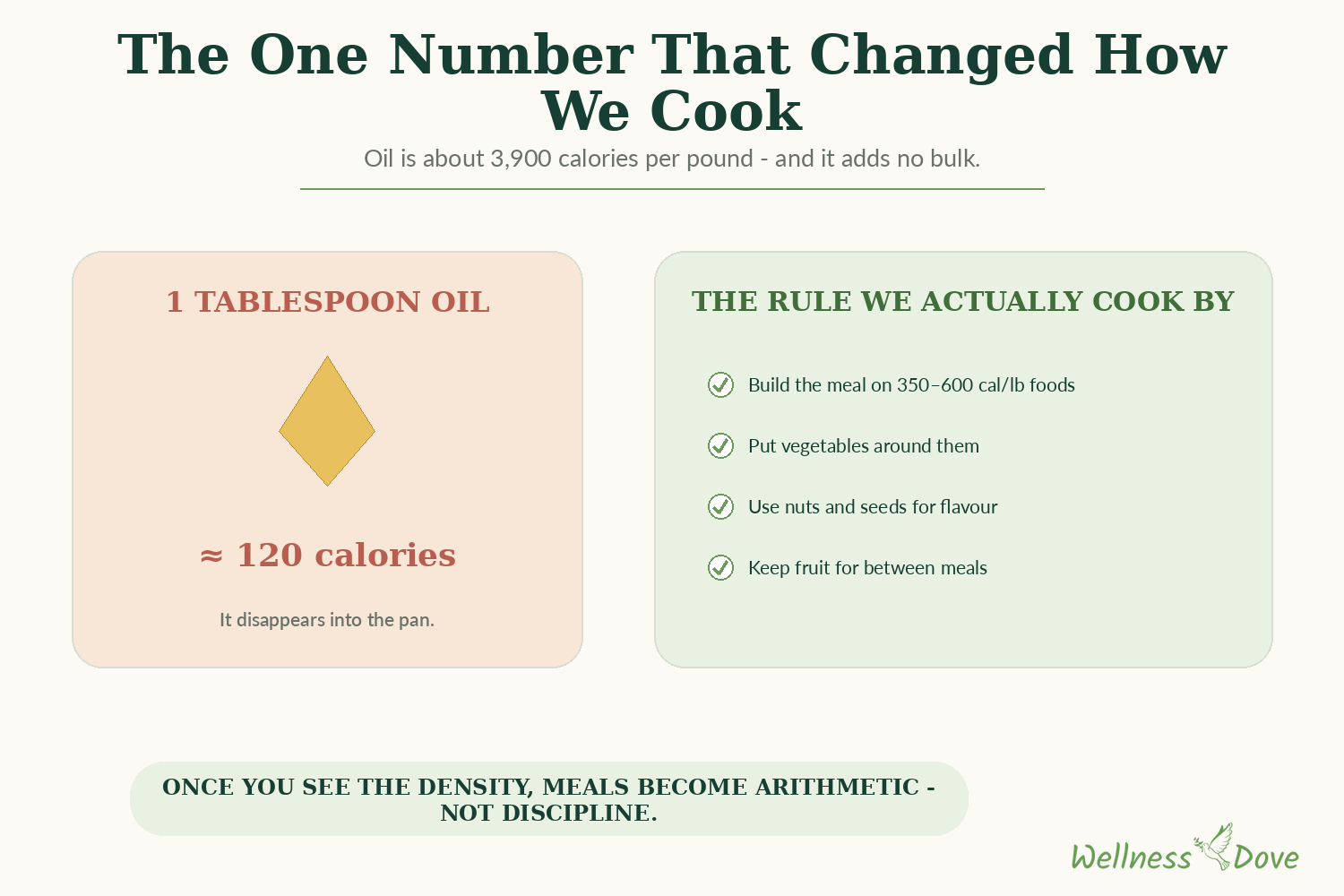
Look back at the table and the argument makes itself. Oil carries thirty-nine times what a plate of greens carries, and it’s the only thing on the list you can add to a meal without seeing it there.
The rule we cook by
We build the meal on the three-to-six-hundred foods and put the vegetables around them. We use the nuts to make it taste good, and we keep the fruit for between meals. That’s the whole of it, and it’s why our motto has always been that the fewer the ingredients, the better.
A bowl of lentil soup with bread is four ingredients and it holds us for about five hours. An elaborate salad can run to fourteen ingredients and still leave you opening the fridge before bed.
Once we could see which foods carry weight, meals stopped being a question of discipline and became a question of arithmetic. The next problem isn’t knowing any of this. It’s being nowhere near your own kitchen at one in the afternoon.
And, always, seek health consciously.