


Breakfast happens at home and dinner happens at home. Lunch doesn’t. Lunch happens wherever you are, usually with about twenty minutes and whatever is within walking distance, and that’s why it’s the meal that ends most attempts at eating this way.
We don’t think the problem is that good options are missing. At one in the afternoon, hungry, with twenty minutes, you eat whatever needs no decision.
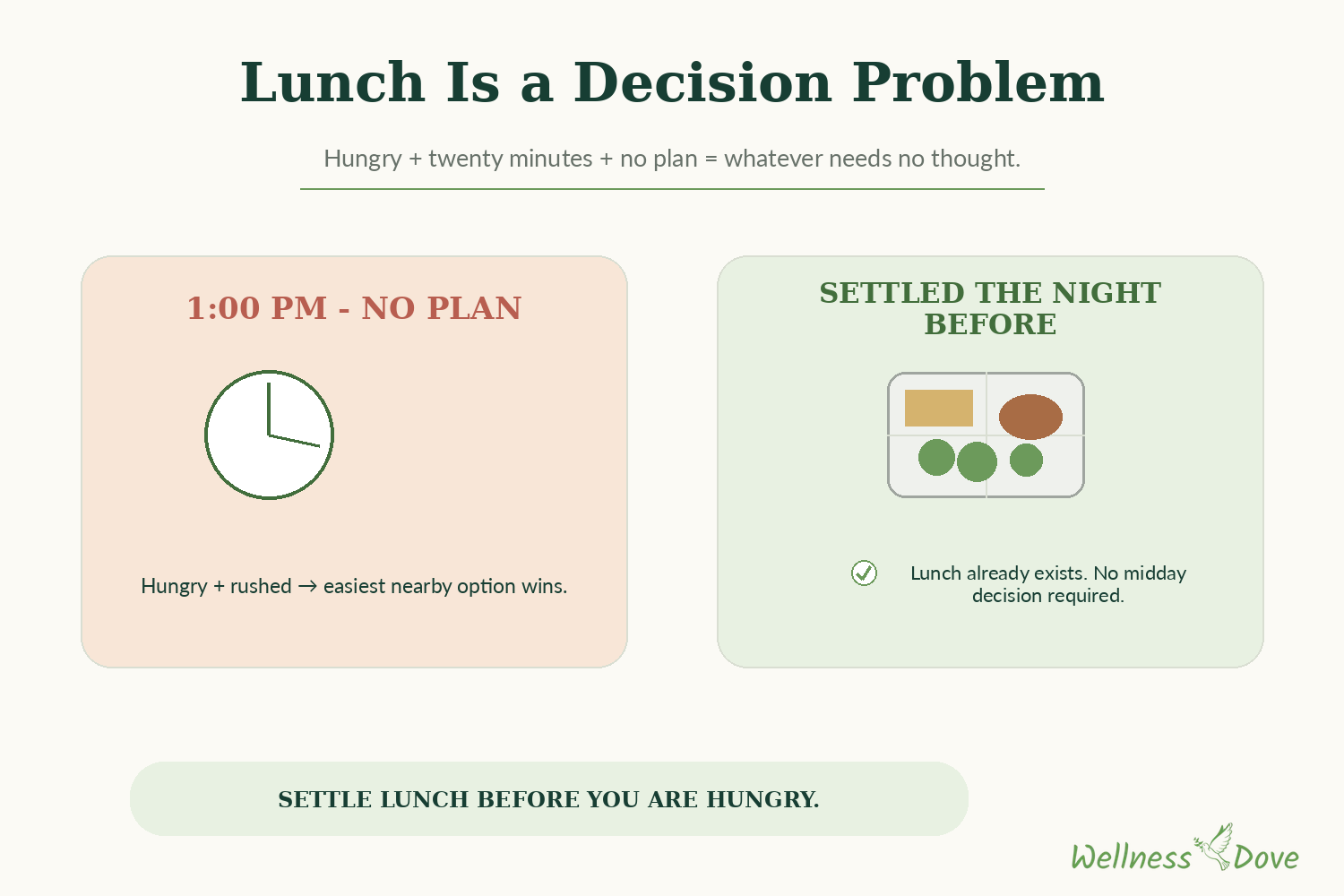
That’s the whole of it, really. So we settle lunch the evening before, or it doesn’t get settled at all.
Why the sandwich fails
The usual first attempt at a plant-based lunch is a sandwich with vegetables in it. Bread, lettuce, tomato, cucumber, and perhaps some avocado if you’re feeling generous. You already know what happens next: two hours, at best. Two slices of bread carry most of the calories and the vegetables carry almost none.
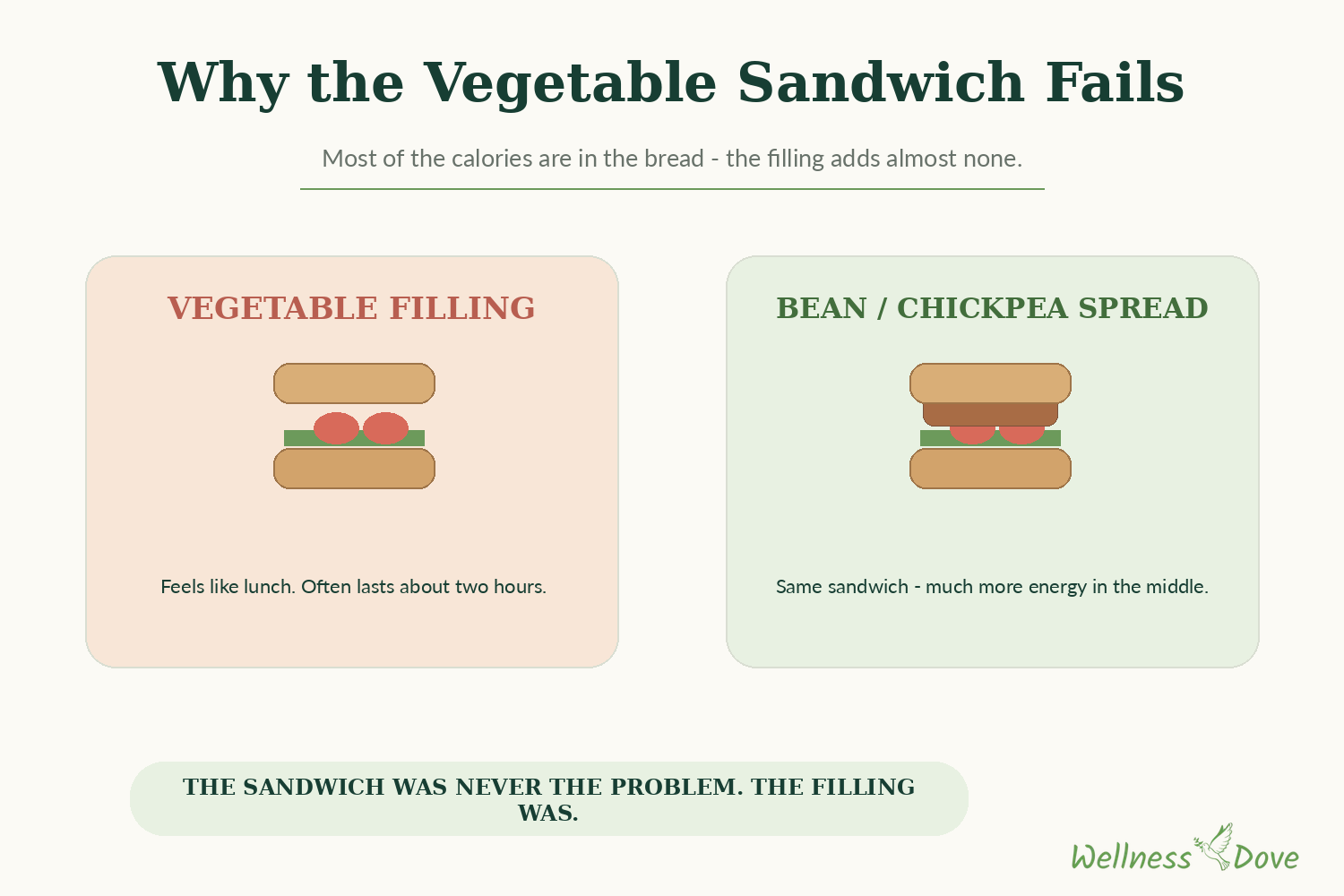
Avocado is the exception, at around 700 calories a pound, but almost all of that comes from fat. Beans or chickpeas do the same job with starch, and starch is what actually carries you through the afternoon.
The fix for lunch
It’s a real portion of starch, something like two to three cups of cooked rice, beans or potatoes inside the meal itself, not beside it.
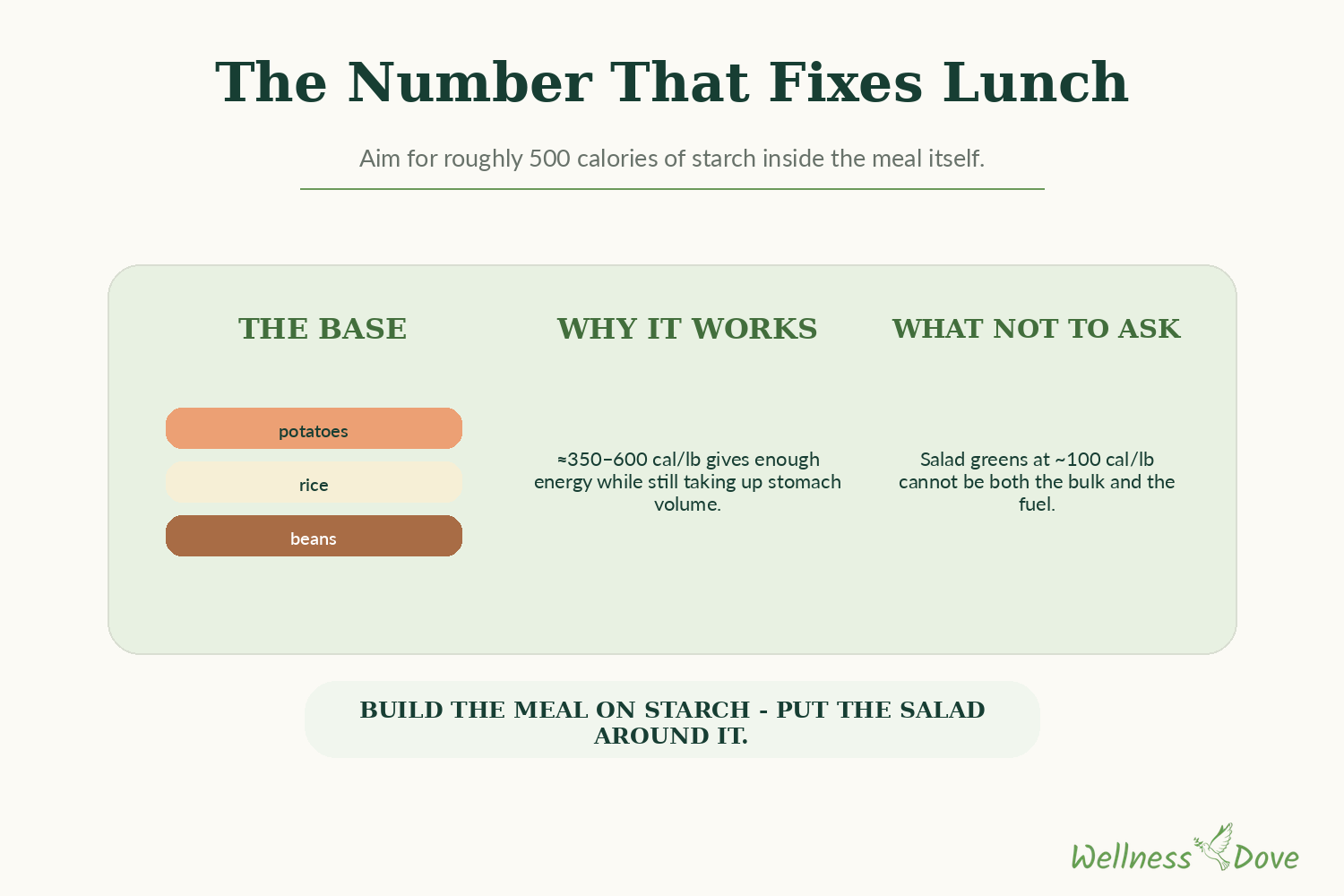
Potatoes, rice and beans land between 350 and 600 calories a pound, which is dense enough to fuel an afternoon and still light enough to fit in a stomach that holds about a liter. Salad greens at 100 a pound can’t do both jobs at once, and asking them to is the single most common way a plant-based lunch goes wrong. By half past three you’re hunting for something sweet, and you conclude that plant-based eating leaves you tired in the afternoons.
The sandwich was never the problem. The filling was! Put a thick spread of beans or chickpeas in it and the same sandwich carries twice the energy and holds you until the evening.
The three shapes that work
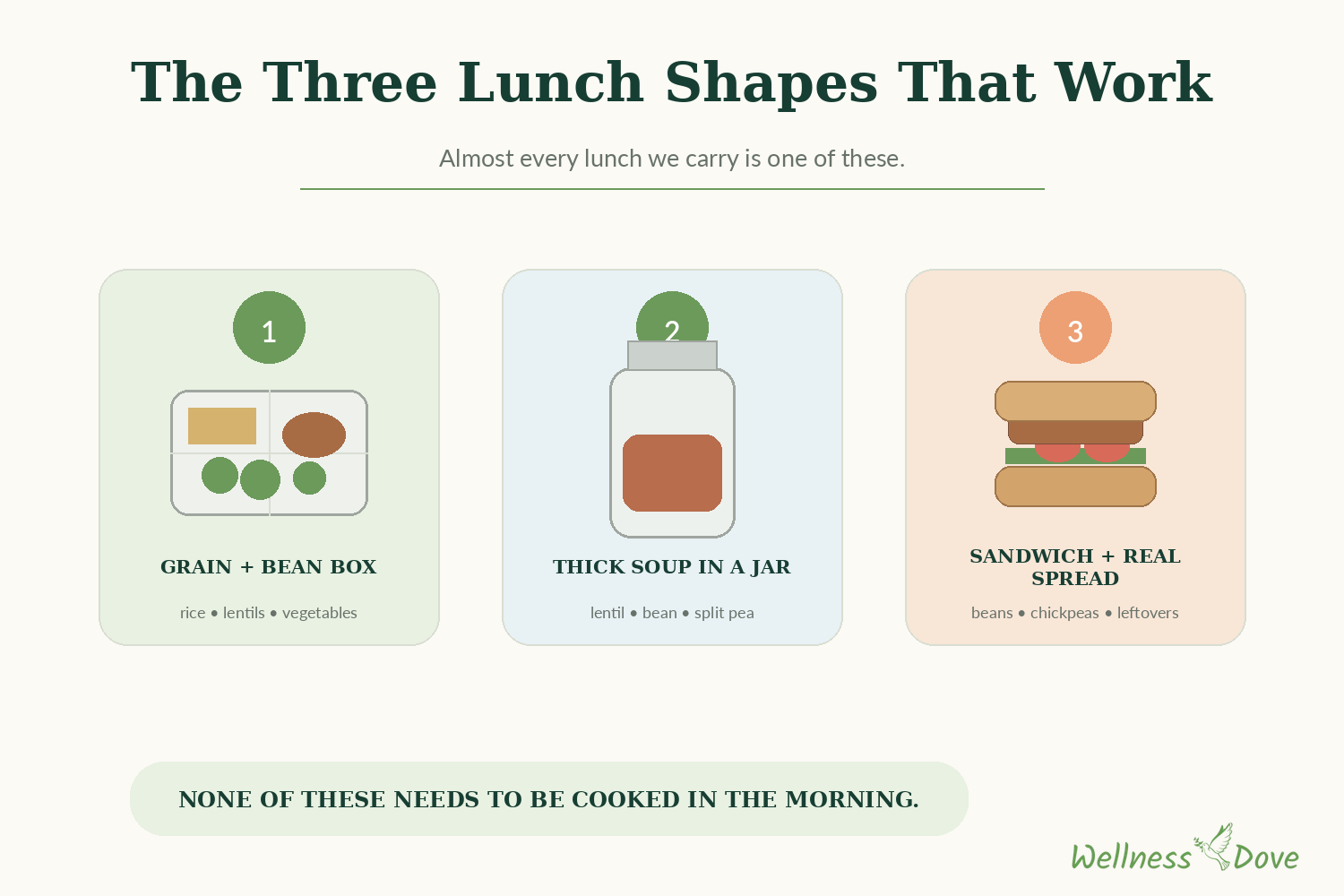
Almost every lunch we take out of the house is one of three things, and after nine years we haven’t felt the need for a fourth.
1. A grain and a bean in a box
Rice with lentils, quinoa with chickpeas, buckwheat with beans, whatever vegetables are around, and a spoon of tahini over the top.
2. A thick soup in a jar
Lentil, bean or split pea. They reheat well, and they travel better than people expect.
3. A sandwich with a real spread in it
Made from whatever we happened to cook the day before. None of these takes more than five minutes in the morning, and that’s because none of them gets cooked in the morning.
Cook once and carry the rest
Nothing we take out of the house was ever made for that purpose. The lentil soup was dinner on Monday. The rice was cooked on Sunday and has been sitting in the fridge since. The chickpea spread exists only because we had chickpeas left over.
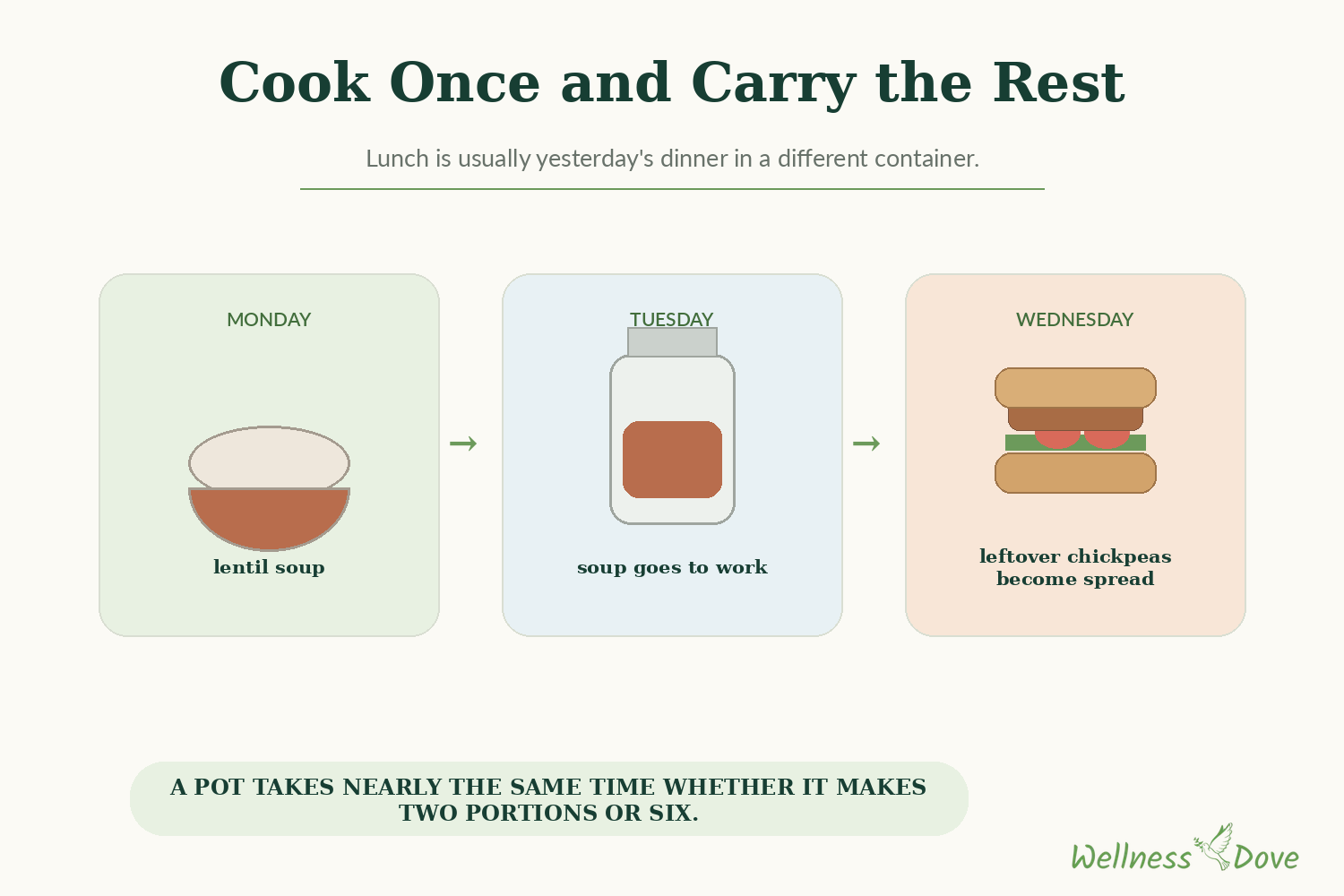
A pot of anything takes the same time to make whether you cook two portions or six. That’s the entire system, and it costs you nothing you weren’t already doing. Cooked grains, beans and soup all keep three to four days in the fridge, which is the USDA limit for any cooked leftover.
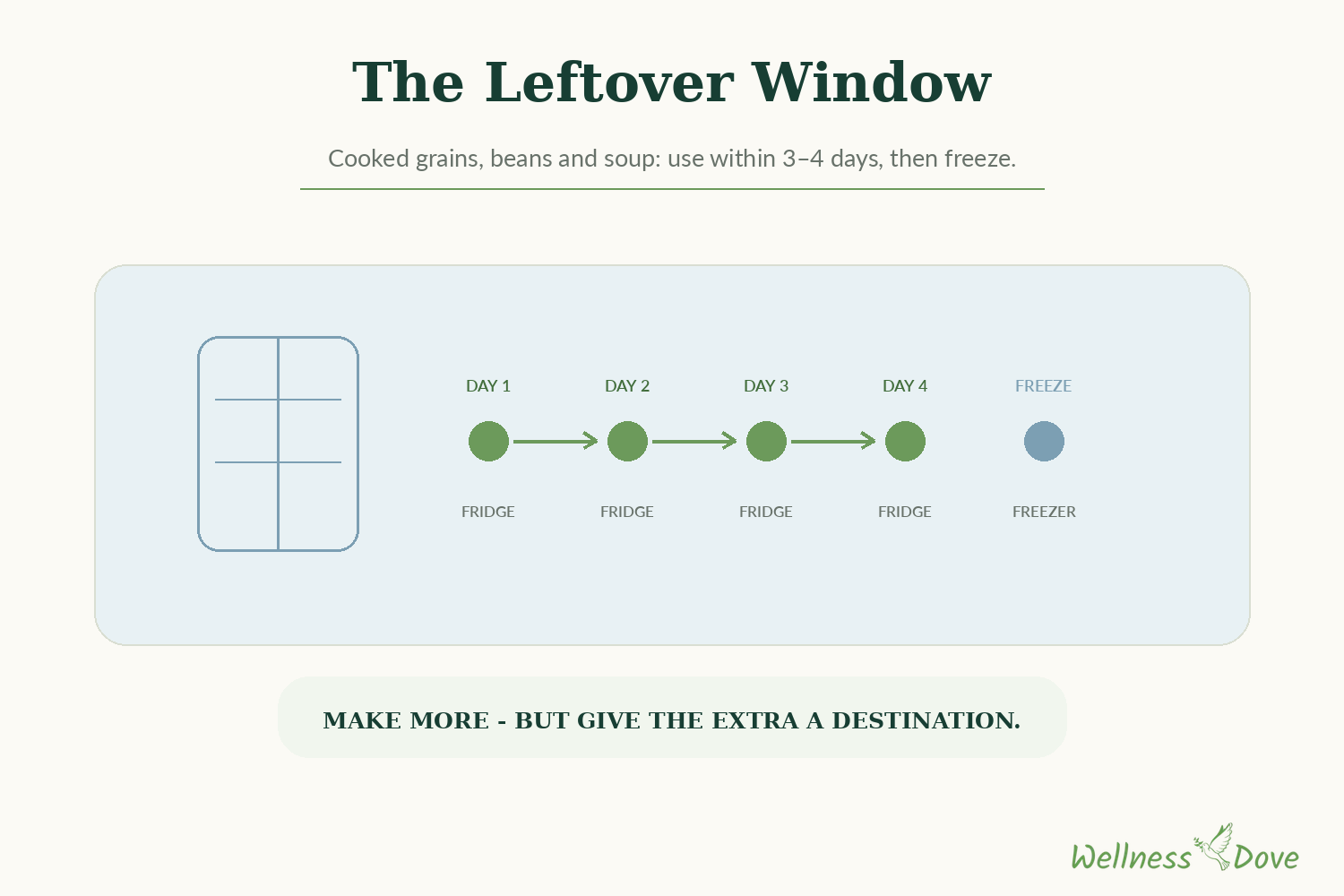
Freeze whatever is still there after that. Venny usually bakes a few sweet potatoes whenever the oven is already on for something else, and they end up in lunches all week.
The days you prepared nothing
Some days there’s nothing in the fridge and you’re already out of the house. It happens to us too.
What to look for when you are out
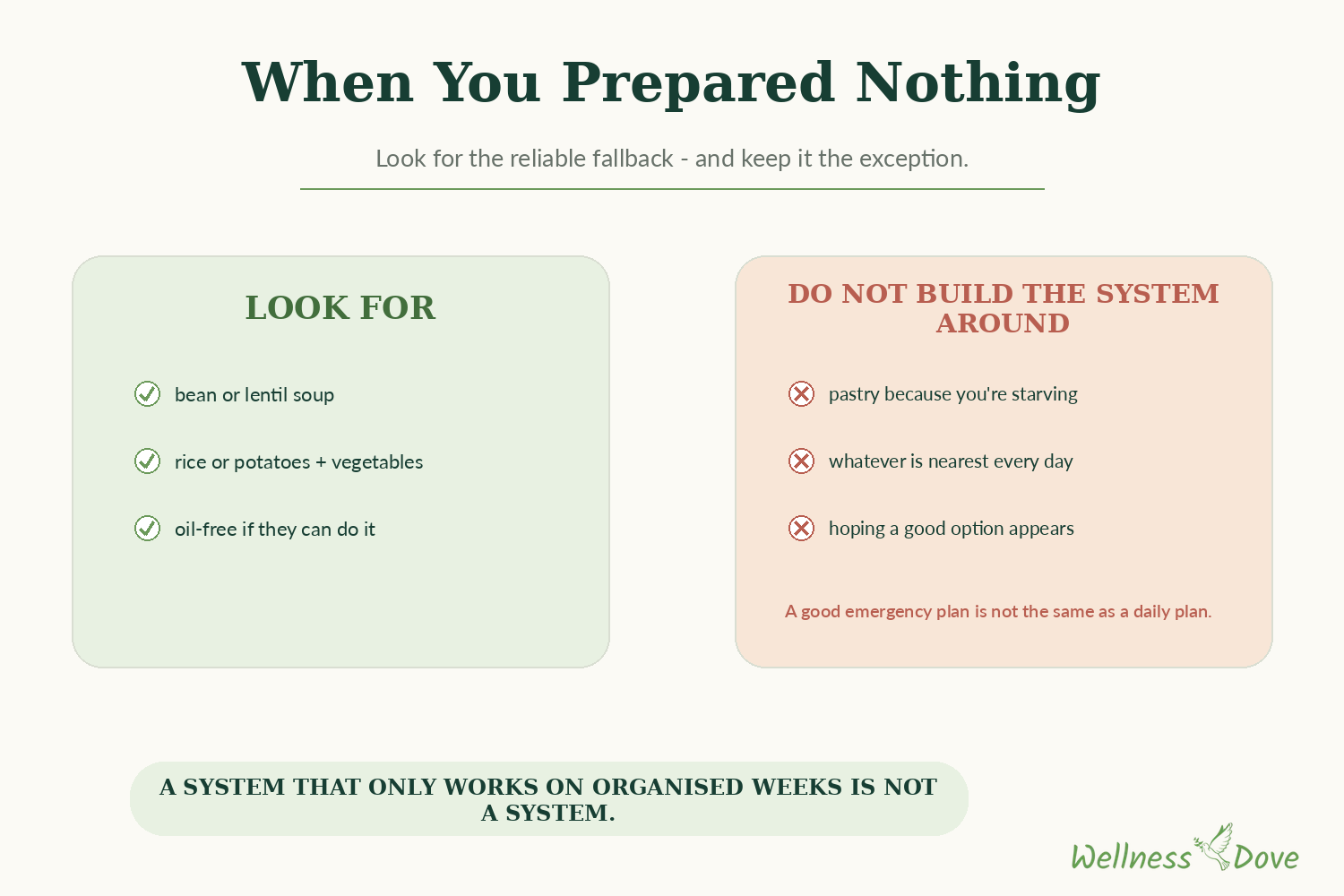
The most reliable thing to find in almost any town is a bean or a lentil soup. The second most reliable is a plate of rice or potatoes with vegetables. We ask for it without the oil, and quite often they’ll do it. When they won’t, it’s still a better afternoon than a pastry.
What matters to us is that this stays the exception rather than the plan. A system that only works during well-organized weeks isn’t a system at all!
And if the real damage happens later, in the evening you can’t account for, it usually starts at this meal too. We wrote about that here: Why Am I So Hungry at Night? (You Might Not Be).
Breakfast is the easier meal to fix, and it’s the one where a small change pays you back every single morning, so that’s where we go next.