

Almost everybody who changes their diet expects the wanting to stop. It doesn’t, or at least not right away, and that surprise ends more attempts than any practical difficulty does.
Somebody eats well for three weeks, finds themselves standing in front of the fridge at eleven at night thinking about cheese, and takes it as evidence that they’re not the sort of person who can do this. We’d say it isn’t evidence of anything, except that the food was working exactly as designed.
Why cheese in particular
Milk was never a neutral food. Cow’s milk is built for an animal that grows fast, with about three times the protein of human milk, and a Holstein heifer weighs around 660 pounds by her first birthday.
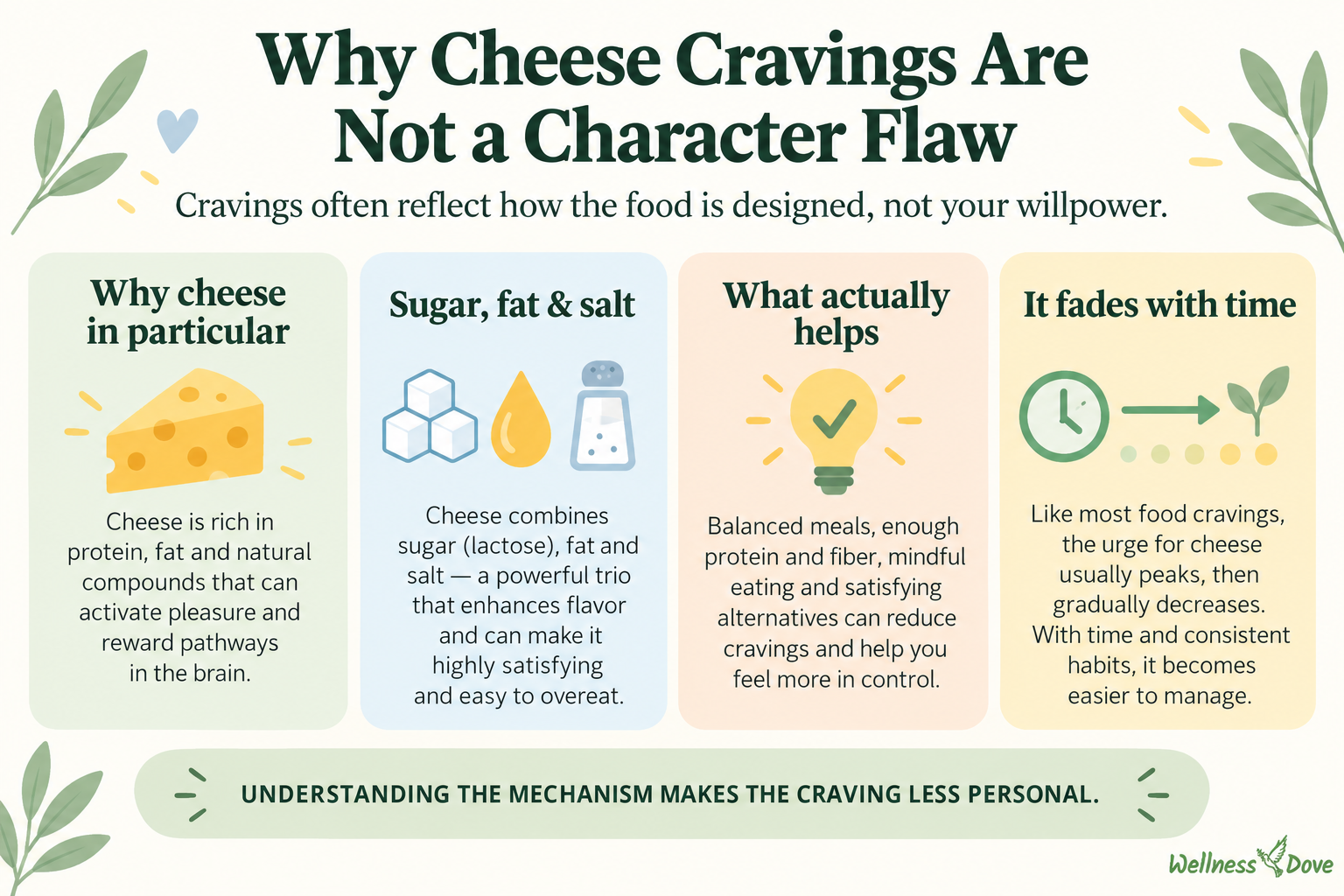
Cow’s milk releases peptides called casomorphins when it’s digested, and in laboratory and animal studies these bind to opioid receptors. Whether they reach the brain in meaningful amounts in adults isn’t settled, and when European food safety reviewers looked at all the evidence in 2009, they found no established link between casomorphins and any disease. What isn’t in dispute is the fat and the salt.
Cheese is milk with most of the water taken out of it. The casein doesn’t leave with the water, so cheese concentrates it roughly ten times over. That’s the whole trick: the same substance, made about ten times stronger, then salted.
Two numbers make the rest of it obvious. A cup of melted cheese is around 986 calories, which is roughly what a person would eat in a whole meal, and it arrives with no fiber at all, so there’s nothing in it to tell you to stop.
How strong the effect really is
It’s worth being calibrated about the opioid part, because it gets overstated everywhere. If casomorphins do anything in adults, nobody has shown it to be strong, so we would not lean on them. When researchers asked people which foods they find hardest to control, plain cheese came 16th of 35, well behind chocolate, ice cream and pizza. The pull is real, and most of it is the fat and the salt.
So you get the same compounds, concentrated, with a great deal of fat and a large amount of added salt on top. Fat, salt and concentrated protein arriving together is a combination that doesn’t occur in nature at anything like this concentration, and wanting it very much isn’t a moral failing on your part. It’s the expected result.
The three things nature made hard to find
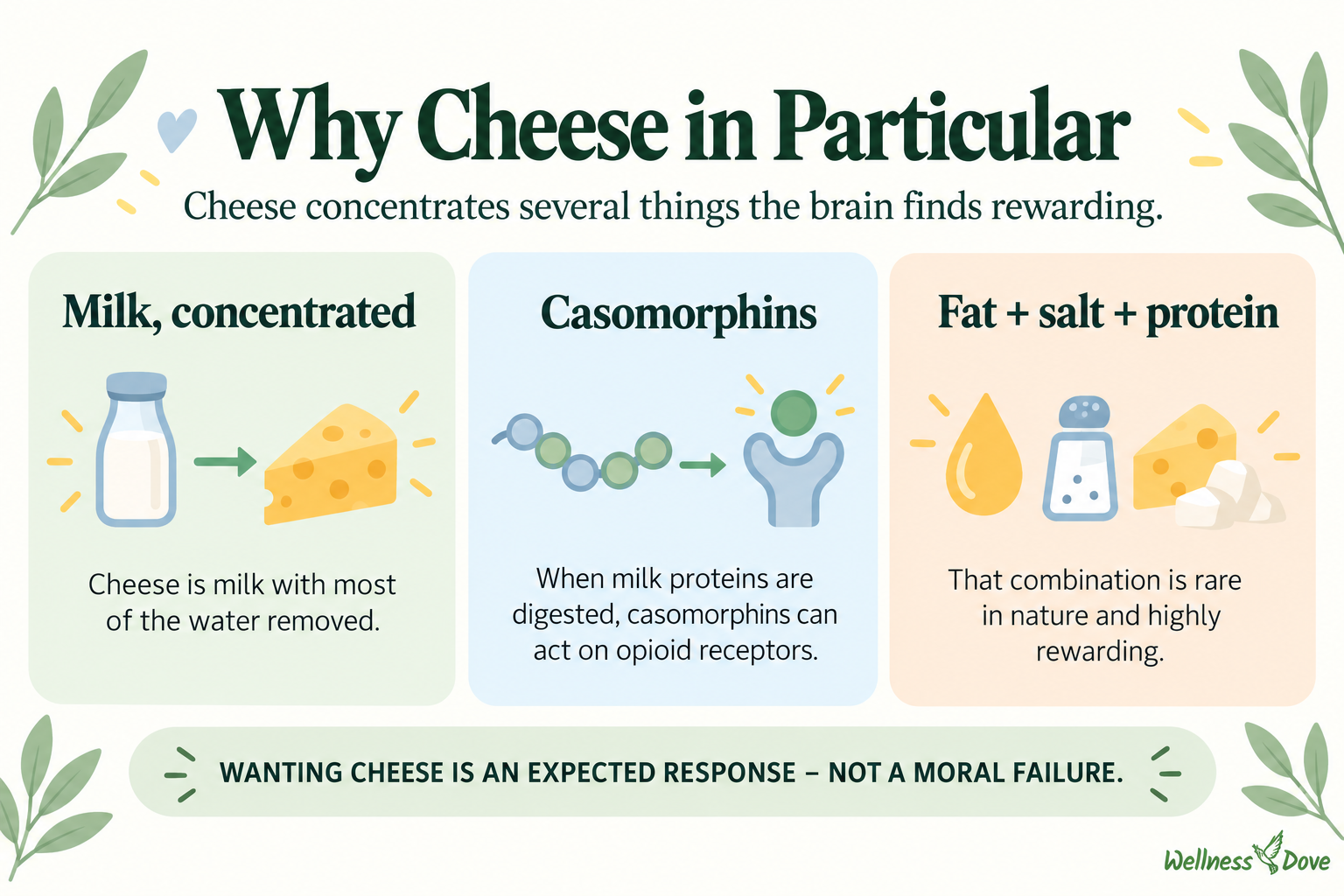
Almost all processed food is built out of the same three things, and they’re the same three things that were hardest to find for most of human history.
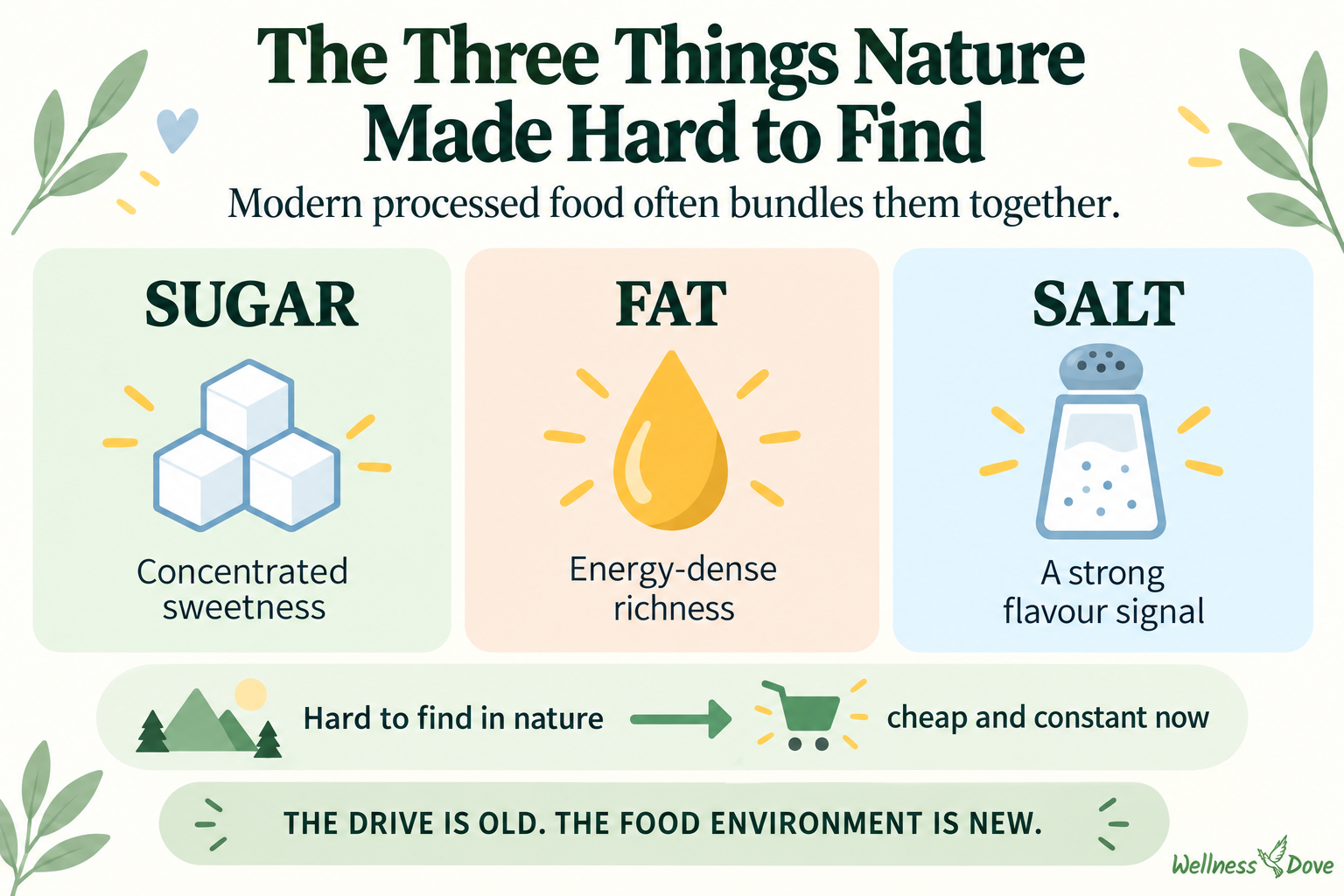
- Sugar, in concentrated form.
- Fat, separated from whatever it grew in.
- Salt, which almost nothing in nature offers you freely.
An animal that went out of its way for those three survived better than one that didn’t, so we’re all descended from the ones that went out of their way. We don’t think the problem is that the drive exists. The problem is that it was built for a world where finding those things took real effort, and now they’re in the next room and cost very little.
What helps
In our experience, understanding the mechanism helps more than people expect it to. A craving you experience as personal weakness is demoralizing, while a craving you recognize as an engineered response is merely inconvenient, and the second one is much easier to sit through!
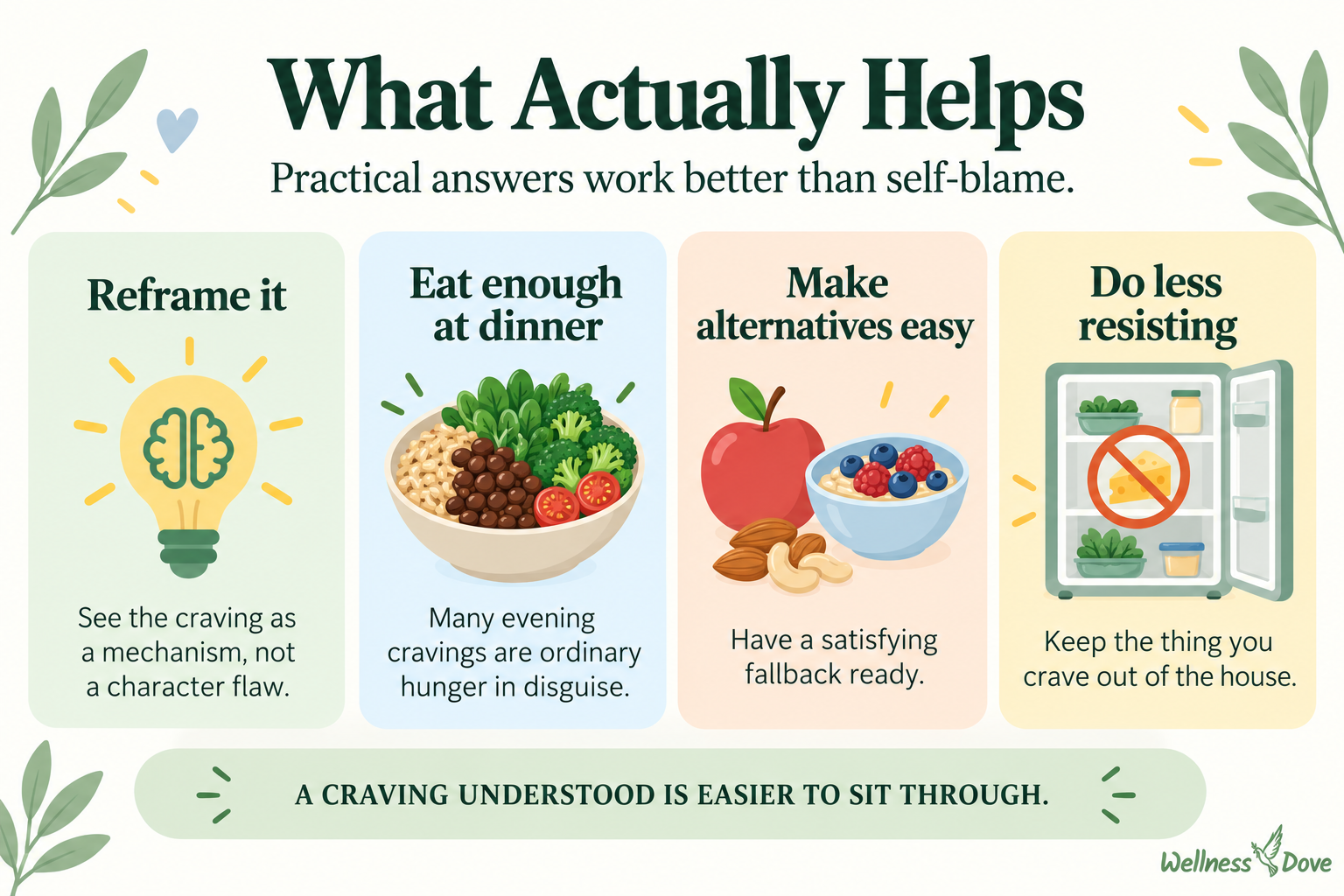
Beyond that, the practical answers we use are dull, and they work. Don’t arrive at the evening hungry, because most of what people call a craving at nine o’clock is ordinary hunger wearing a costume.
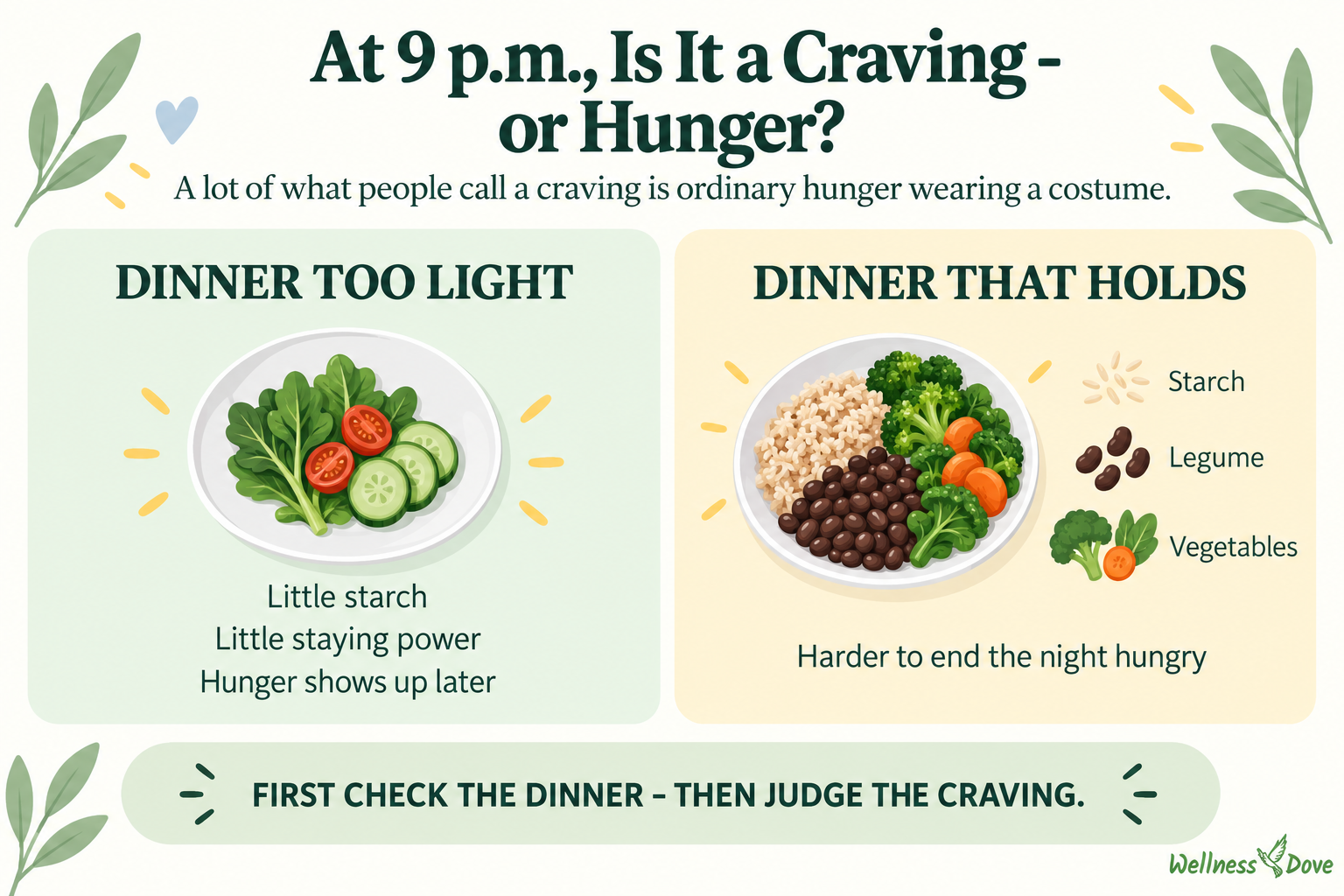
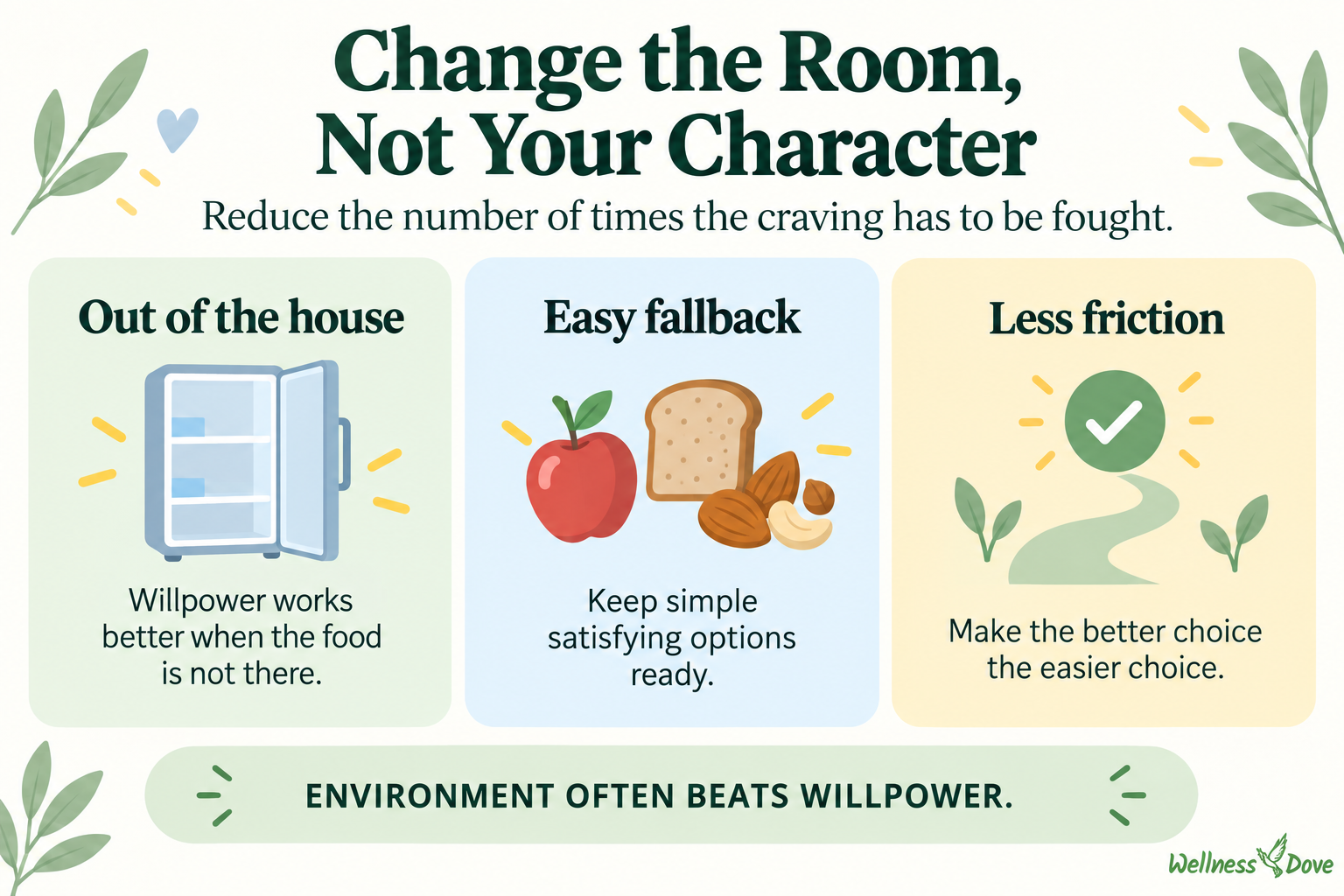
Make sure you eat enough at dinner, from the foods that carry weight. And keep the thing you crave out of the house rather than in the house being resisted, because a decision you never have to make is easier than one you have to win every evening.
The part nobody mentions
The wanting does fade, and it fades further than most people expect it to.
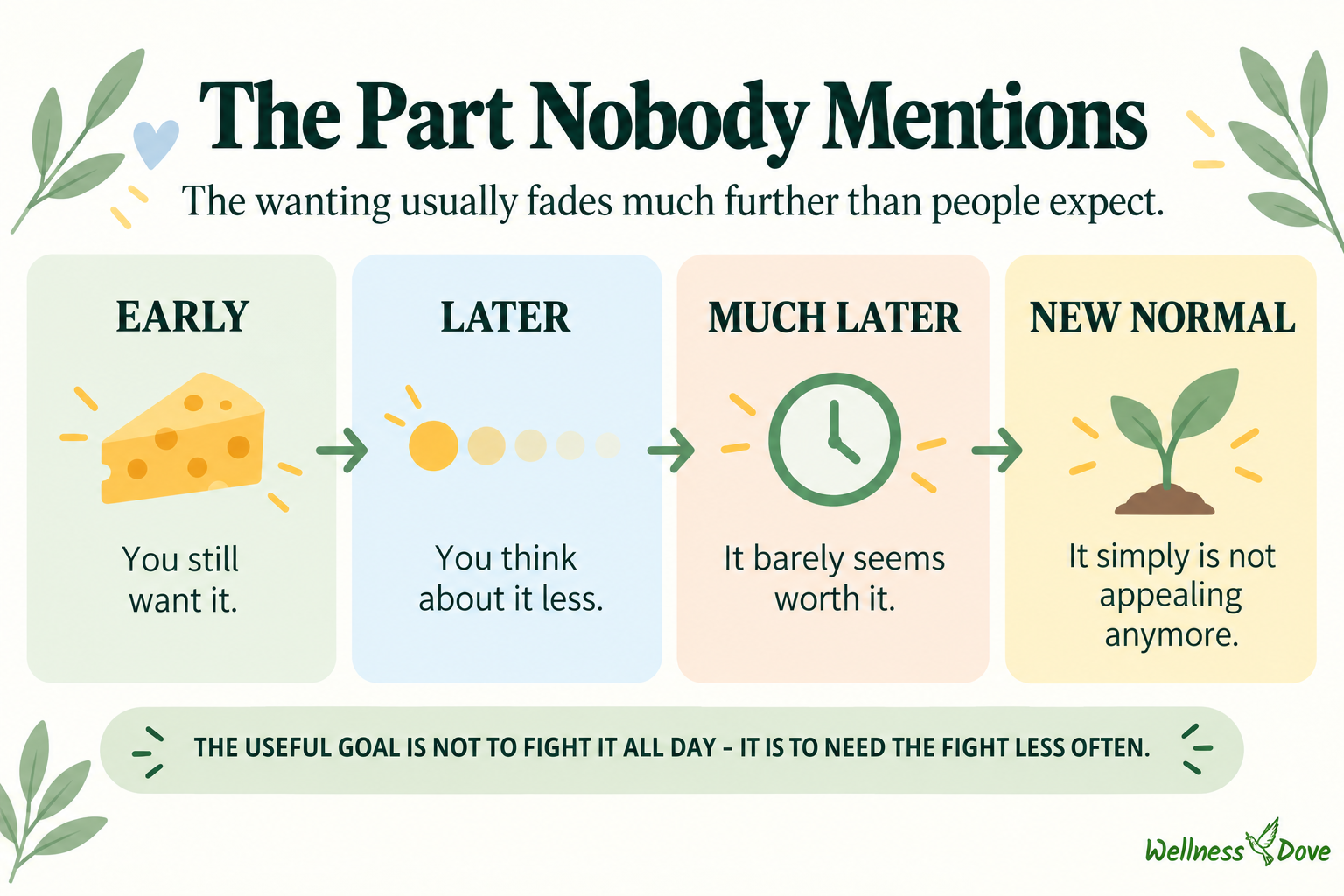
We don’t particularly want animal foods now, and that isn’t discipline. After a few years of eating this way, they just stopped being appealing.
How long it took us
That took considerably longer than two weeks, and we’d be lying if we said otherwise. The studies that have measured this point the same way. People who cut right back on salt, or on fat, found their tastes shifting over the following few months, until the old versions started to taste too salty or too rich. It worked best for the people who stopped tasting the old food altogether, not the ones who kept a little of it around.
In the meantime, the useful position isn’t to fight the craving but to stop arranging your life so that it has to be fought so often.
The hardest version of this isn’t the fridge at eleven at night, though. It’s other people, and that’s what we want to talk about next.