


Somewhere in the second or third month, the food stops being interesting. Not bad, just flat. You look at the same bowl of lentils you were so pleased with in week one and you feel nothing about it at all.
Almost everybody reads this as motivation running out and goes looking for new recipes. In our experience that’s the wrong diagnosis and the wrong fix, and it’s why so many people end up with a folder of two hundred saved recipes and nothing they ever make.
The short answer: Two different things get called boredom. One is taste recalibration, which arrives in weeks two and three and ends on its own. The other is a technique problem, and you fix it by changing how you cook the food you already have rather than by finding new food. Repetition isn’t the enemy, either. Most households run five or six dinners on rotation, and that’s normal.
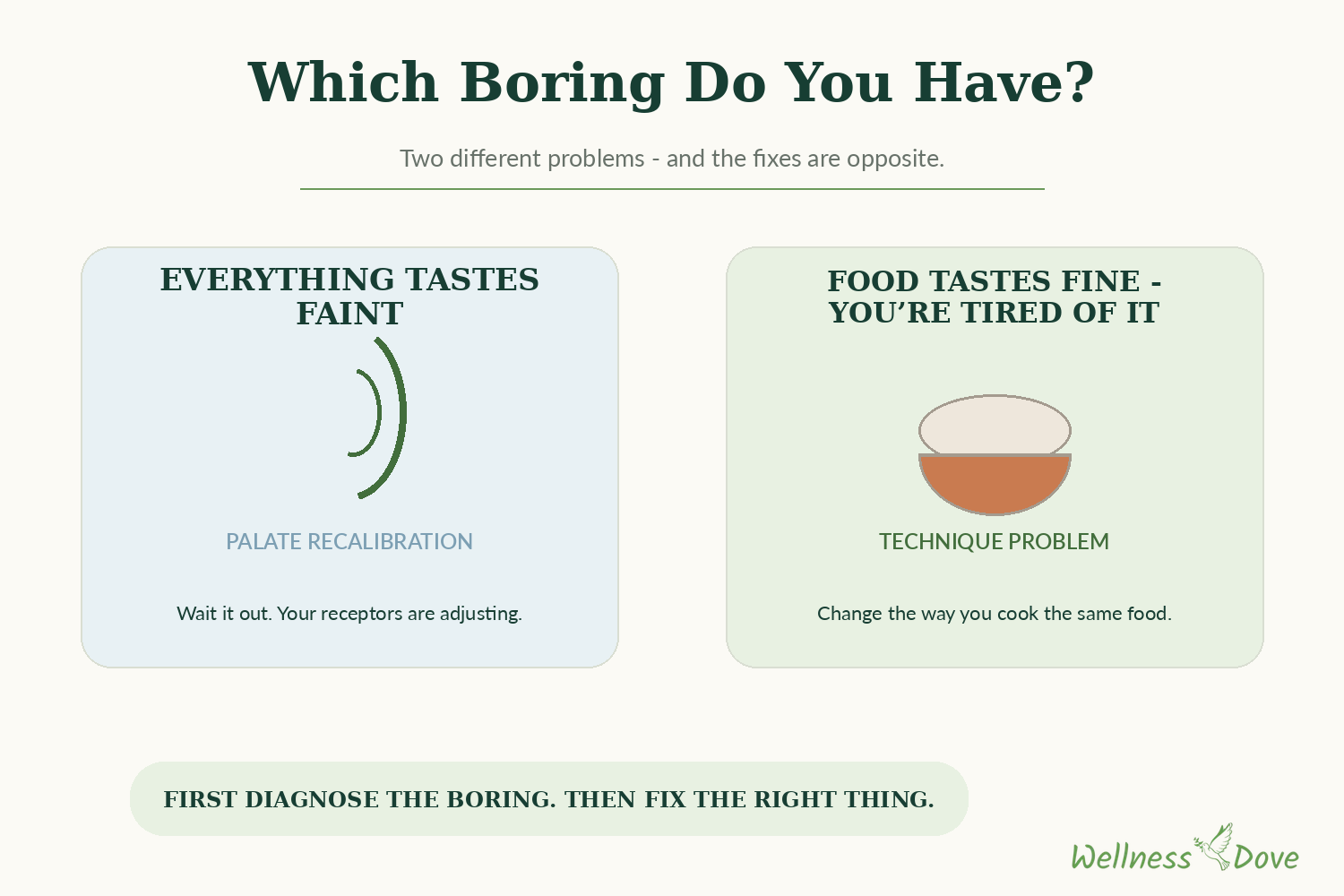
First, Work Out Which Boring You Have
There’s a real difference between the two, and the fixes are opposite.
Boring one: everything tastes faint
If everything tastes faint, including things you used to like, that’s your palate recalibrating. Processed food is engineered to hit salt, sugar and fat harder than anything that grows, and against that reference point real food does read as quiet for a while. What’s happening is that your receptors spent years turning themselves down to cope with the constant blast, and now the blast has stopped but they haven’t turned back up yet.
So for a couple of weeks you have the downregulated palate and none of the stimulation, and everything reads as quiet. It’s like stepping out of a rock concert. Your ears take a while to hear crickets again.
When your palate comes back
The receptors come back on their own clock, and the clocks have been measured.
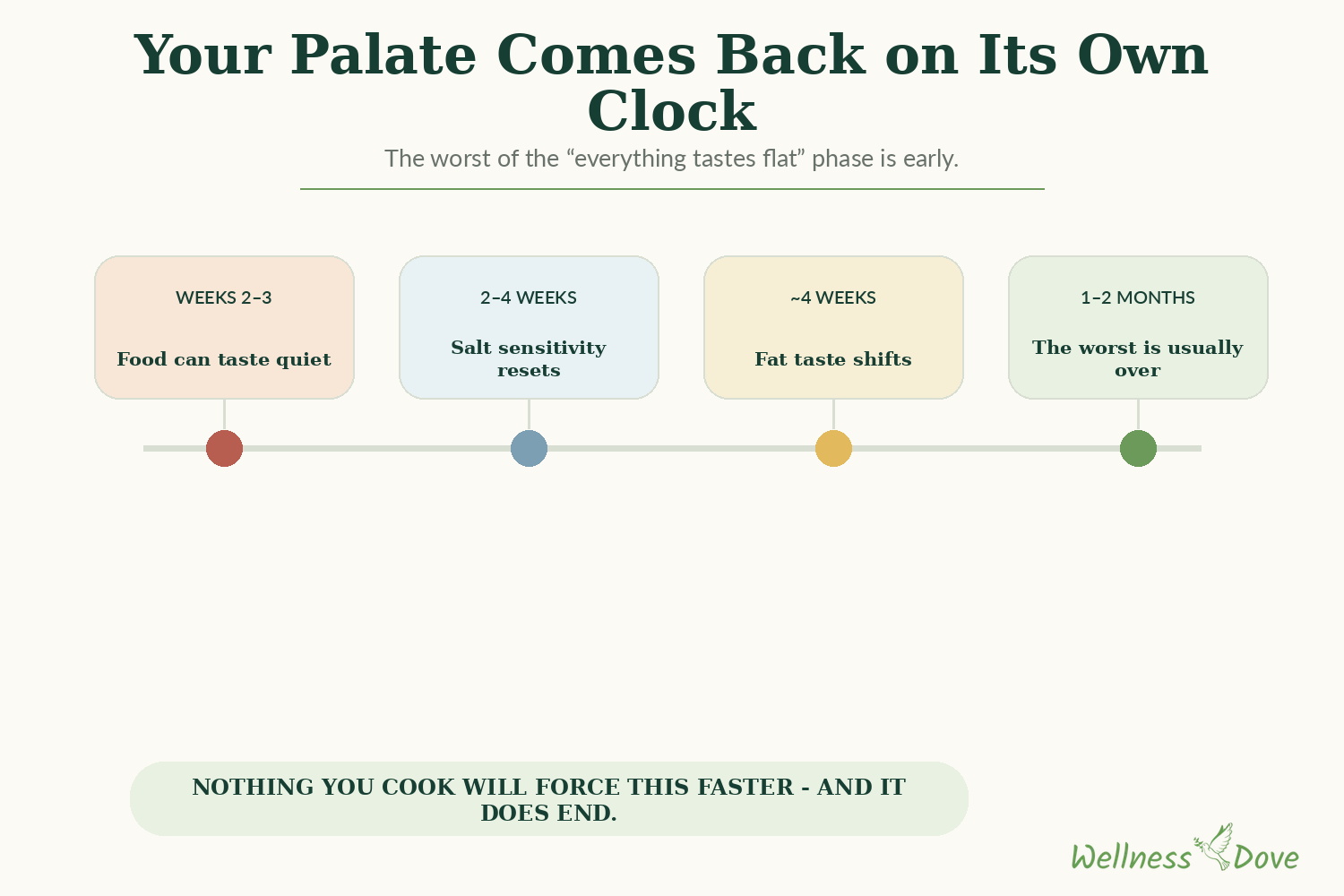
Salt takes longer than people expect. In the studies, it took about two to three months of eating less salt before people preferred less of it, and after that they genuinely preferred it rather than just tolerating it. Fat taste is quicker. In one small trial, four weeks of lower-fat eating made people measurably more sensitive to fat, better at noticing small differences in how rich a food was.
So the worst of it is early, and it usually resolves within two or three months. We have written out the whole timeline here. Nothing you cook will fix it faster, and it does end.
Boring two: you’re just tired of it
If the food tastes fine but you’re tired of it, that’s a different thing entirely, and the rest of this post is about that.
Repetition Is Not the Problem
This is worth saying plainly, because the internet suggests otherwise every single day. Most households lean on a short list of meals they repeat week after week, whatever diet they eat.
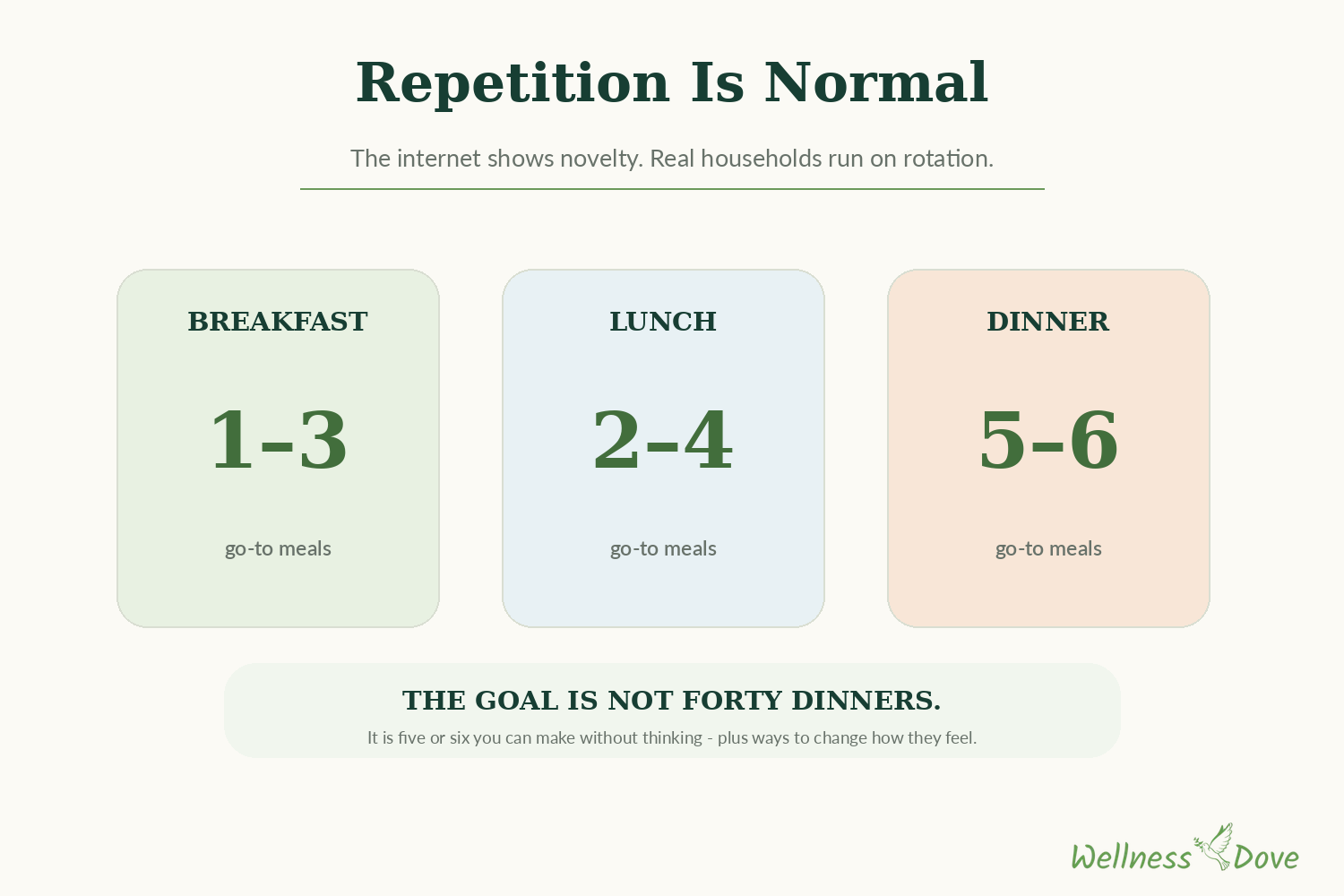
Nobody should call that a failure of imagination. It’s how people eat, and it always has been. Our own week is more repetitive than anybody would guess from a recipe site, and the repetition is exactly what makes it survivable. When the food is decided in advance, the tired Wednesday costs you nothing.
So the goal was never forty dinners. It’s five or six that you can make without thinking, plus a way to make each of them feel different.
Four Techniques That Change a Meal More Than a New Recipe Does
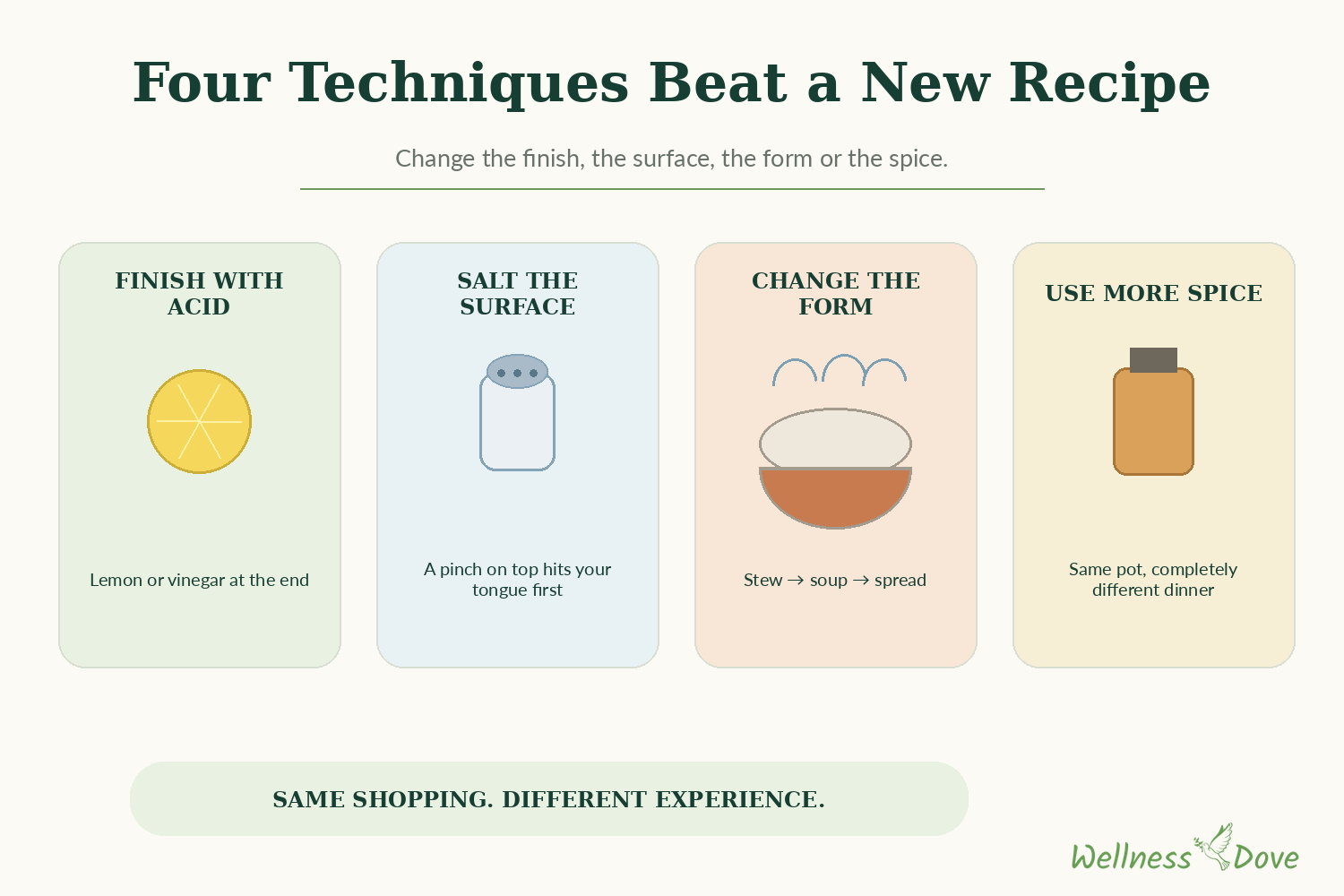
Finish with acid
Lemon or vinegar, added at the end rather than during cooking. Acid does much of what salt does from a different direction, and it’s the single most reliable rescue we know for a pot of something that tastes of not very much.
Salt the surface, not the pot
Salt stirred into a stew gets distributed through the whole thing, and most of it never reaches your tongue. Salt sprinkled on top hits your tongue first, so a little on the surface tastes saltier than the same amount stirred in, and you can get away with using less.
Change the form, not the ingredients
This one surprised us, and it has a measurement behind it. Researchers at Penn State gave women the same 270-calorie starter before lunch, either a chicken and rice casserole with a glass of water or the same casserole with that water stirred in as soup. After the soup, they went on to eat about 100 fewer calories at lunch, roughly 290 instead of 400.
Identical ingredients, identical water, and only the physical state of the food was different. A separate study in Nottingham watched it happen on MRI: when a chicken and vegetable meal was blended into soup, it stayed in the stomach longer than the same meal eaten with a glass of water, and people felt less hungry for the next three hours.
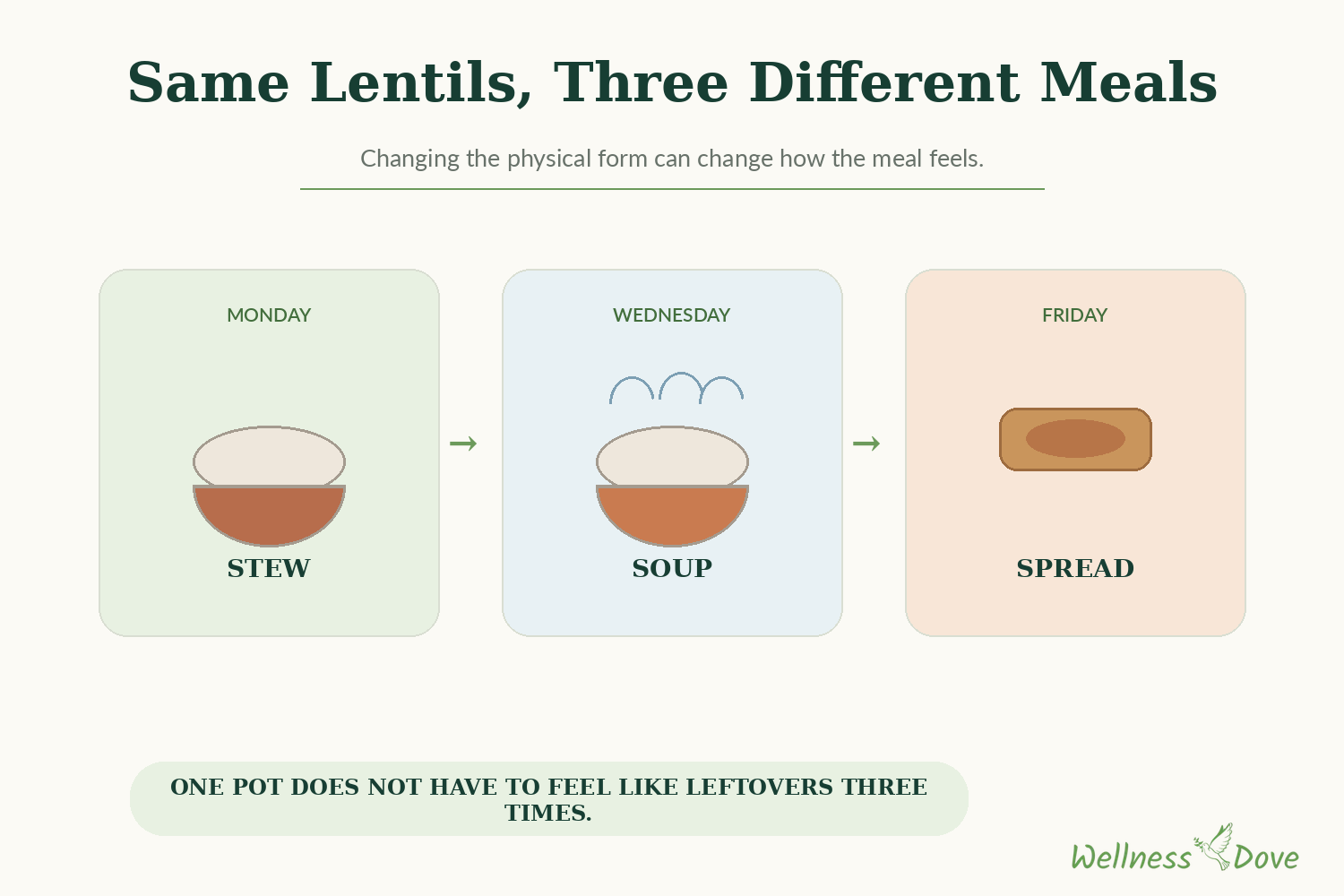
Which means the same lentils can be a stew on Monday, a soup on Wednesday, and a spread on bread on Friday. Three meals from one pot, and the third one doesn’t feel like leftovers.
Use twice the spice you think
Most of us under-season, and then conclude the food is boring. The same pot of lentils is a completely different dinner with cumin and coriander, with paprika and garlic, or with curry powder and a squeeze of lime, and nothing about the shopping has changed.
Chop your onions and garlic and then leave them alone for ten minutes before they go in the pan. The sulfur compounds that make alliums useful only form once the cells are broken open, and heat applied right away shuts the reaction down. Broccoli and cabbage want longer, closer to forty minutes, if you have the time. Cut, wait, then cook.
A Target Worth Having Instead of a Rule
If you want something to aim at that isn’t a restriction, this is the one we like. One of the largest citizen-science gut studies, the American Gut Project, with more than 10,000 people, found that the number of different plants people ate told researchers more about their gut bacteria than whether they called themselves vegan or omnivore.
People who ate more than thirty different plants a week had more varied gut bacteria than people who ate ten or fewer.
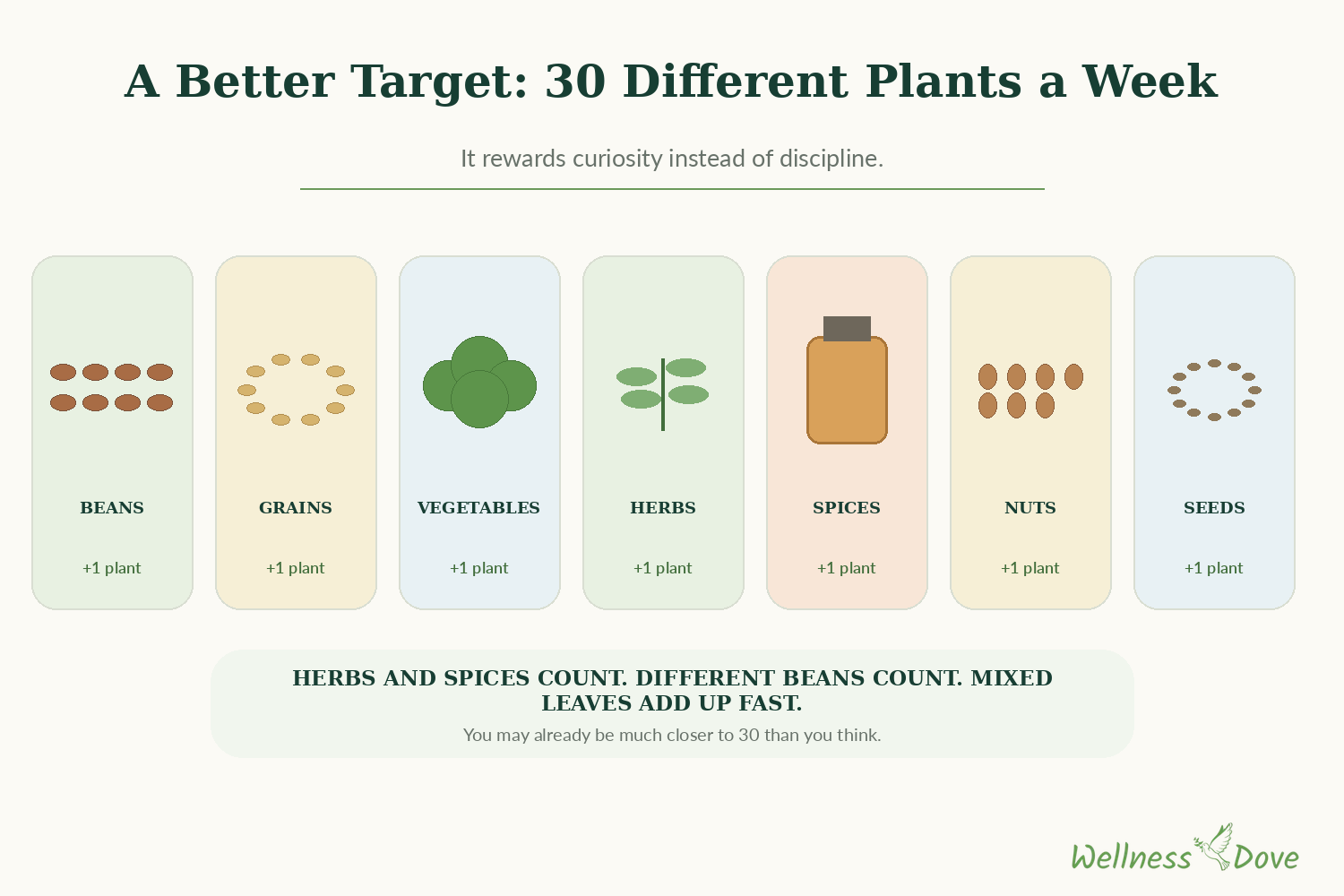
Thirty sounds like a lot until you start counting properly. Herbs count, spices count, and every different bean, grain, nut and seed counts. A handful of mixed leaves is often four or five on its own. Count one week carefully and you’ll probably find you’re at eighteen or twenty, and that getting to thirty is a matter of buying a different bag of lentils rather than learning to cook.
It’s an observation rather than a prescription, and we like it because it rewards curiosity instead of discipline.
Two Small Things to Know
Cook your starch the day before
Potatoes and rice are better cooked the day before and eaten cold or reheated. Cooking a starch and then cooling it changes its physical structure, and some of it becomes resistant starch, which passes into the large intestine and feeds your gut bacteria instead of being absorbed. Lower glycemic load, more food for the microbiome, and no extra work.
Berries and starch
Berries are often said to slow the digestion of starch. They do inhibit the enzyme that breaks it down in a test tube, but in people it’s less clear cut. When researchers fed volunteers raspberries and blueberries with pancakes, the berries did nothing measurable to the blood sugar response. The effect holds up better against sugar than against starch. So put them on the oatmeal because they taste good and bring their own fiber, not because they’re canceling the oats.
And If You Really Dislike Something
Give it fifteen tries before you decide.
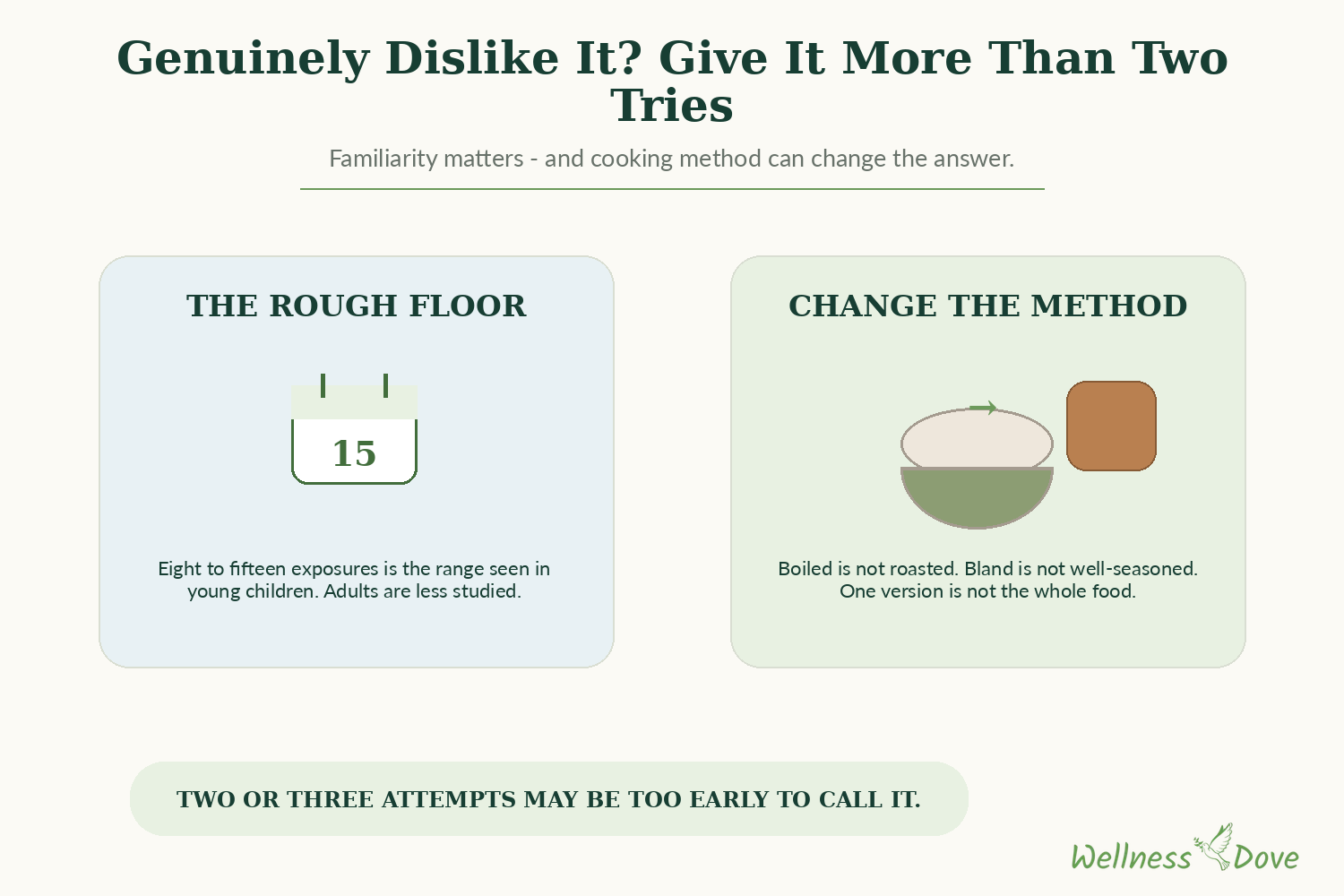
That number comes from research on young children, where eight to fifteen tastes is the usual advice before deciding a child dislikes a food. The adult research is thinner, but it points the same way: liking tends to grow the more often you taste something. Parents of toddlers usually give up after three to five tries, well before that point.
Roasted rather than boiled, and with a little salt on the outside, Brussels sprouts win over a lot of people who swore they hated them.
What We Wouldn’t Bother With
Themed weeks, food journals, tracker charts and challenges.
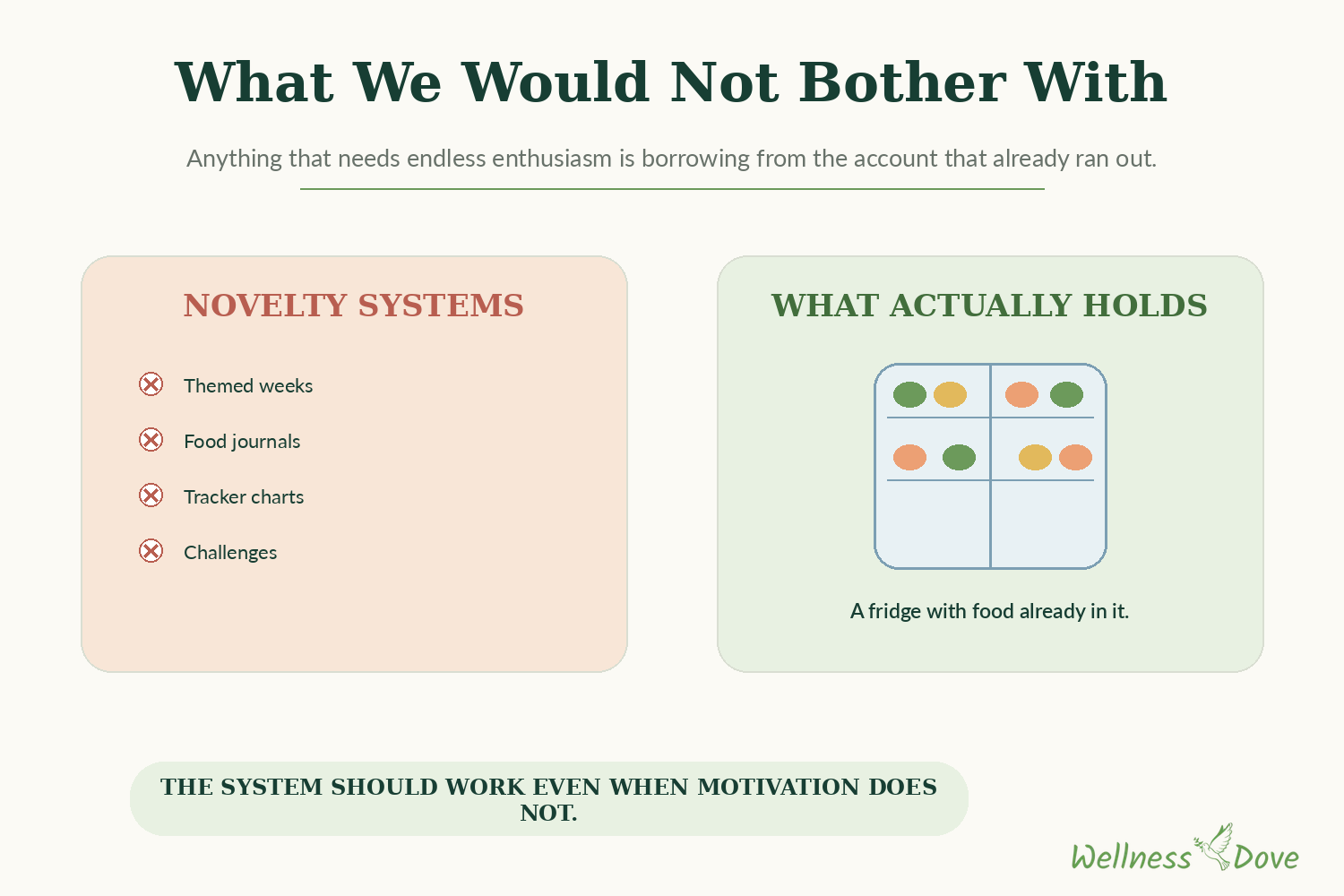
They work while the novelty lasts, which is roughly as long as the motivation you were trying to replace. Anything that requires you to keep up enthusiasm is borrowing from the same account that ran out in the first place.
The thing that actually holds is a fridge with food already in it.
And, always, seek health consciously.