


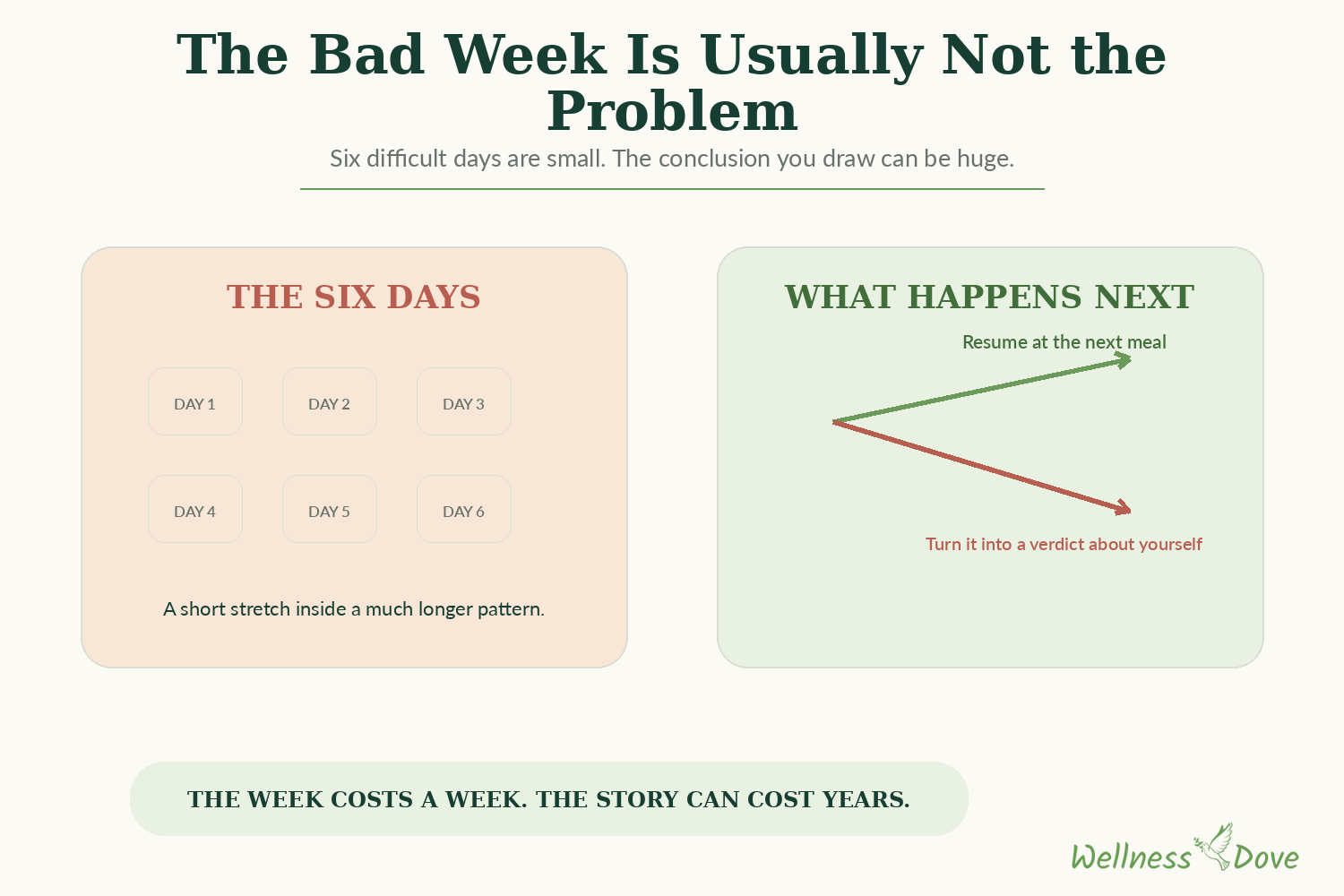
More attempts at eating well are ended by a bad week than by any particular food. We’ve watched the pattern repeat, and it’s remarkably consistent. Somebody eats well for a month, then has a vacation, an illness, a rough stretch at work, or just a week where nothing goes to plan. They eat badly for six days. Then, instead of picking back up where they left off, they conclude that they were never really doing it, and the whole thing stops.
In our view the six days did almost nothing. The conclusion did all the damage.
Where the thinking goes wrong
Diets get sold as states you’re either in or out of, so people end up treating eating as a matter of identity rather than of frequency. Once it’s an identity, a bad week stops being a bad week. It becomes evidence about what sort of person you are, and that’s a much harder thing to recover from than a few days of bad food.
Andy spent years on that particular treadmill before any of this. He had lost weight through sheer willpower before, and it never lasted, because a system that runs on effort eventually runs out of it. What kept the weight off in the end wasn’t more determination. It was eating food that didn’t require any.
The two sentences that decide what happens next
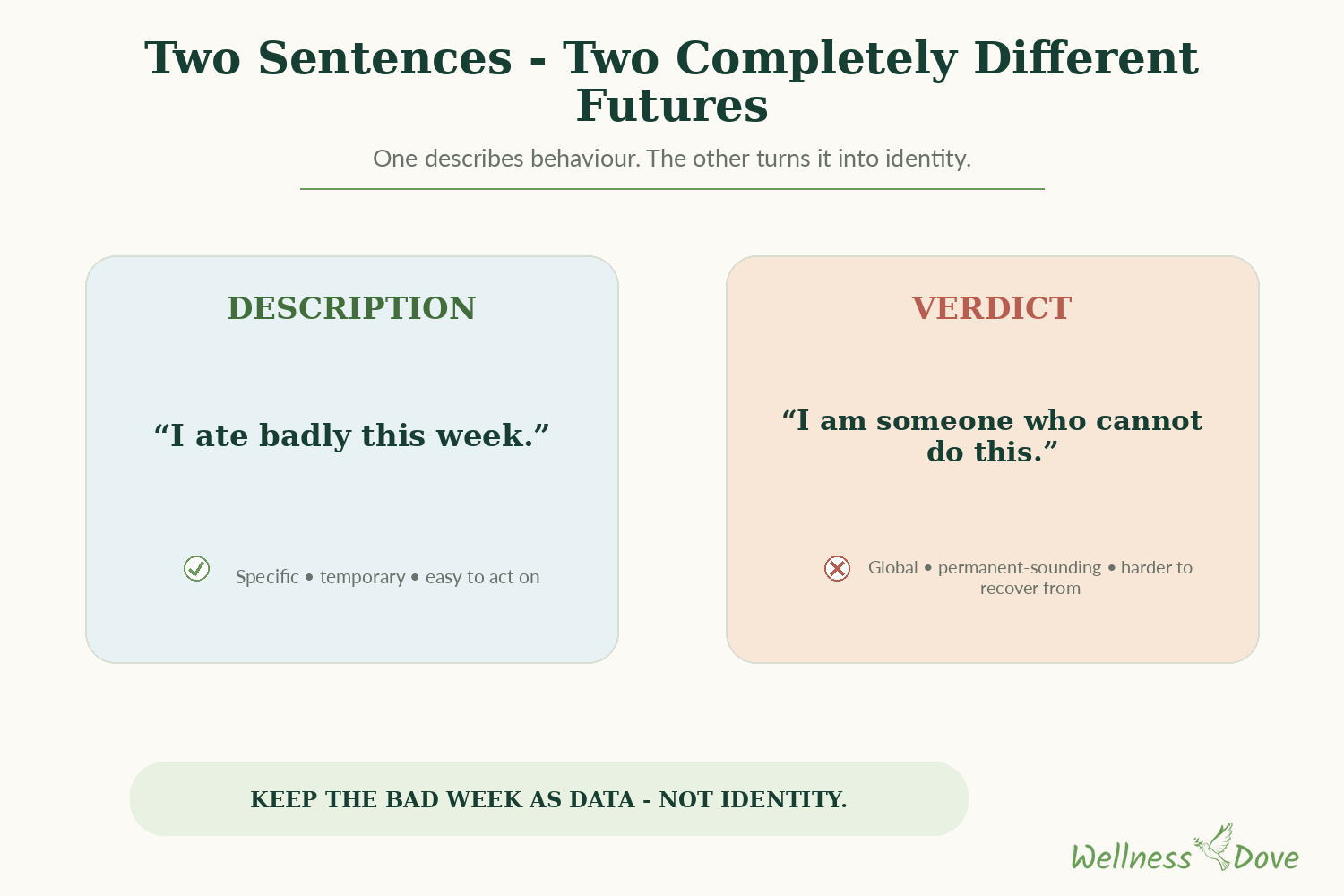
There are two sentences people say after a bad week, and they have completely different futures. “I ate badly this week” is a description. “I am someone who can’t do this” is a verdict. The first one costs you a week. The second one can cost you years, and it’s the one almost everybody reaches for.
The habit research is unusually blunt about this. When researchers in London tracked 96 people forming a new daily habit, missing a single day didn’t measurably slow how automatic the habit became. One day is nothing. The study didn’t test what happens after that, but our rule of thumb is that the risk is the second miss, because by then you may have decided something about yourself.
So the rule we use is never miss twice, and the comeback is the next meal rather than Monday.
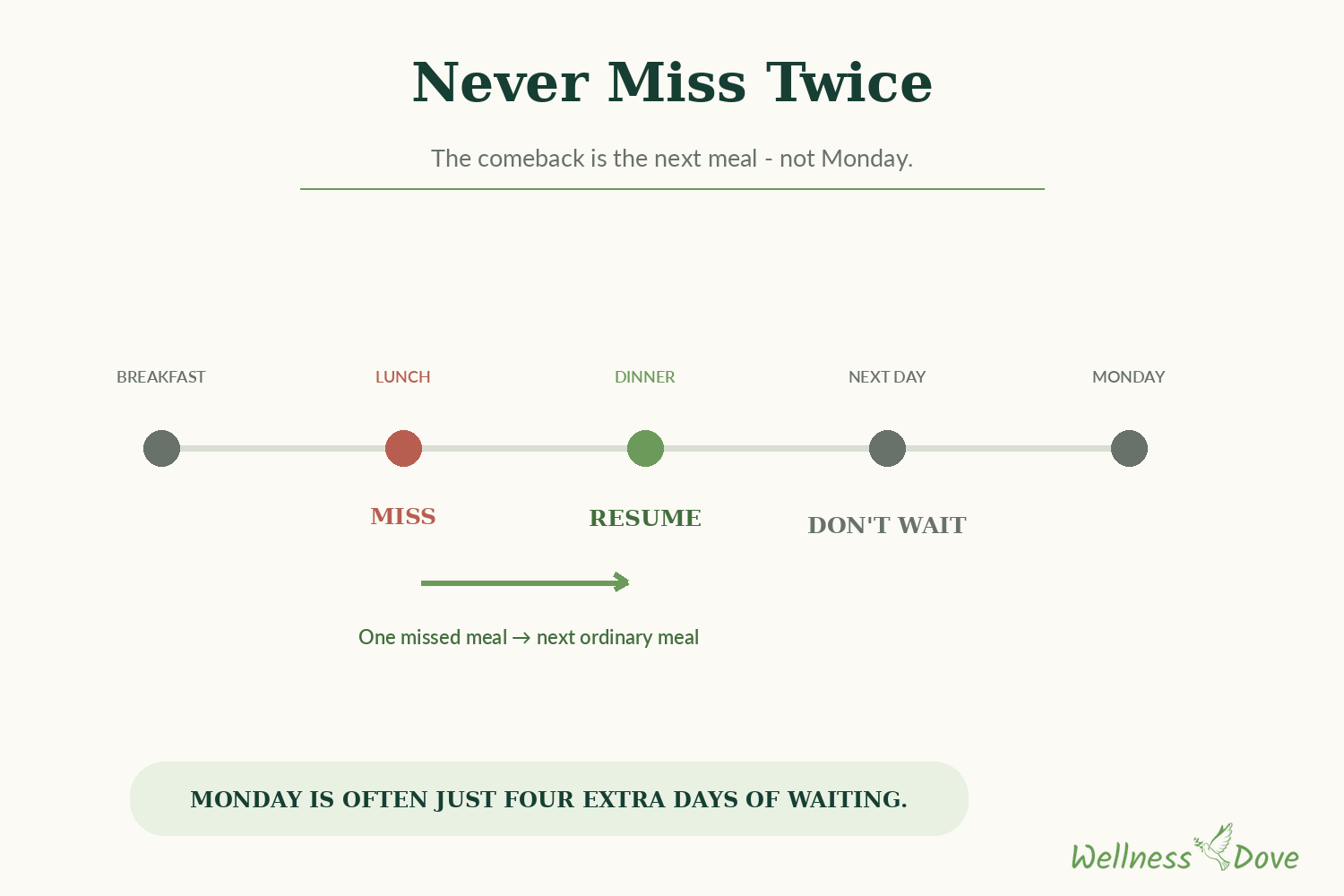
Waiting for Monday means spending four days deciding that you’re the sort of person who waits for Monday, and that’s a decision too.
What really accumulates
Your body responds to what you do most of the time, and that’s the part people forget. Blood pressure, cholesterol, inflammation and weight all follow the average of many months, not the worst few days inside them. Six bad days inside a good year is under two percent of your meals.
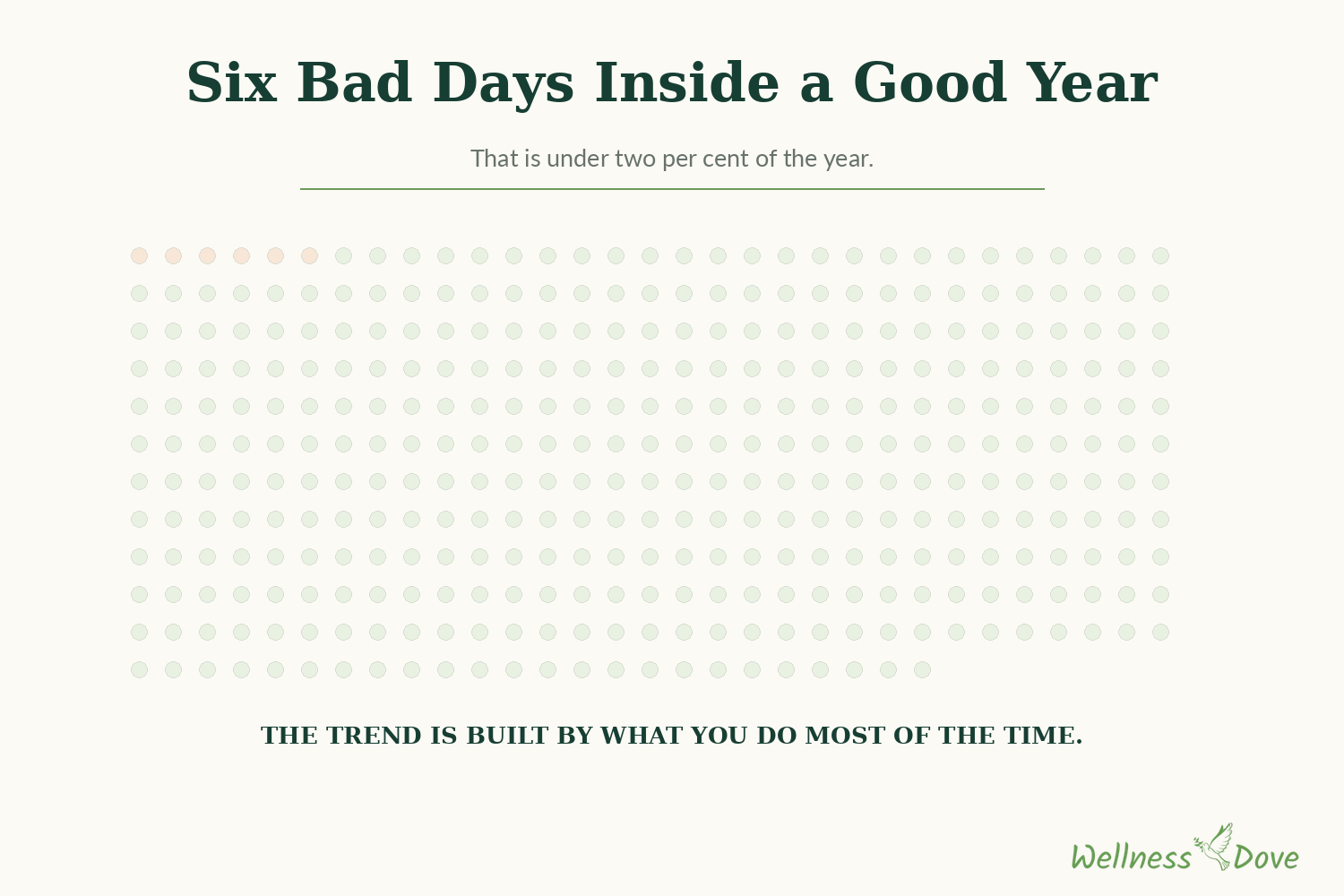
Your body does notice a rich meal for a few hours, but it doesn’t keep score, and the idea that six days undo a good year isn’t how the arithmetic works. We’d go further than that. A person who eats well eighty percent of the time for ten years will be in far better health than one who eats perfectly for four months and then stops for good.
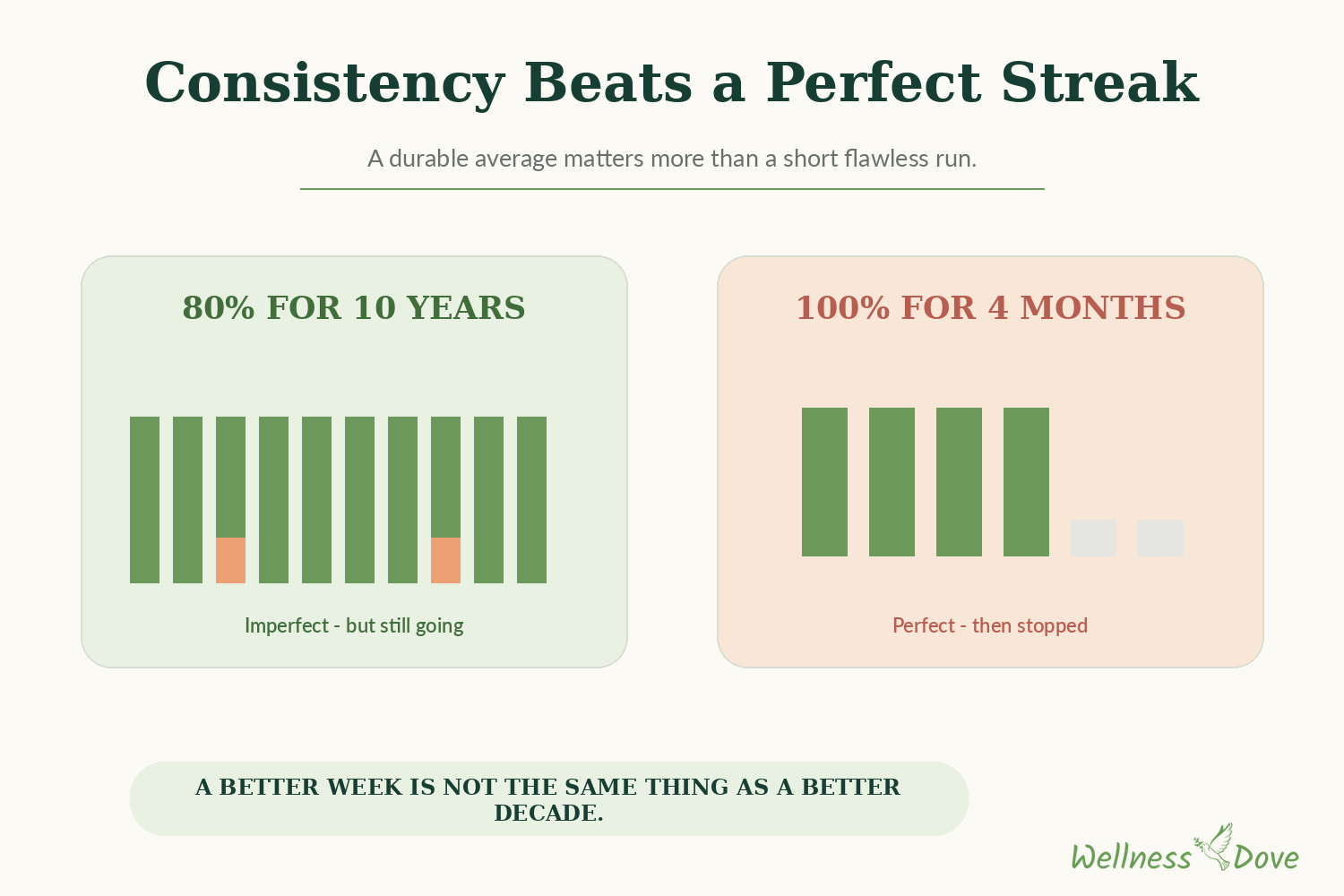
Put another way, the second person gets the better week and the worse decade, and we know which of those we’d rather have.
Getting back is not a project
The recovery doesn’t need to be dramatic, and it shouldn’t be. There’s no reset, no cleanse and no atonement required after a bad week, and we’re suspicious of anybody who’s selling you one.
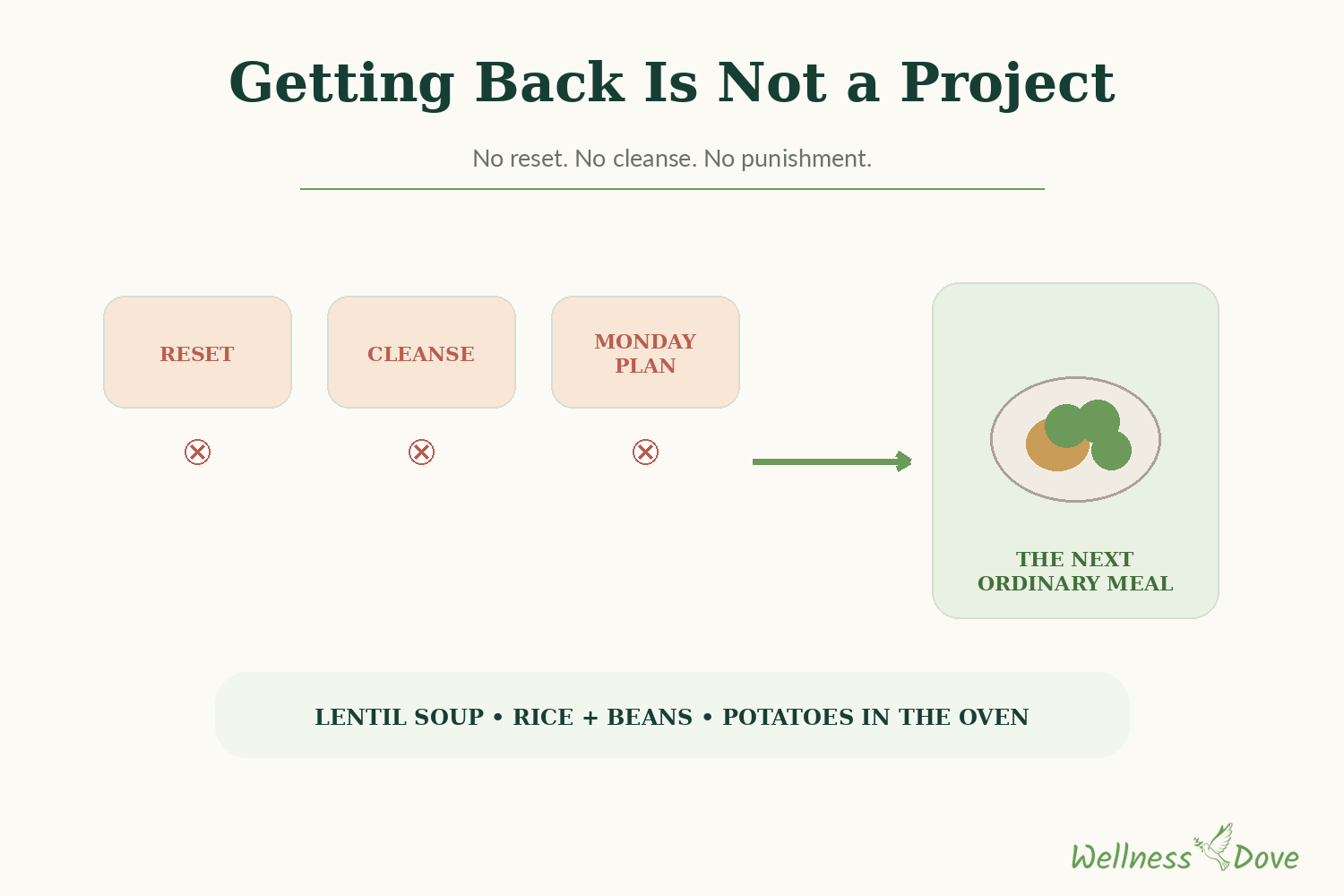
You just cook the next meal. If the fridge is empty, which after a bad week it usually is, the useful move is to cook one pot of something familiar rather than plan an ambitious fresh start for Monday. Lentil soup. Rice and beans. Potatoes in the oven.
We’d say the next ordinary meal is the entire recovery. Treating it as anything more than that is what turns a bad week into a bad year.
Being unimpressed by your own progress
The other thing to mention is that this eventually stops feeling like an achievement, and that’s the goal rather than a loss. For the first few months you notice every meal, because each one is a decision. Later on the food is just what you eat, and you’d no more congratulate yourself for it than for brushing your teeth.
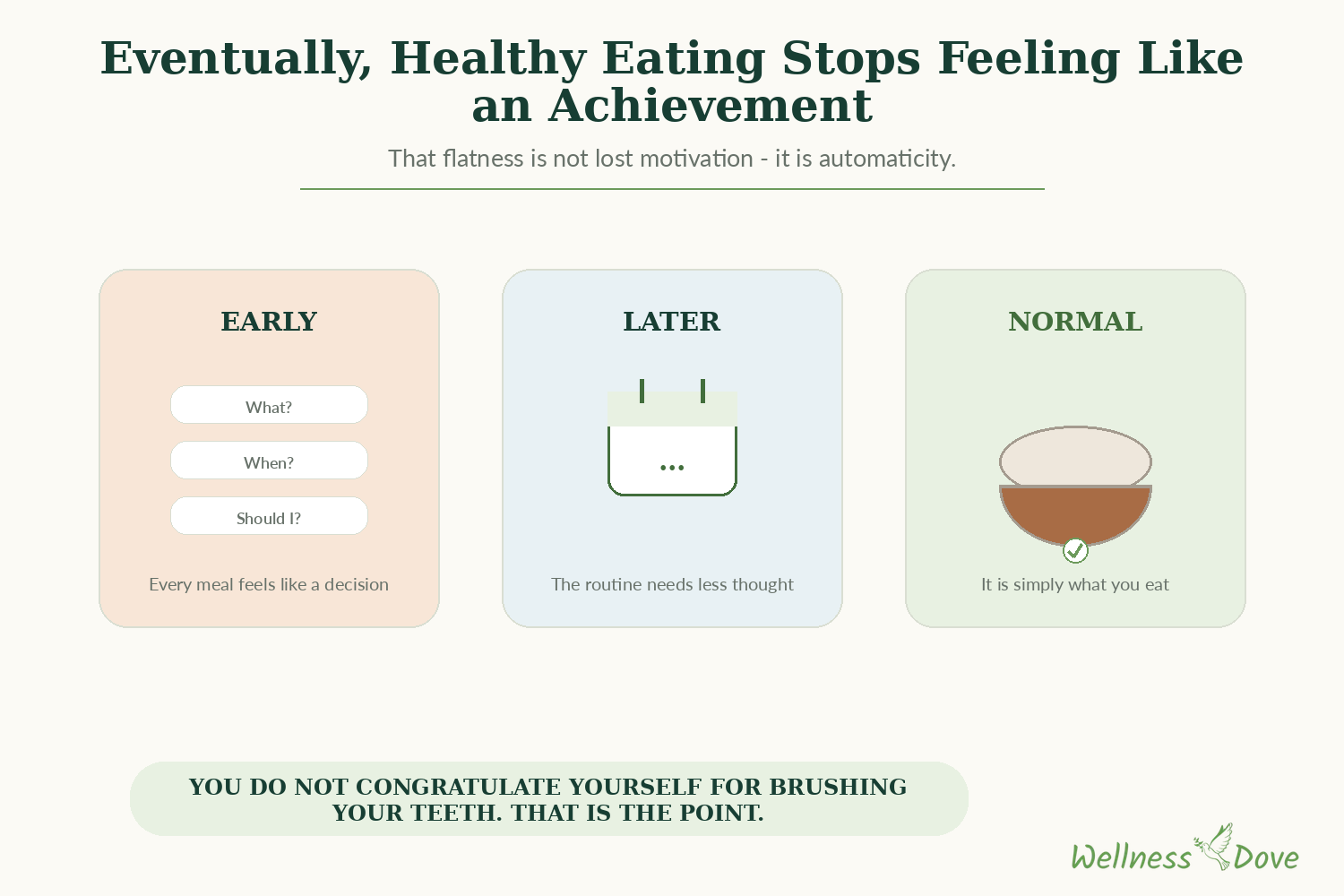
People sometimes read that flatness as losing motivation. We think it’s the point. The last thing to talk about is what that looks like from further out, once a few years have gone by.
And, always, seek health consciously.