


Everything gets easier once your own kitchen is sorted out. Then somebody invites you to dinner, or the office orders lunch in, or you’re three hundred miles from home in a town you don’t know.
This is the situation people worry about most before they change how they eat, and we want to say up front that it turns out to be smaller than it looks from the outside. It’s also the situation where trying to be perfect does the most damage.
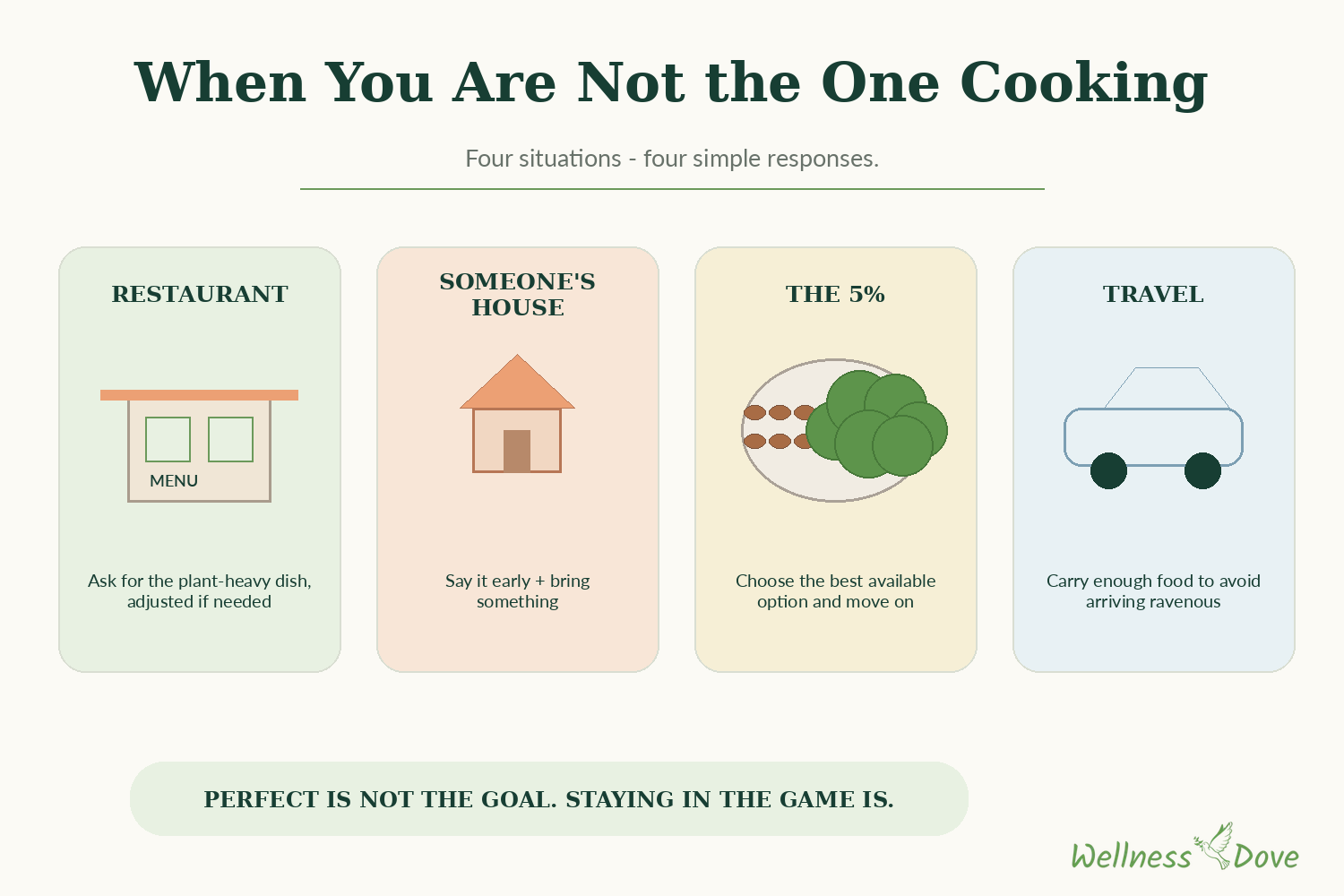
Restaurants are easier than they were
Almost every cuisine on earth has a plant-based tradition somewhere in it, because meat has been expensive for most of human history in most places. So the dish you want usually already exists on the menu, and it isn’t marked in any special way.
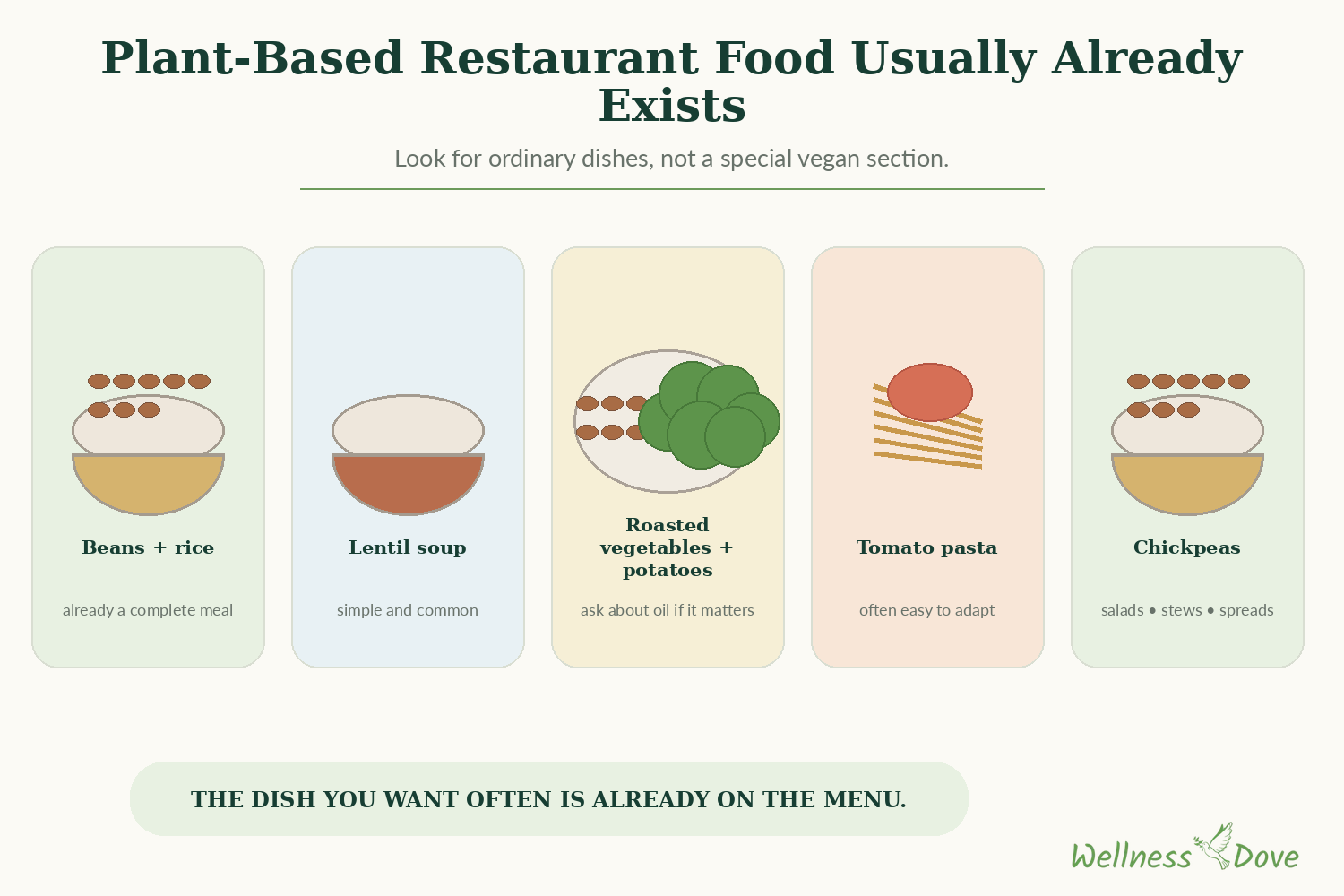
Beans and rice. Lentil soup. Roasted vegetables and potatoes. Pasta with a tomato sauce. Chickpeas in almost any form you can think of.
The most useful question we ask isn’t whether something is vegan.
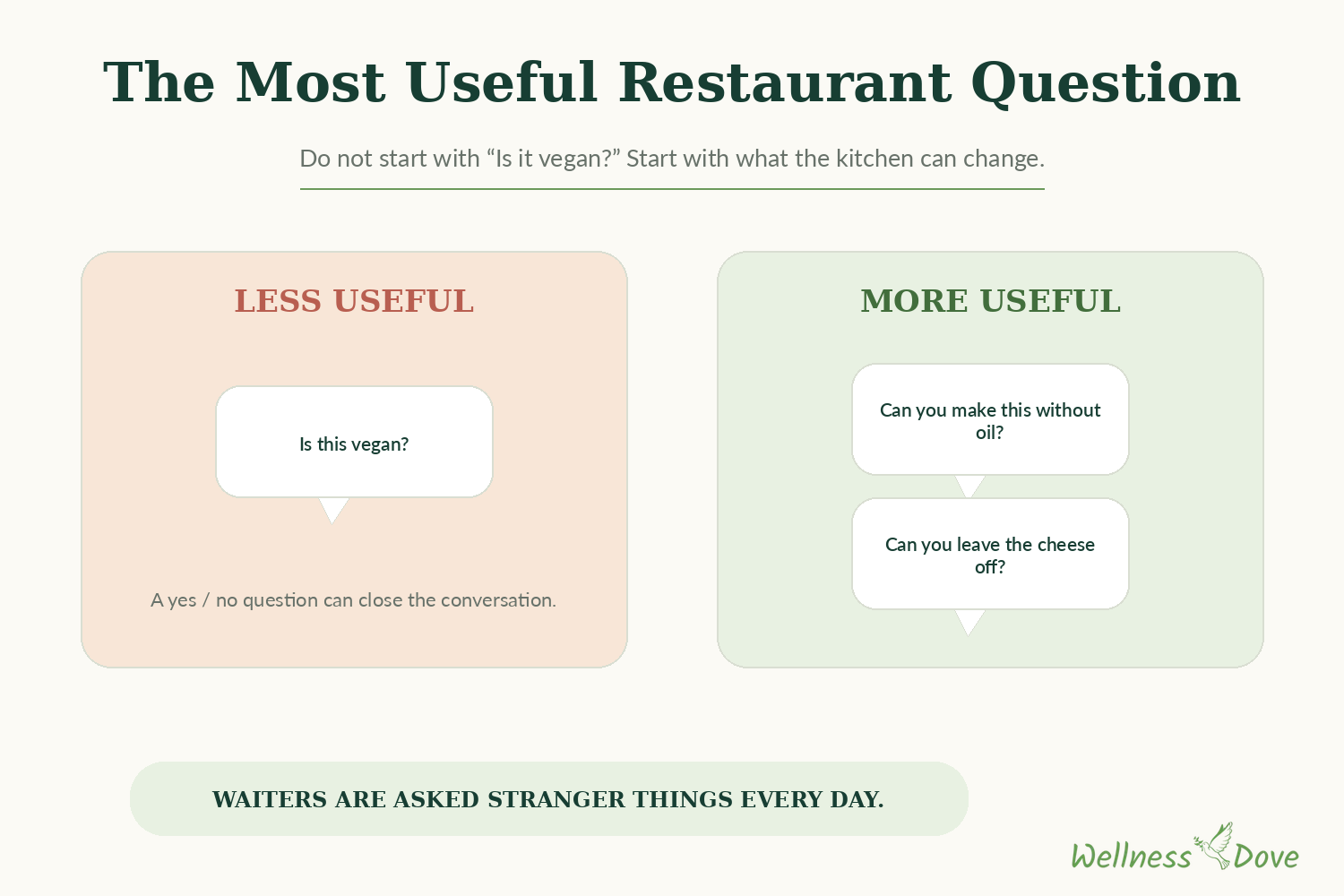
It’s whether the kitchen can do it without the oil, or with the cheese left off, and the answer is yes far more often than you’d expect. Waiters get asked stranger things than this every day of the week!
Eating at somebody’s house
This is the awkward one, because a host has cooked for you and their feelings are in the food. We handle it in two ways, and neither of them is clever.
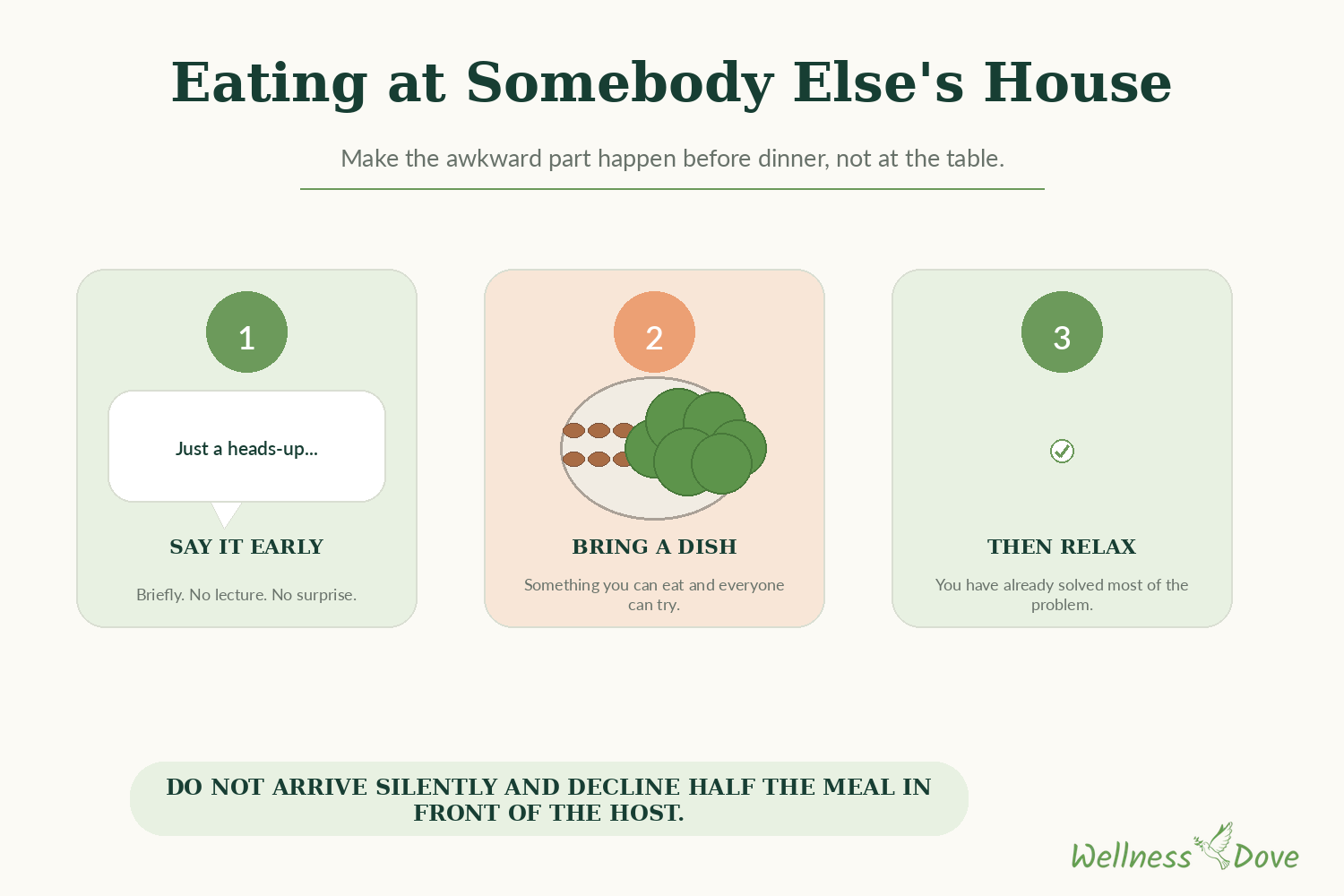
The first is to say something in advance, briefly and without a lot of explanation, so that nobody is surprised at the table. The second is to bring a dish, which solves the problem without any fuss and has the useful side effect of being the thing everybody asks about afterward. What we don’t do is arrive with no warning and then decline most of the meal in front of the person who made it.
The five percent
Sometimes there’s nothing, and you’re hungry, and the only options on the table contain something you’d rather avoid. We eat the most plant-heavy thing available and we don’t think about it afterward.
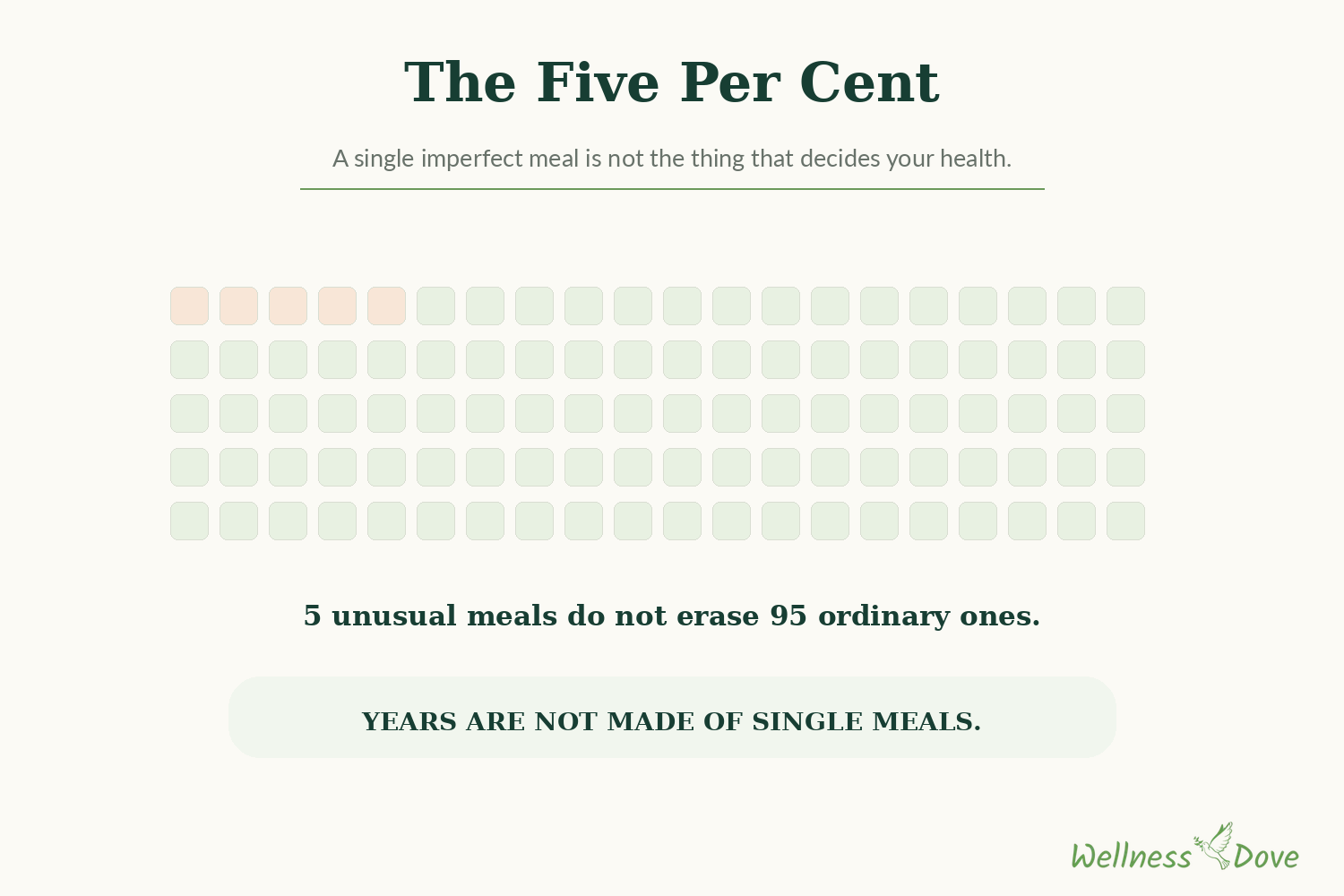
This isn’t a compromise we feel bad about. The point of eating this way is what it does to your health over years, and years aren’t made of single meals. Somebody who eats well at home and imperfectly on the road four times a year is in excellent shape. Somebody who abandons the whole idea because a wedding menu defeated them is not.
Traveling
Long trips are the one case where a little preparation really pays off.
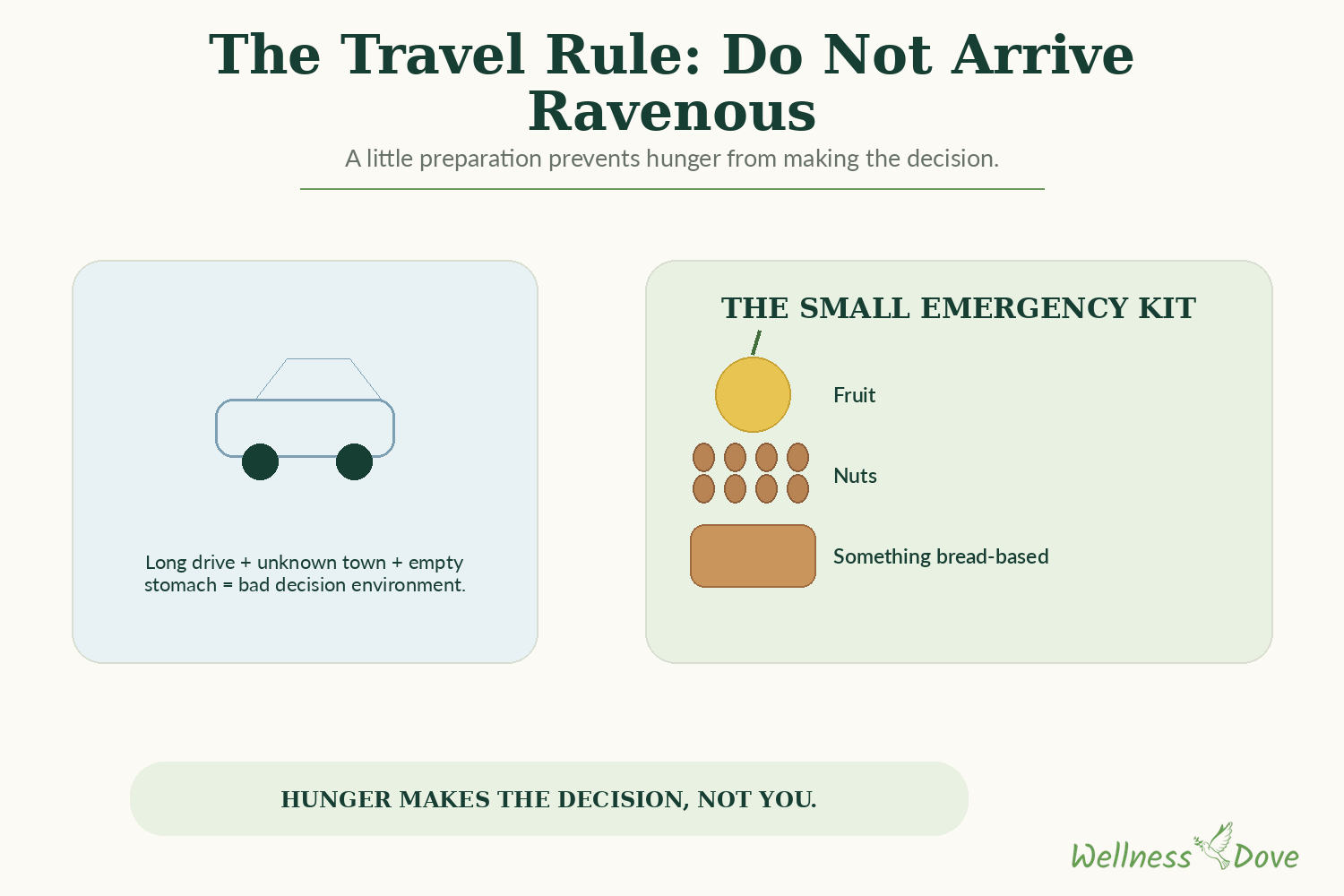
We carry fruit, nuts and something bread-based, because the failure mode on a long drive is arriving somewhere ravenous with only a gas station in sight. That’s the same problem as the tired Wednesday, just in a different place: hunger makes the decision instead of you. Beyond that, a trip doesn’t have to be planned around food, and we wouldn’t want to travel that way anyway.
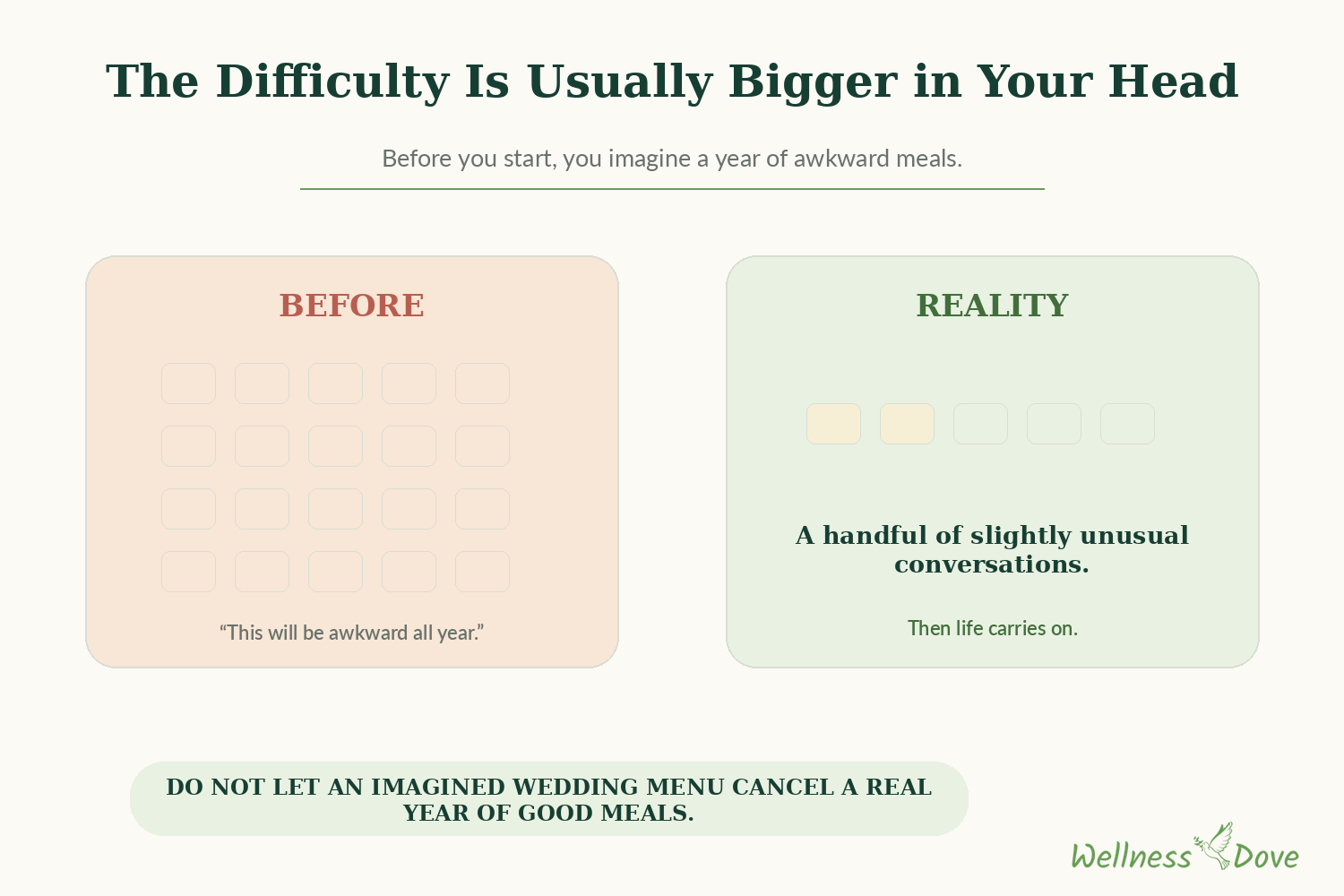
Most of the difficulty here is anticipatory. People imagine a year of awkward meals and then find that it amounts to a handful of slightly unusual conversations.
What does more damage than any restaurant is what happens in your own head after a week that went badly, and that deserves a proper look of its own.