


Most writing about changing your diet stops at the beginning. There’s a great deal about the first month and almost nothing about what it settles into once it isn’t new anymore.
We changed how we ate in February 2017, so we can at least describe the far end of it from experience. The short version is that it becomes uninteresting, and that turns out to be the best thing about it.
What happened to us
Andy had been overweight for as long as he could remember. There was a pollen allergy diagnosed when he was seven, and stomach problems for most of his life, and none of that was expected to change. He lost about forty pounds in that first year and has kept it off ever since, eating as much as he wants. We didn’t expect that part to hold, and it has.
The allergy was the real surprise. That spring there were almost no symptoms, after twenty years of Aprils spent indoors, and it has stayed that way since.
Venny has an autoimmune thyroid condition, and her antibodies came down substantially. Her thyroid peroxidase antibodies fell to less than a quarter of what they’d been, and her thyroglobulin antibodies came back into the normal range. Antibody levels move for many reasons, though, so this is one person’s bloodwork rather than a result you should expect for yourself. Her iron and hemoglobin, both of which had been low, normalized as well.
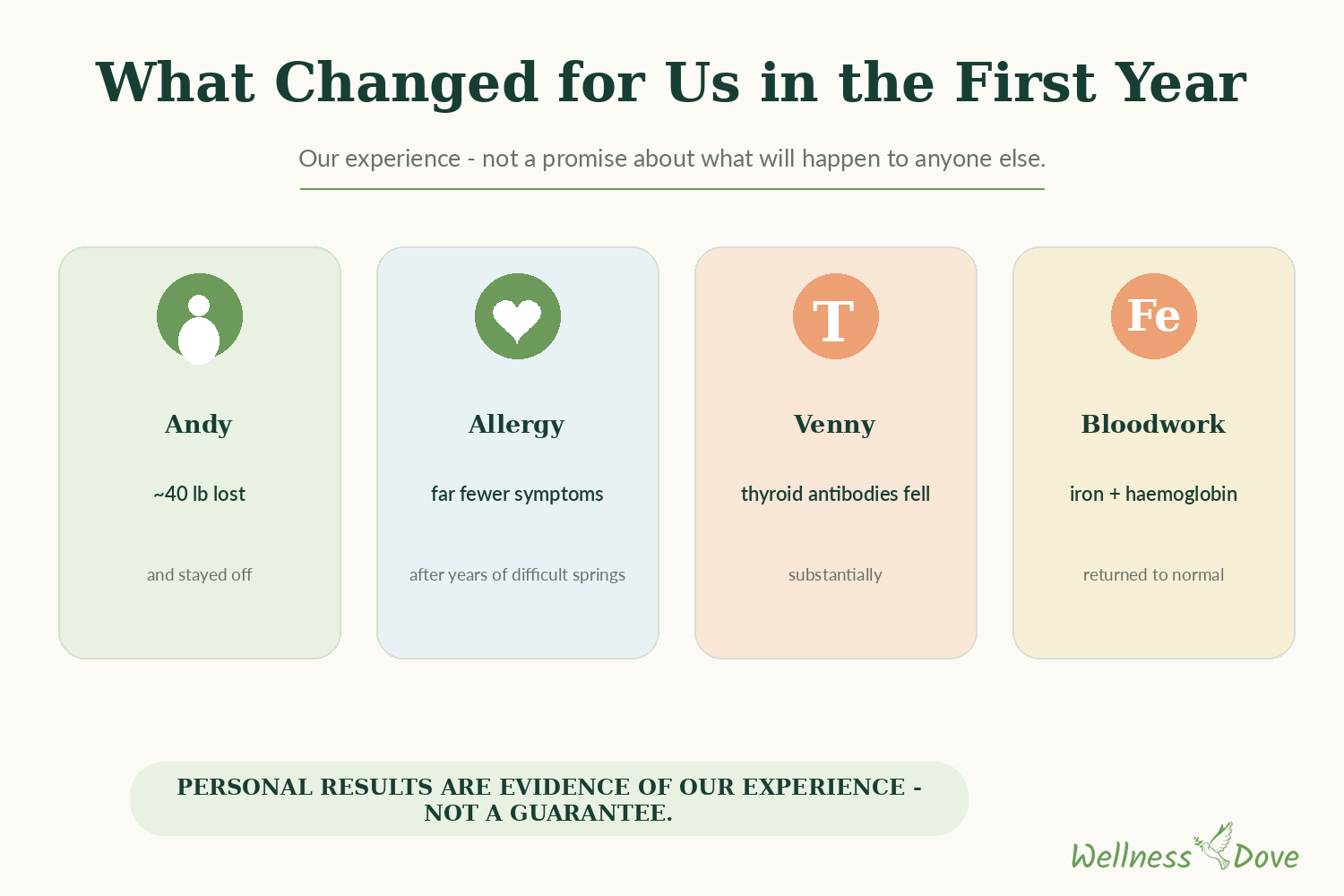
We’re not going to tell you any of this is guaranteed for anybody else. We don’t know that, and neither does anybody.
The part we didn’t expect
The wanting goes away. We didn’t give up animal foods by continuing to want them and refusing to have them. After a few years they stopped being appealing, in the way a food you haven’t eaten since childhood stops being appealing.
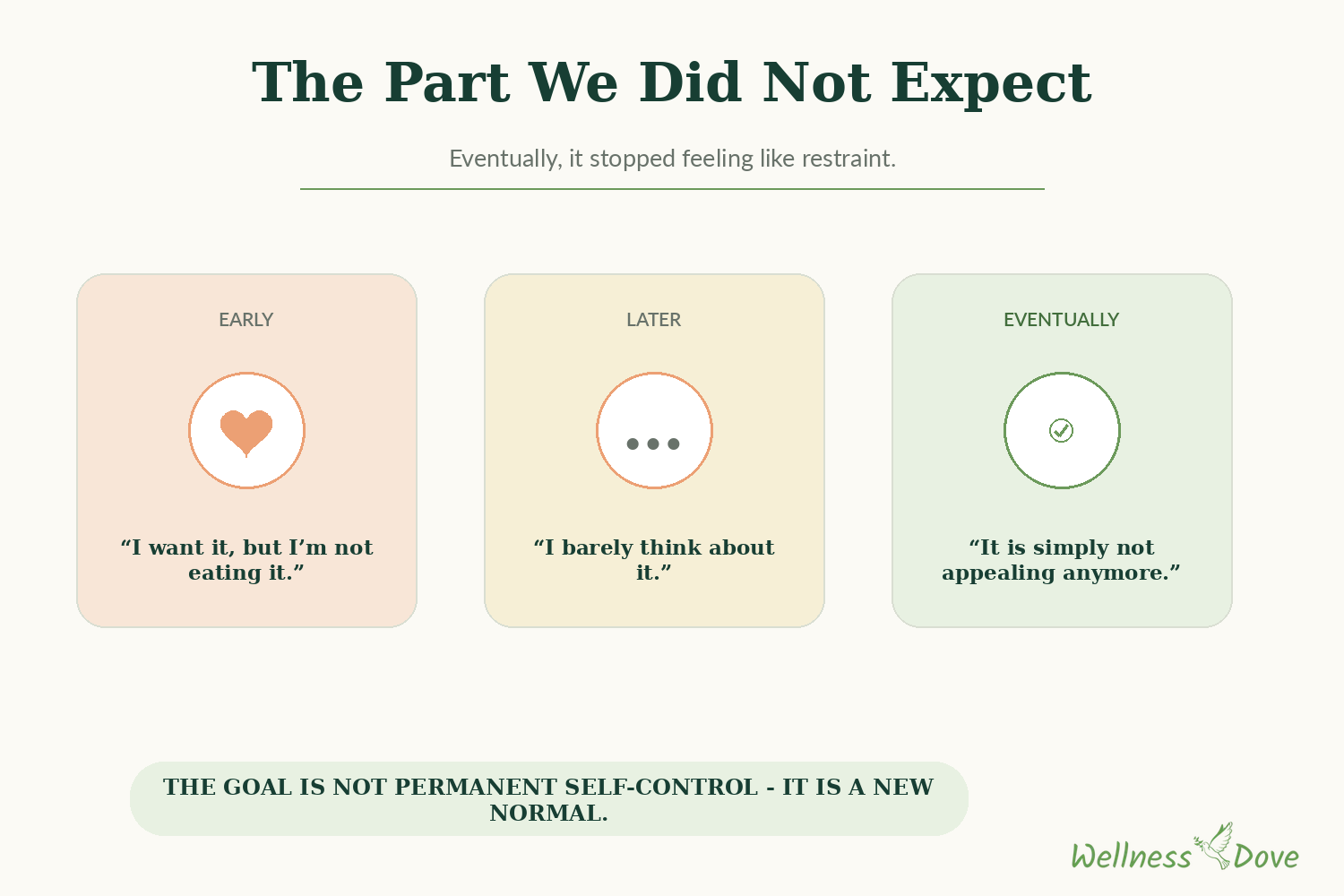
There’s no daily act of restraint involved. That took considerably longer than the practical side did, though. We had the kitchen sorted out in a couple of months, and the appetite took years.
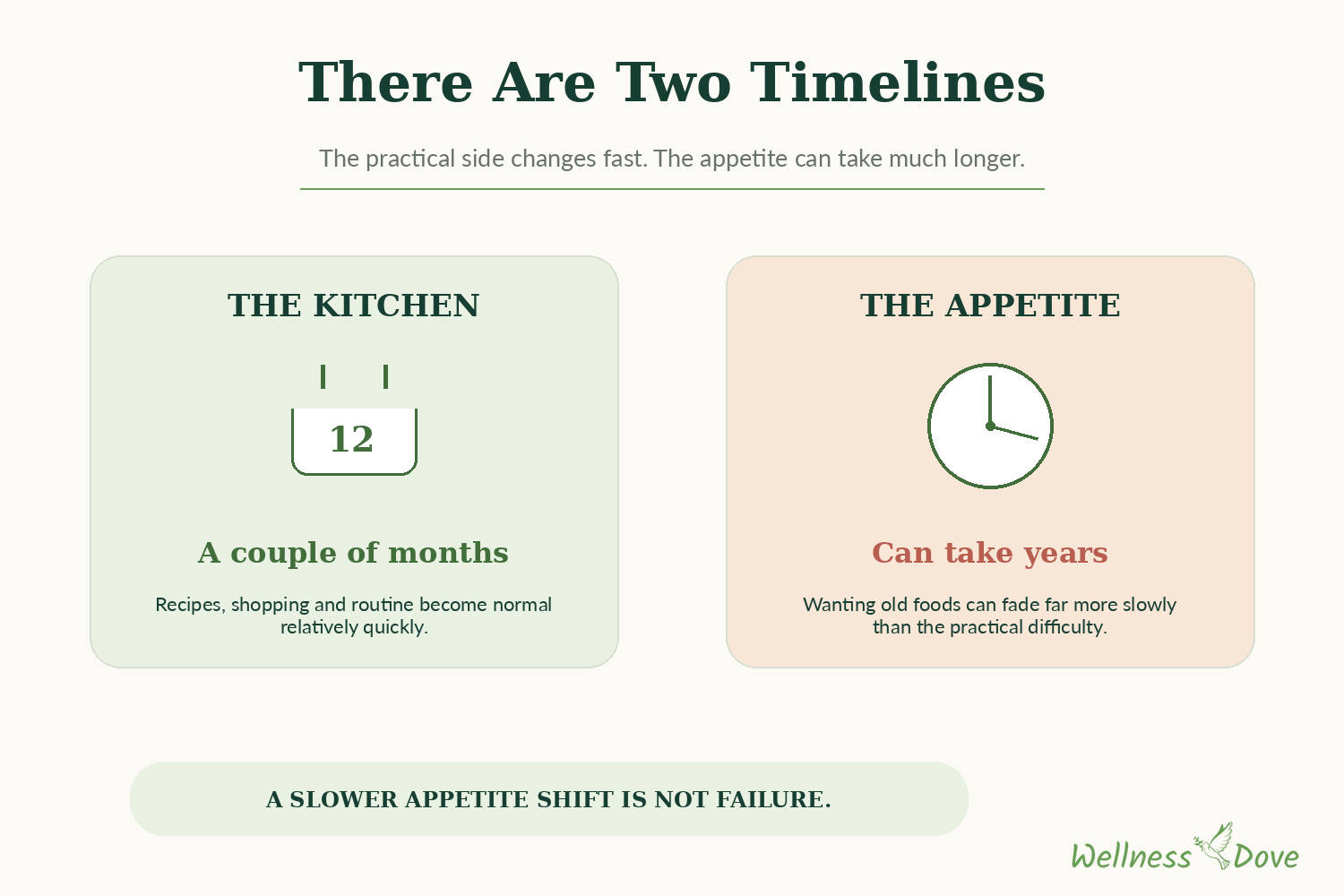
Nobody tells you about the second timeline, which is a shame, because knowing it would spare people a great deal of worry in month three.
What our week looks like
There’s no plan on the fridge and there never has been. We cook a pot of something most days, we cook more than we need, and the rest becomes tomorrow’s lunch.
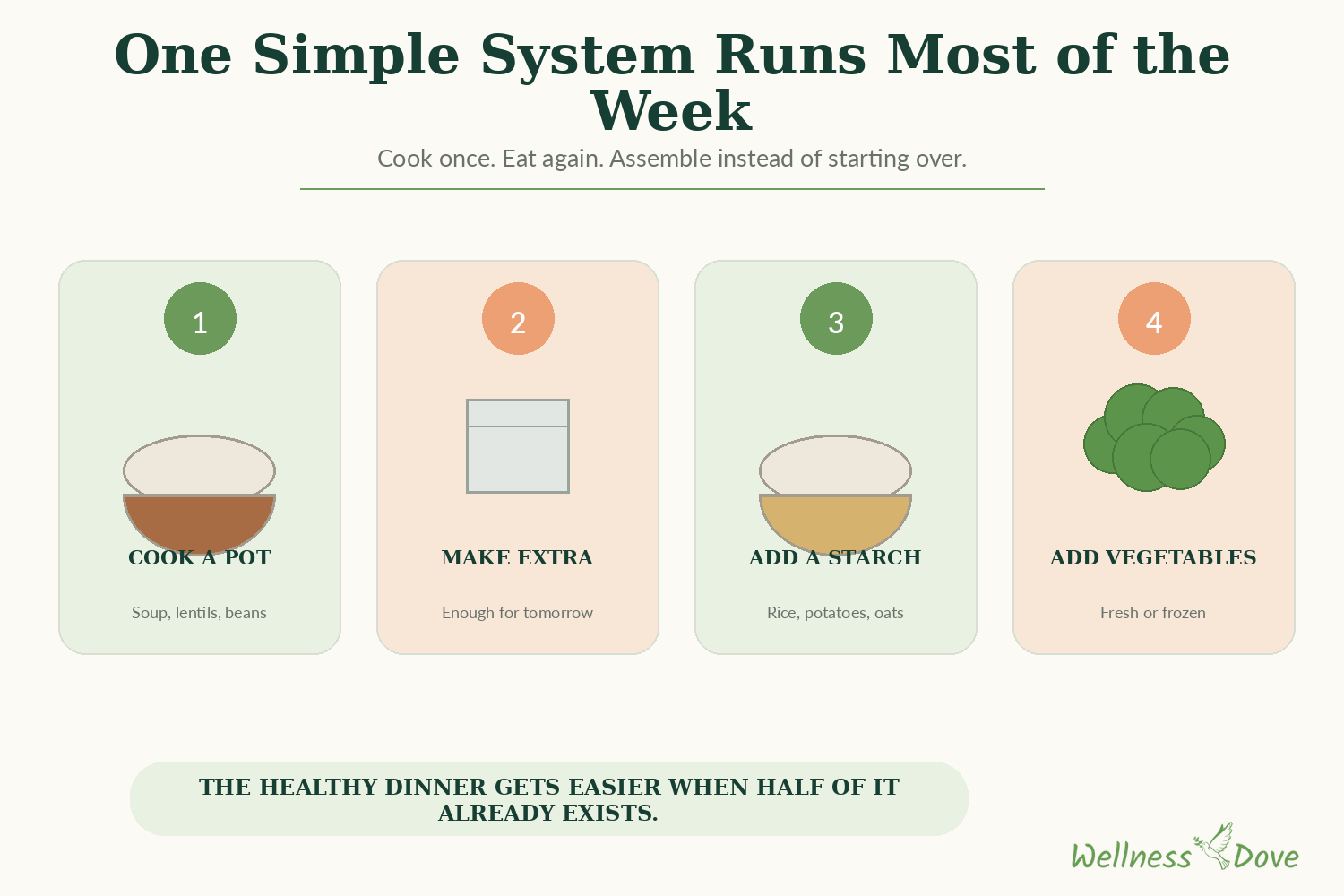
Breakfast is oats most mornings, and dinner is a grain, a legume and vegetables in some arrangement or other.
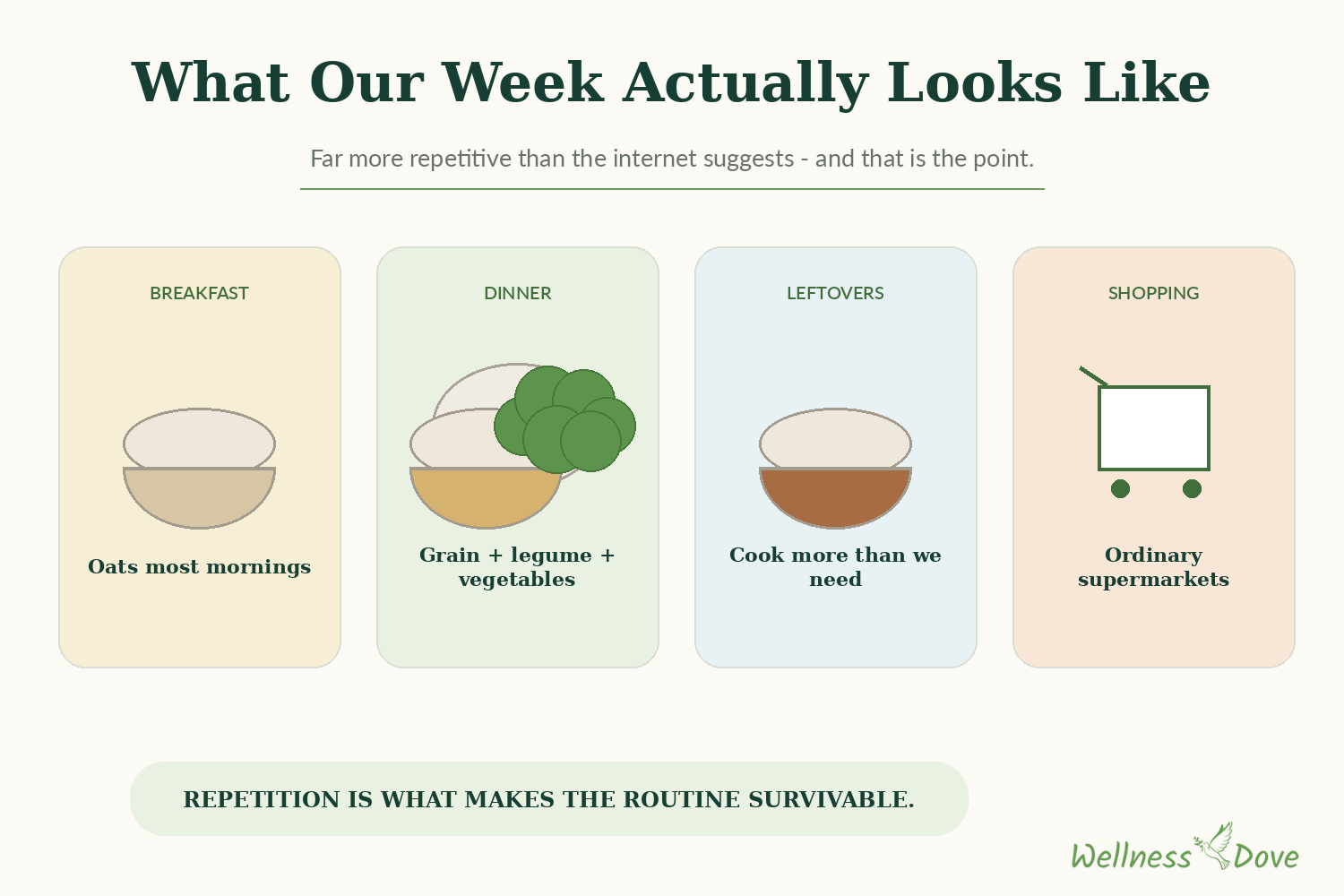
We shop at ordinary supermarkets, and we go to a health food store once a month at most. It’s far more repetitive than the internet suggests it should be, and that repetition is what makes it survivable!
What we would say to somebody starting
Don’t try to get it right.
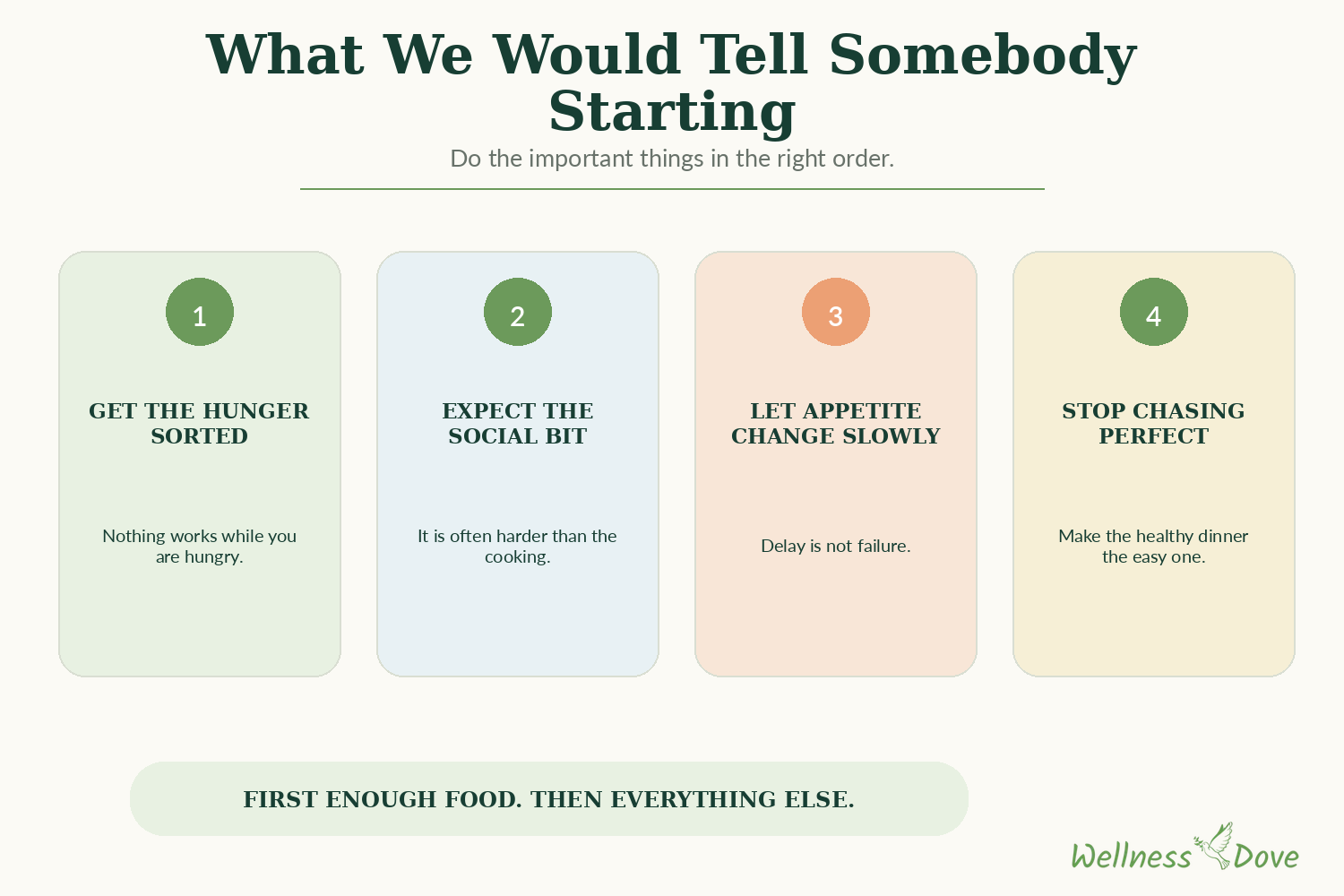
Get the hunger sorted first. Nothing else works while you’re hungry, and everything else becomes manageable once you’re not. After that, most of the difficulty is social rather than practical, and most of that fades once the people around you have eaten your food a few times.
We’d tell you to expect the appetite to change slowly, and not to read the delay as failure. Above all, the aim isn’t to become someone with an impressive diet. The aim is for the healthy version of dinner to be the easiest one to reach.
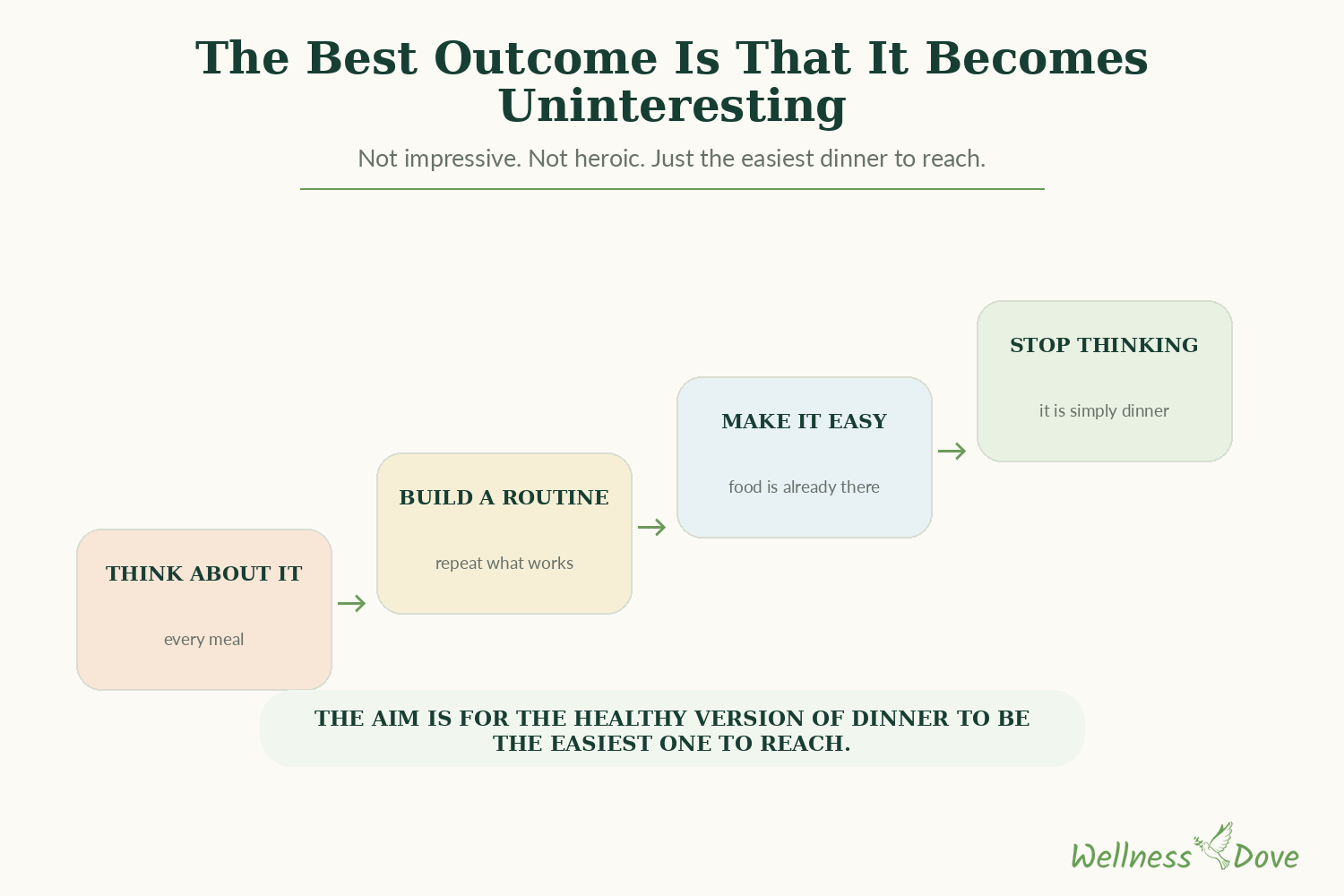
When that happens you stop thinking about any of this, which is where we’ve ended up, and it’s a considerably better place than we expected.

I thought this piece about living a plant-based lifestyle was fantastic. Instead of seeming overwhelming, the useful advice and mental adjustments make it seem more attainable and long-lasting. https://www.logodesigncanada.ca/graphic-design – as a Canadian graphic design firm, we also recognize the impact that well-organized text and captivating images can have on readers considering healthier lifestyle choices.