

Losing weight can feel harder after 40, but not because your metabolism has fallen off a cliff.
In the largest study of its kind, metabolism held steady from about 20 to 60. The changes most women notice come from less muscle, less daily movement and, around menopause, a shift in where fat is stored.
It’s not surprising that we find ourselves gaining weight, even when we make every effort to keep it off. It’s as if our body gives up on us, right?
Not at all!
We just need to start understanding our bodies better and find new ways to help them work properly.
In this article, we will go through the 8 steps you can take to start losing weight if you are a woman of a certain age.
None of these is dramatic on its own. Together, they are what tends to work, slowly, after 40.
Stay active with low-impact exercises such as walking.
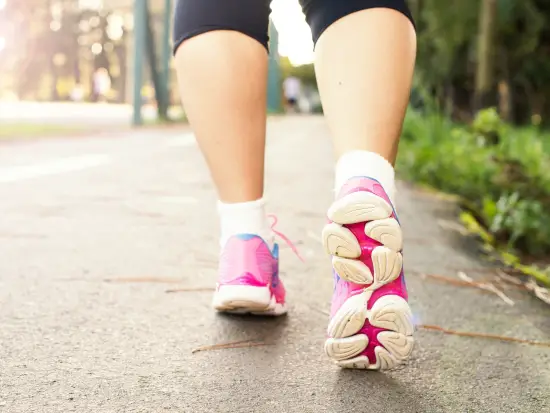
Walking is an excellent activity to support healthy aging and reduce the risk of disease. It can be done almost anywhere, inexpensively and with minimal equipment.
It improves general fitness, and people who walk the most have about 30 percent less heart disease than those who walk the least.
Walking is the easiest exercise to keep up after 40 because it is gentle on the joints.
It is gentle on the joints, which matters more with every passing decade, and the threshold is lower than people assume. The American Heart Association’s minimum is 150 minutes a week of moderate activity, about twenty-two minutes of brisk walking a day.
Walking is also an excellent way to reduce stress. The gentle rhythm of walking can help calm your mind and improve your outlook on life.
Stress changes eating for most people. Some eat less, but many, especially people who have been dieting, reach for more snack food, and a walk is one of the simplest ways to take the edge off. Walking may help remind you of what is important in life. It can help put things into perspective and give you a healthier point of view.
Walking is very versatile, so it can be done almost anywhere you go; through a neighborhood park, on trails in the woods, or at your local shopping center. It can be done alone or with family and friends.
It’s just a pleasant form of exercise that you will enjoy and want to do every day. And every little bit counts!
Get more sleep each night.

Sleep matters more than most people expect. In a 2022 trial, short sleepers who added about an hour a night ate around 270 fewer calories a day without trying.
Losing weight and staying fit requires a healthy diet and exercise, but your routine won’t be as well maintained if you’re not getting quality sleep.
As much as you might think that skimping on your sleep won’t affect your weight, rest is crucial to lose weight over 40. Even a few hours of lost sleep can make you lose energy and feel extremely tired throughout the day.
Studies have shown that not sleeping enough can increase your appetite and make you crave more sweets, processed carbohydrates, or junk food.
Not getting enough sleep may also stimulate your hunger hormones and make you lose control over how much you eat each day, which could lead to weight gain.
Adults need at least seven hours regularly.
Drink plenty of water
You’ve likely heard this one before, but hear us out.
As a society, we have been slowly replacing the liquids that we drink with all kinds of abnormal tasting beverages, including soda, diet soda, flavored water, vitamin water, kombucha, etc.
It is becoming harder to get your water intake in because you are tempted with all of these other options, and many people don’t know how much they need to drink.
There is no special water target for weight loss. The National Academies put a typical woman’s total at about 91 ounces a day, and roughly a fifth of that comes from food. For most healthy people, drinking when you are thirsty covers it.
You Do Not Have to Be Perfect
Eating well most of the time leaves plenty of room for chips on a Saturday night or takeout with friends.
Nothing here is off-limits, and nothing needs to be earned.
What matters is what you eat on ordinary days, not on the occasional evening out.
Switch Up Your Routine
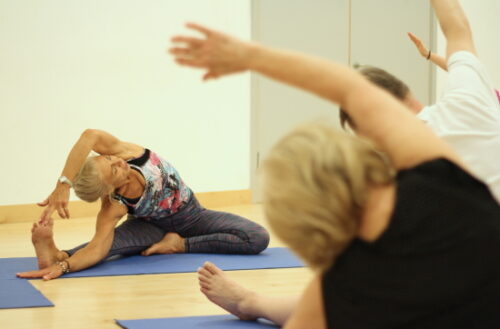
Your routine may need to change after 40, but mostly by adding to it.
After 40, keep the walking and add strength work at least two days a week. The American Heart Association and the World Health Organization both recommend it, and it matters more from here on, because it is what holds on to muscle and bone as estrogen falls.
If running starts to hurt, swap in cycling, swimming or brisk walking rather than doing less.
Build up gradually and rest when something hurts, but there is no reason to do less just because of a birthday.
Keep Your Blood Sugar Steady
They also fill you up for fewer calories, which matters more for weight than any single blood sugar reading.
Whole grains, beans, fruit and vegetables are digested slowly, because their fiber keeps the starch inside intact plant cells, so glucose reaches your bloodstream gradually.

They also travel well, which helps on long days without time to sit down.
If you already have problems with your blood sugars, that is a conversation for your own doctor rather than a website, and it is worth having before you change anything.
Limit Your Alcohol Intake
If you drink, less is better. Alcohol is a known cause of breast cancer, and the risk starts to rise even at one drink a day.
Keep in mind that we all metabolize alcohol at different rates, so even one more beer than your friend may be too much for you.
If you’re trying to lose weight over 40, don’t let these factors stop you from getting healthy!
Be mindful of what’s going into your body and make real whole foods the staple in your diet. You may not see results overnight, but they will come as long as you keep up with this lifestyle change.
Eat a Whole Food, Plant-Based Diet

The best diet for women of any age is a whole food plant-based diet that avoids most animal products as well as any processed foods containing sugar or oil.
A good rule of thumb when you are eating out is to check whether there’s anything on the menu items listed as “crispy,” “fried” or anything that contains the word “breading.”
Processed foods are loaded with sugar and fat. In an NIH study, people ate about 500 more calories a day on ultra-processed food than on whole food.
The best way to combat craving for sweets and fried food is by eating a whole-food diet high in fiber where you take time to chew your food.
Focus on beans and whole grains as well as fiber-rich vegetables such as broccoli or kale.
Eating this way is linked with better heart health and lower rates of some cancers. For breast cancer, women eating the most fiber had about an 8 percent lower risk across 20 studies.
One honest note about metabolism after 40, because it is the premise of most articles like this one.
Resting metabolism does decline with age, but far more slowly than the popular version suggests, and most of what people experience as a middle-aged slowdown is muscle loss and reduced daily movement rather than a switch flipping at a birthday. For women there is one real hormonal change. In the SWAN study, fat gain doubled and muscle began to decline as menopause began, which is why strength work matters more after 40, not less.
Both of those are addressable. Neither of them is your body giving up on you.
If you want the mechanism rather than the tips, it is the density of what you eat: the four numbers are here, and they explain more than any age-specific advice does.
Venny is a medical doctor and a specialist in Nutrition and Dietetics; Andy holds a master’s degree in psychology. This is general information rather than medical advice. Perimenopause changes several things at once and is worth discussing with your own doctor rather than managing from an article.
And, always, seek health consciously.
Read Next
- The Four Numbers That Make Plant Food Filling
- Walking for Weight Loss: What It Really Does
- One Bad Week Does Not Undo Anything
Sources (13)
- Pontzer H, Yamada Y, Sagayama H, et al. Daily energy expenditure through the human life course. Science. 2021;373:808-12. View
- Greendale GA, Sternfeld B, Huang M, et al. Changes in body composition and weight during the menopause transition. JCI Insight. 2019;4(5):e124865. View
- Bull FC, Al-Ansari SS, Biddle S, et al. World Health Organization 2020 guidelines on physical activity and sedentary behaviour. Br J Sports Med. 2020;54:1451-62. View
- Watson SL, Weeks BK, Weis LJ, et al. High-intensity resistance and impact training improves bone mineral density and physical function in postmenopausal women with osteopenia and osteoporosis: the LIFTMOR randomized controlled trial. J Bone Miner Res. 2018;33:211-20. View
- Institute of Medicine. Dietary Reference Intakes for Water, Potassium, Sodium, Chloride, and Sulfate. Washington (DC): National Academies Press; 2005. View
- Valtin H. “Drink at least eight glasses of water a day.” Really? Is there scientific evidence for “8 x 8”? Am J Physiol Regul Integr Comp Physiol. 2002;283:R993-1004. View
- Tasali E, Wroblewski K, Kahn E, et al. Effect of sleep extension on objectively assessed energy intake among adults with overweight in real-life settings. JAMA Intern Med. 2022;182:365-74. View
- Watson NF, Badr MS, Belenky G, et al. Recommended amount of sleep for a healthy adult. Sleep. 2015;38:843-4. View
- Hamer M, Chida Y. Walking and primary prevention: a meta-analysis of prospective cohort studies. Br J Sports Med. 2008;42:238-43. View
- Oliver G, Wardle J. Perceived effects of stress on food choice. Physiol Behav. 1999;66:511-5. View
- Farvid MS, Spence ND, Holmes MD, Barnett JB. Fiber consumption and breast cancer incidence: a systematic review and meta-analysis of prospective studies. Cancer. 2020;126:3061-75. View
- Bagnardi V, Rota M, Botteri E, et al. Alcohol consumption and site-specific cancer risk: a comprehensive dose-response meta-analysis. Br J Cancer. 2015;112:580-93. View
- Hall KD, Ayuketah A, Brychta R, et al. Ultra-processed diets cause excess calorie intake and weight gain: an inpatient randomized controlled trial of ad libitum food intake. Cell Metab. 2019;30:67-77. View