


The practical side of eating this way is mostly solved in a couple of weeks. The social side takes considerably longer, and almost nobody warns you about it in advance.
When we started, our friends and our family thought we were crazy. They weren’t unkind about it. They just couldn’t see how a person lives without cheese and meat, and they were sure it wouldn’t last.
Why other people find it uncomfortable
Food isn’t only fuel, and it never has been. We gather around a table in good times and in bad ones, and what’s on that table carries a great deal that has nothing to do with nutrition. So when you change what you eat, other people at the table hear something that you didn’t say.
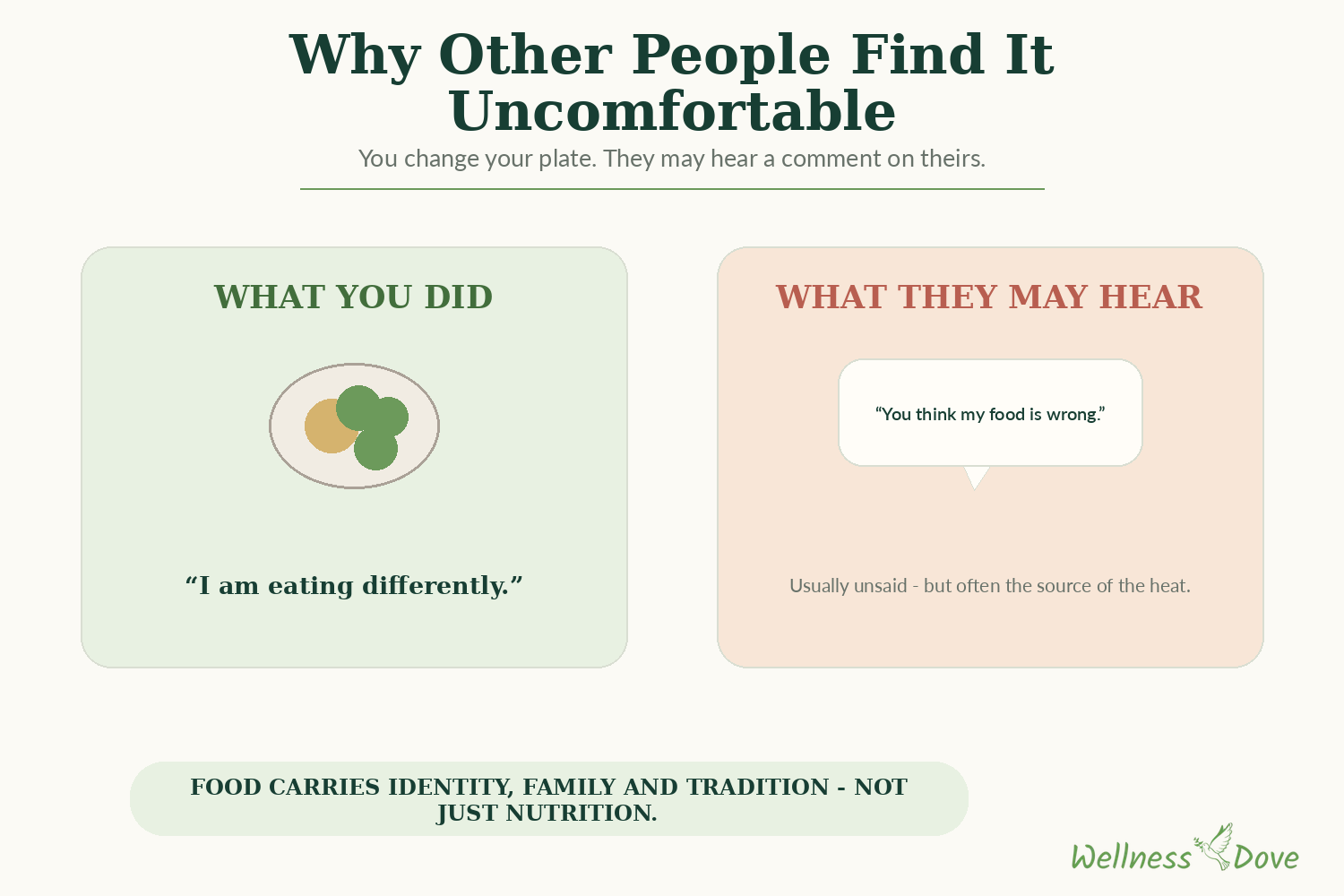
They hear a comment on what they’re eating. That’s usually the whole of the friction, and it explains why the questions come with more heat than the subject deserves. Nobody interrogates you about your opinion of jazz over dinner. They do interrogate you about beans!
What we found works
Explaining less works better than explaining more. We spent our first months with a great deal to say about it, and we don’t think a single person was persuaded by any of it.
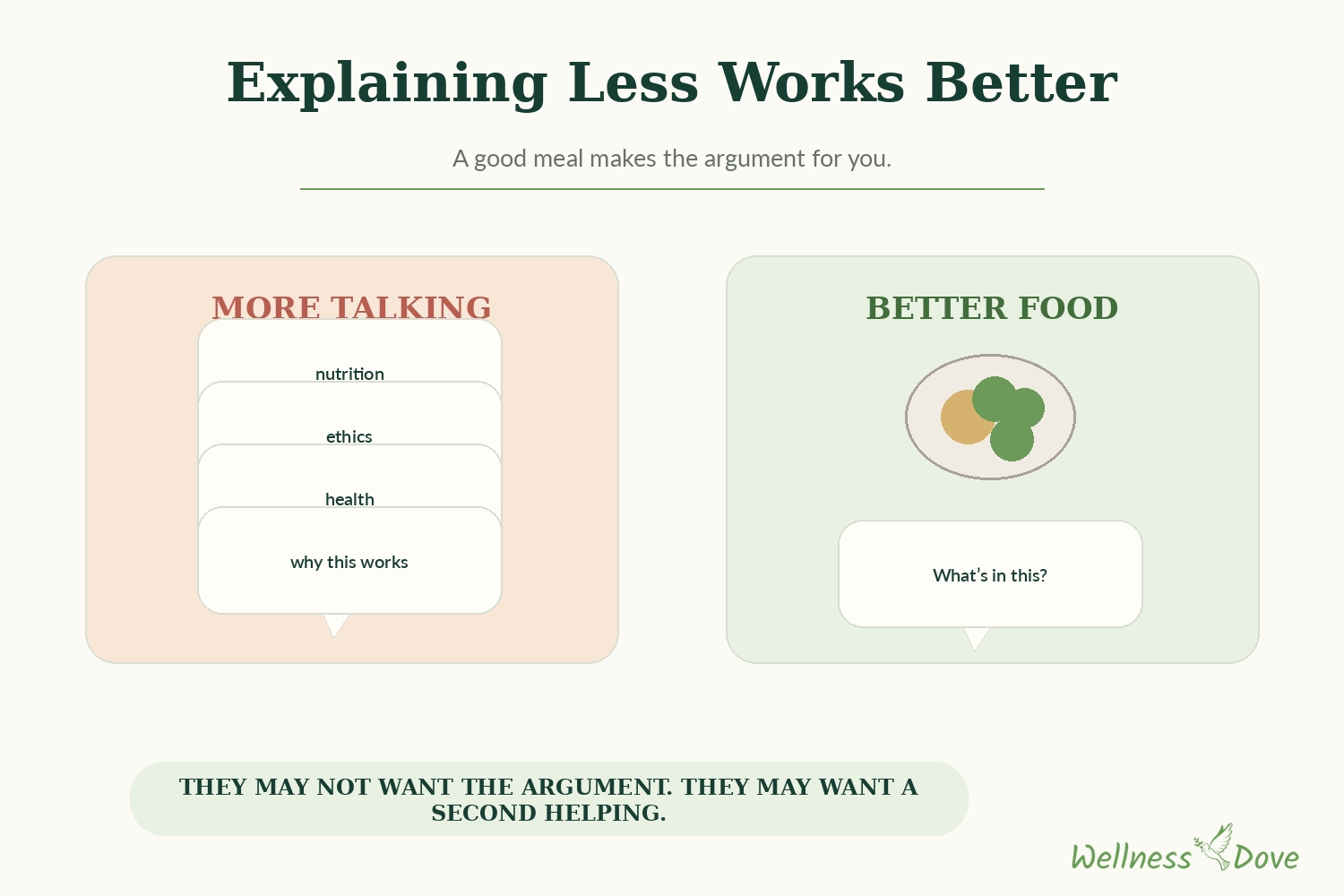
What changed their minds was the food. Venny cooked, and after a while the same people who had been sure we were mad started asking what was in it, and then asking for it again. A good meal makes an argument that no amount of talking does.
Beyond that, three moves do most of the work at somebody else’s table, and none of them involve a conversation.
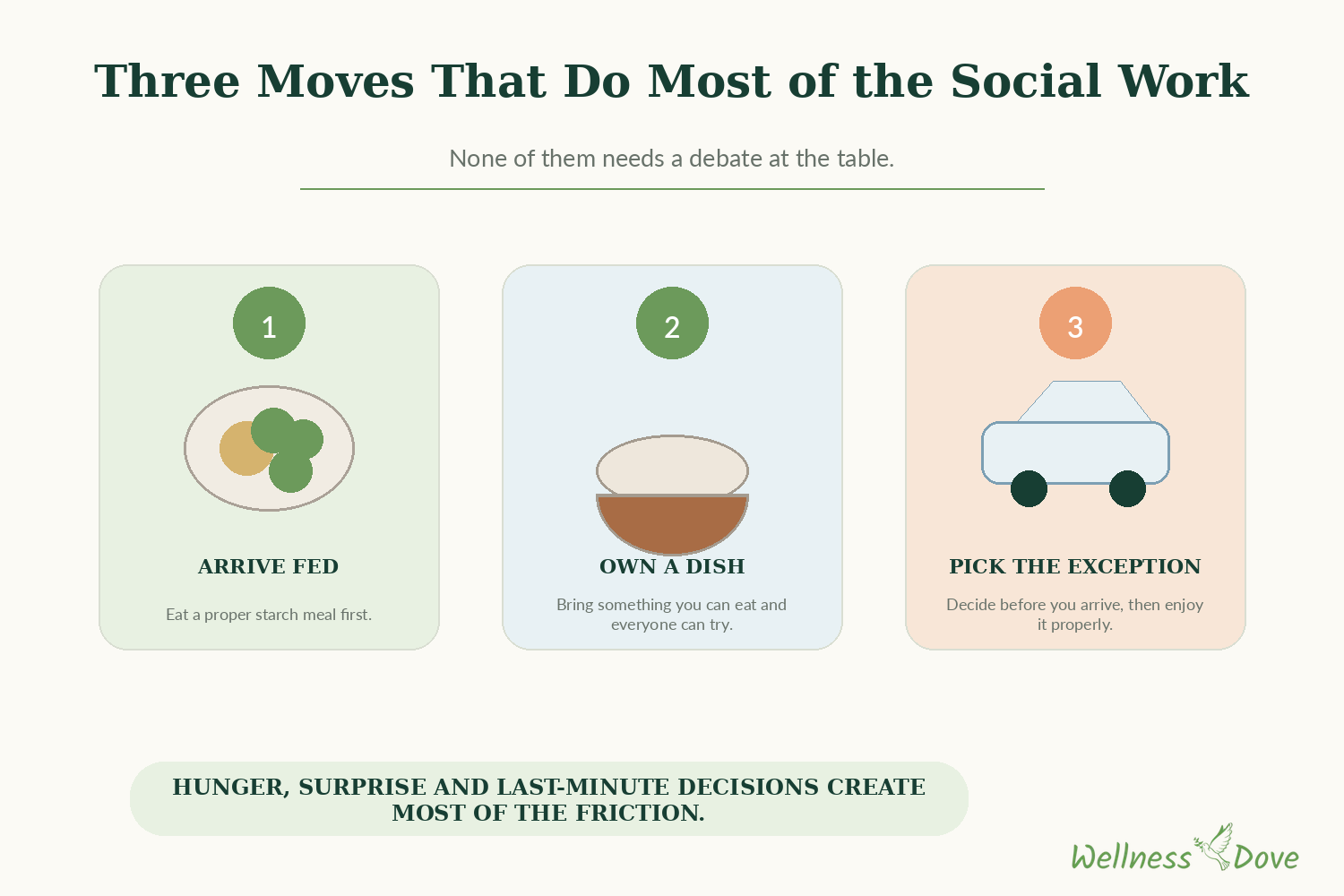
1. Arrive fed
Eat a proper starch meal before you go. Almost every social disaster we’ve had began with turning up hungry to a table with nothing on it we wanted, and hunger makes a much worse decision than principle ever does.
2. Own a dish
Bring something. It guarantees there’s one thing on the table you can eat, and it turns you from the awkward guest into the person who brought the good thing. It also does the persuading for you, which nothing you say will.
3. Pick your exception before you arrive
If there’s one thing at your mother’s table that you truly love, decide on it in the car on the way over and then enjoy it properly.
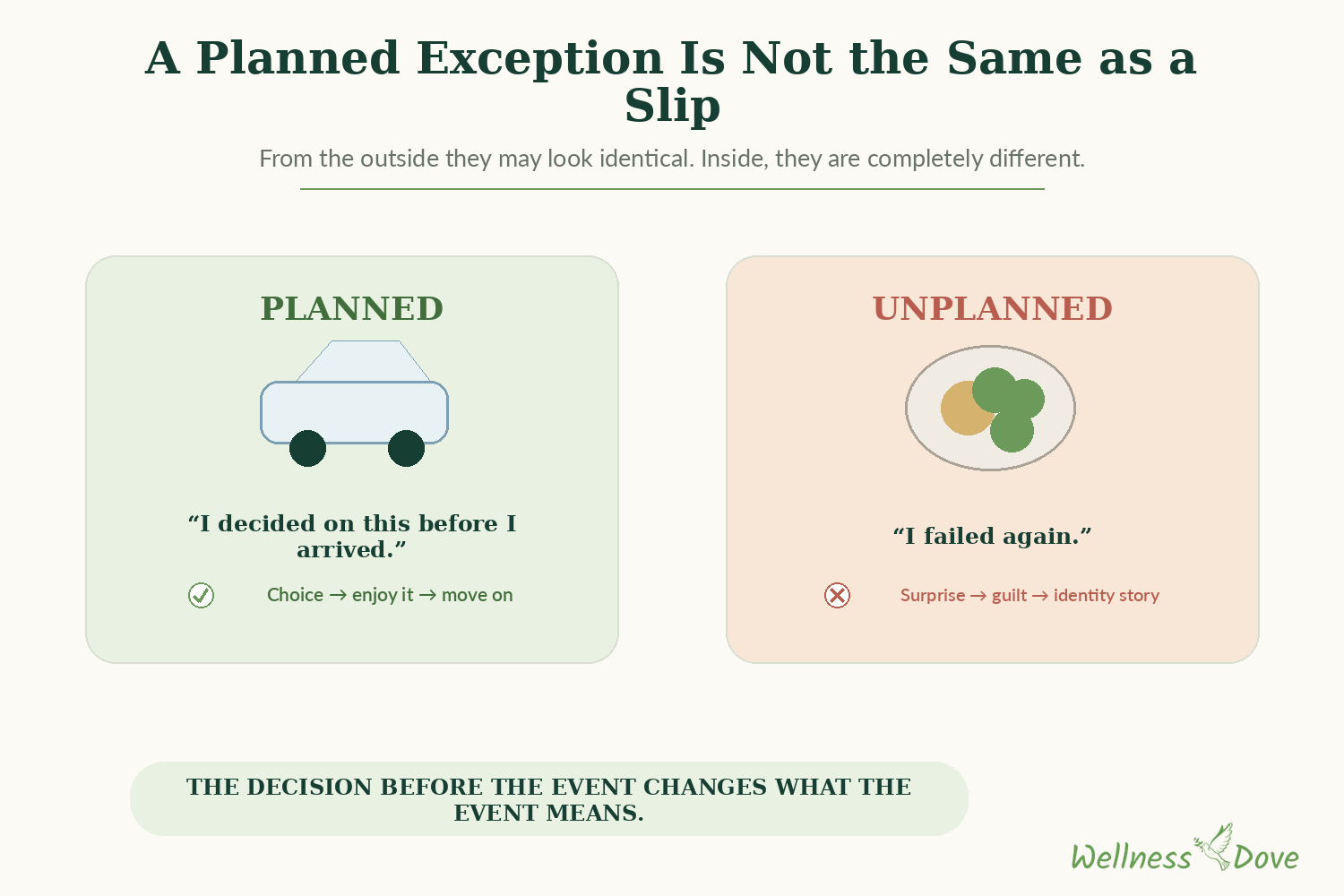
A planned exception and a slip look identical from the outside and feel completely different from the inside, and only one of them ends with you deciding that you’ve failed.
The one conversation worth having
There’s one exception, and it’s with the people you live with. Somebody who shares a kitchen with you needs to know what’s changing, because it affects their evenings too. That conversation goes better when it’s about what you’re adding rather than about what everybody is giving up.
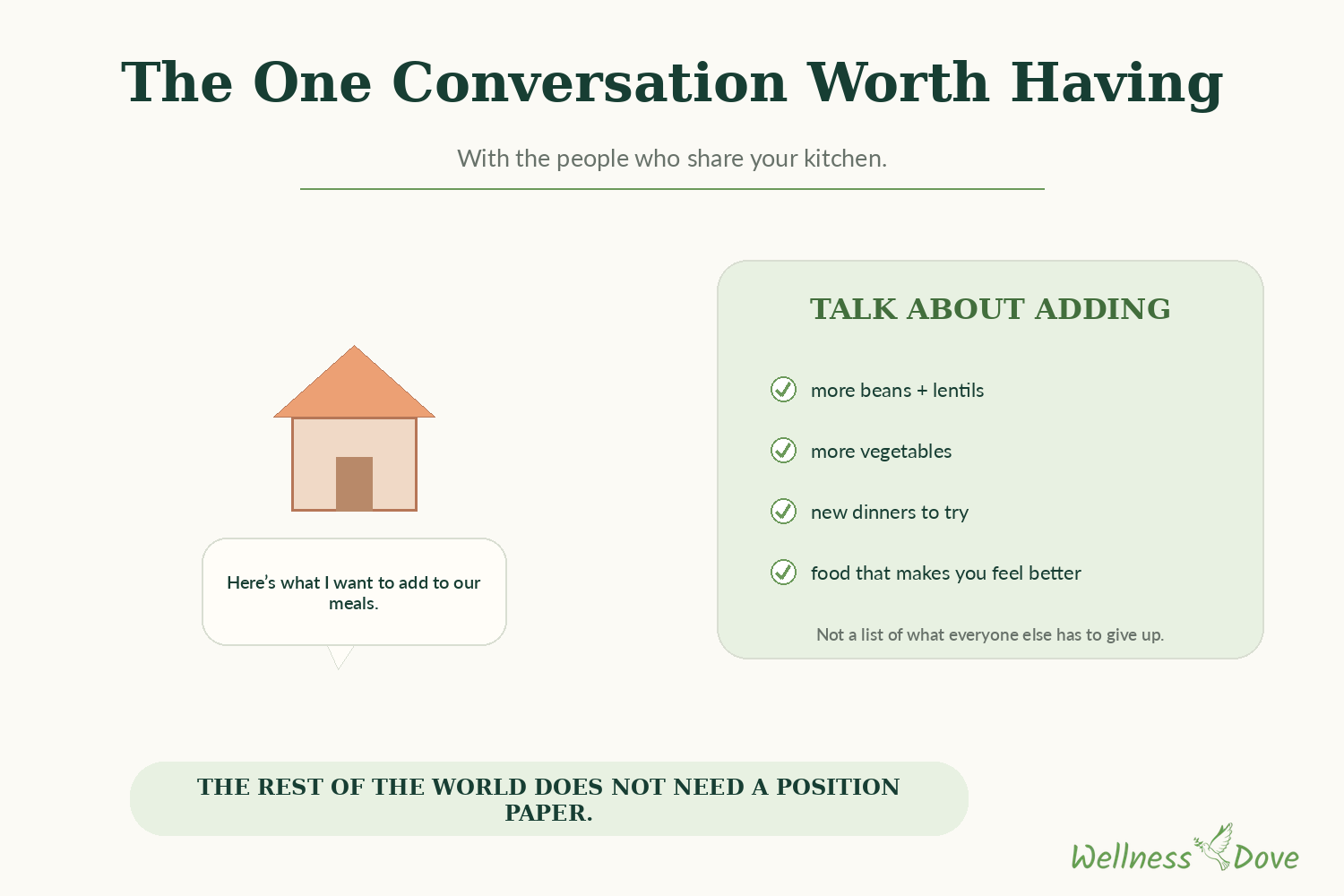
The rest of the world doesn’t need a position paper. When somebody asks, we tend to say that we feel better eating this way, which is true, brief, and hard to argue with.
About the label
We don’t call ourselves vegan, and we never really have. Technically we very nearly are, though we do eat some honey. The reason is that the word arrives before you do, and people start the conversation with whatever they already think about it rather than with you.
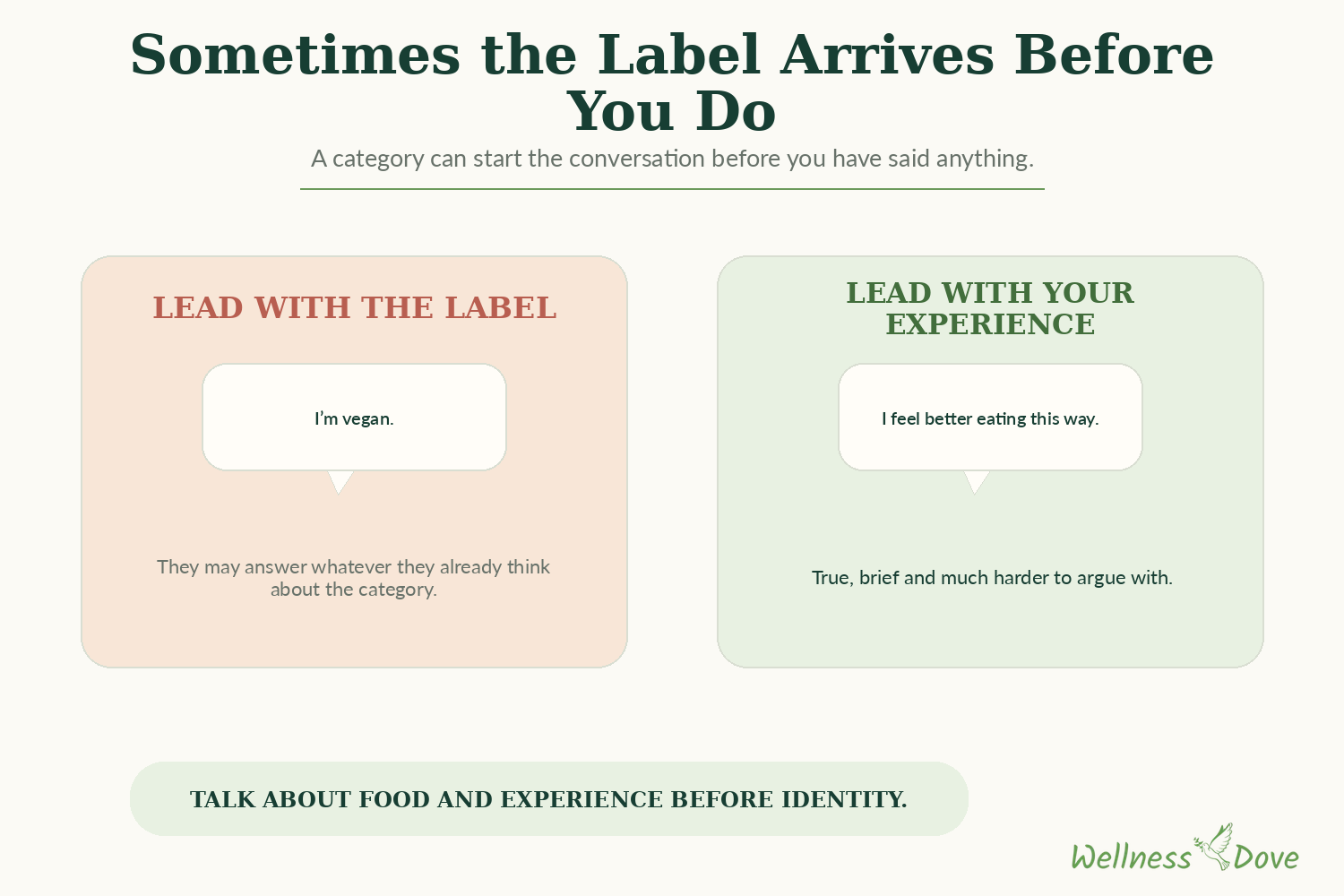
We’d rather talk about food than about a category.
There’s a second reason, and it matters more. Trying to be perfectly consistent in a world that isn’t built for it can be exhausting, and we’ve watched people decide the whole thing is impossible because they couldn’t manage the last five percent.
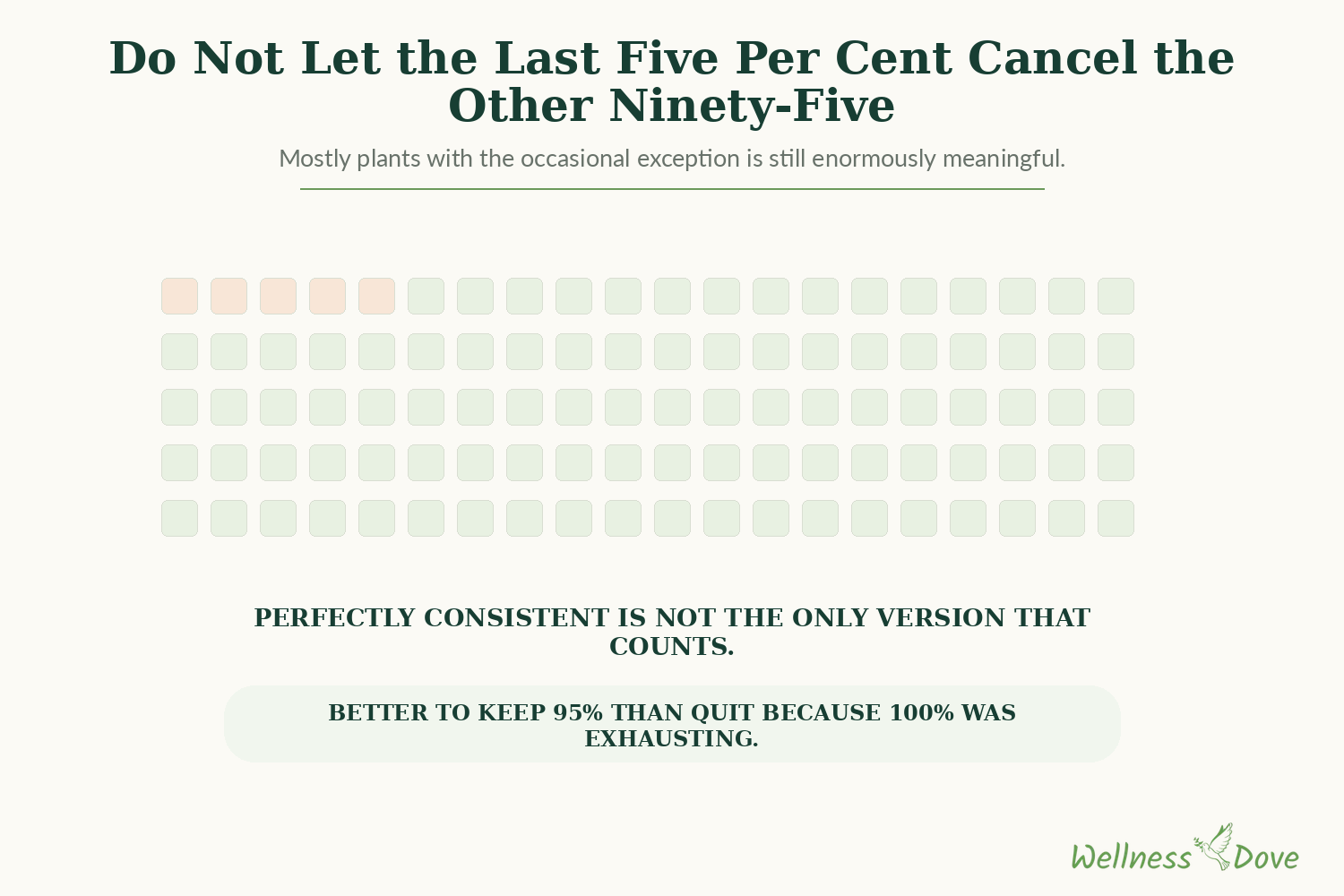
Eating mostly plants with the occasional exception is enormously better than deciding it’s too hard and eating none at all.
What happened in the end
Venny’s mother was hesitant for a long time, and then she wasn’t. Some months after she changed how she ate, her blood pressure came back into a healthy range, and her arthritis improved as well. If you take medication for blood pressure, talk to your doctor before you change how you eat, because the dose may need to change too.
That wasn’t the result of an argument. It was the result of her watching, for a good while, and then deciding on her own. Most people come around that way or they don’t come around at all.
The harder version of this isn’t the family table, where you have some influence, but a restaurant, where you have none, and that’s next.