

In a large 2014 U.S. survey of former vegetarians and vegans, about a third had quit within three months and more than half inside a year. So most of the leaving happens early, and the reasons people give are telling. When asked why, the most common answer was that the food just didn’t satisfy them, followed by health worries, social pressure and inconvenience. Very few said they lacked the motivation.
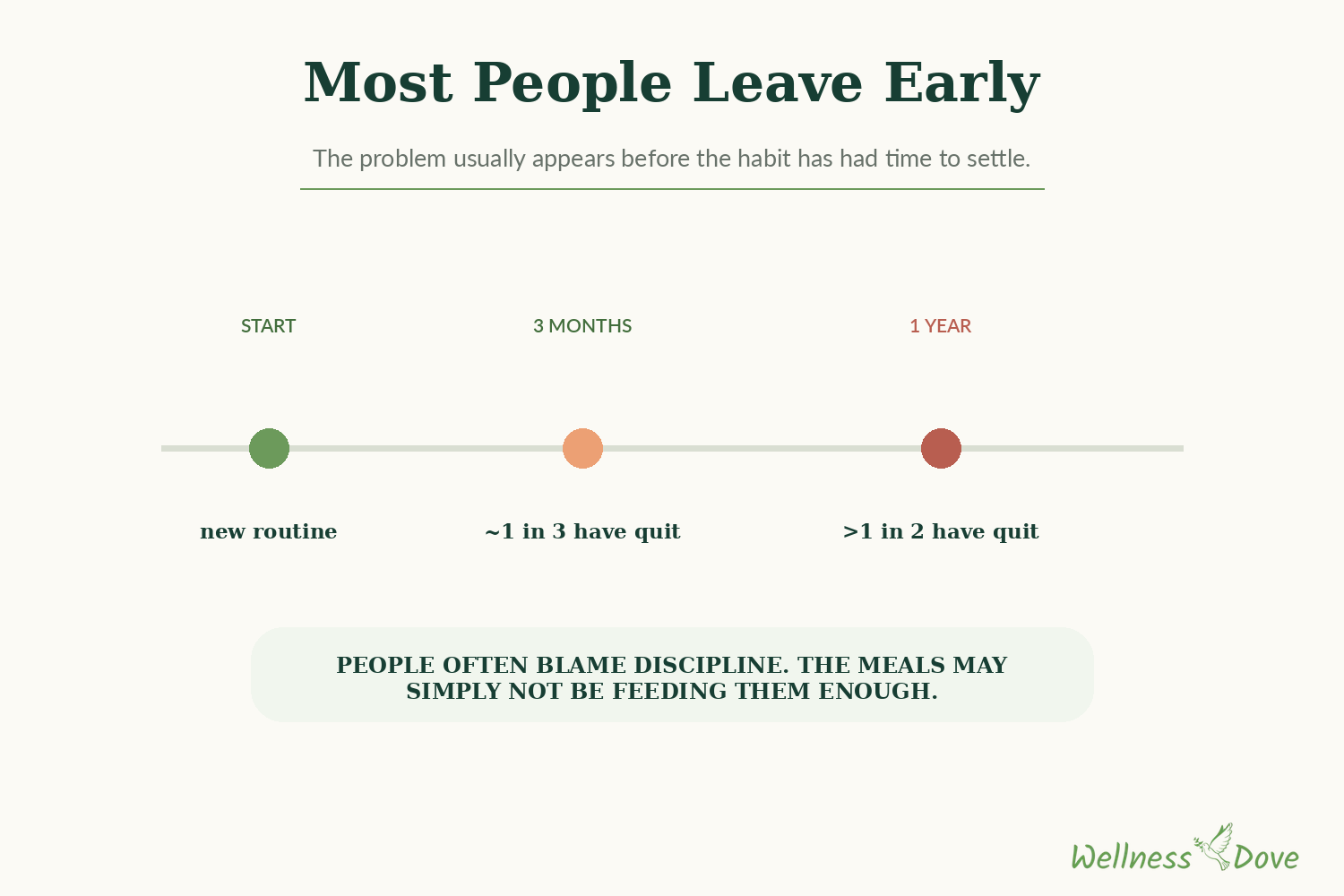
We don’t think discipline had very much to do with it.
When we first changed how we ate, we had exactly the problem every beginner has: we didn’t know what to eat. So we searched the internet, bought a stack of cookbooks and spent our days in the kitchen. A lot of those recipes were complicated and took a long time to make, and worse than that, they didn’t fill us up. We thought we were going to starve!
The plate that looks right
Picture what a beginner puts together on the first evening. A large salad, some steamed vegetables, and a piece of fruit afterwards. It looks like health and it photographs beautifully, and it’s also almost entirely water and fiber.
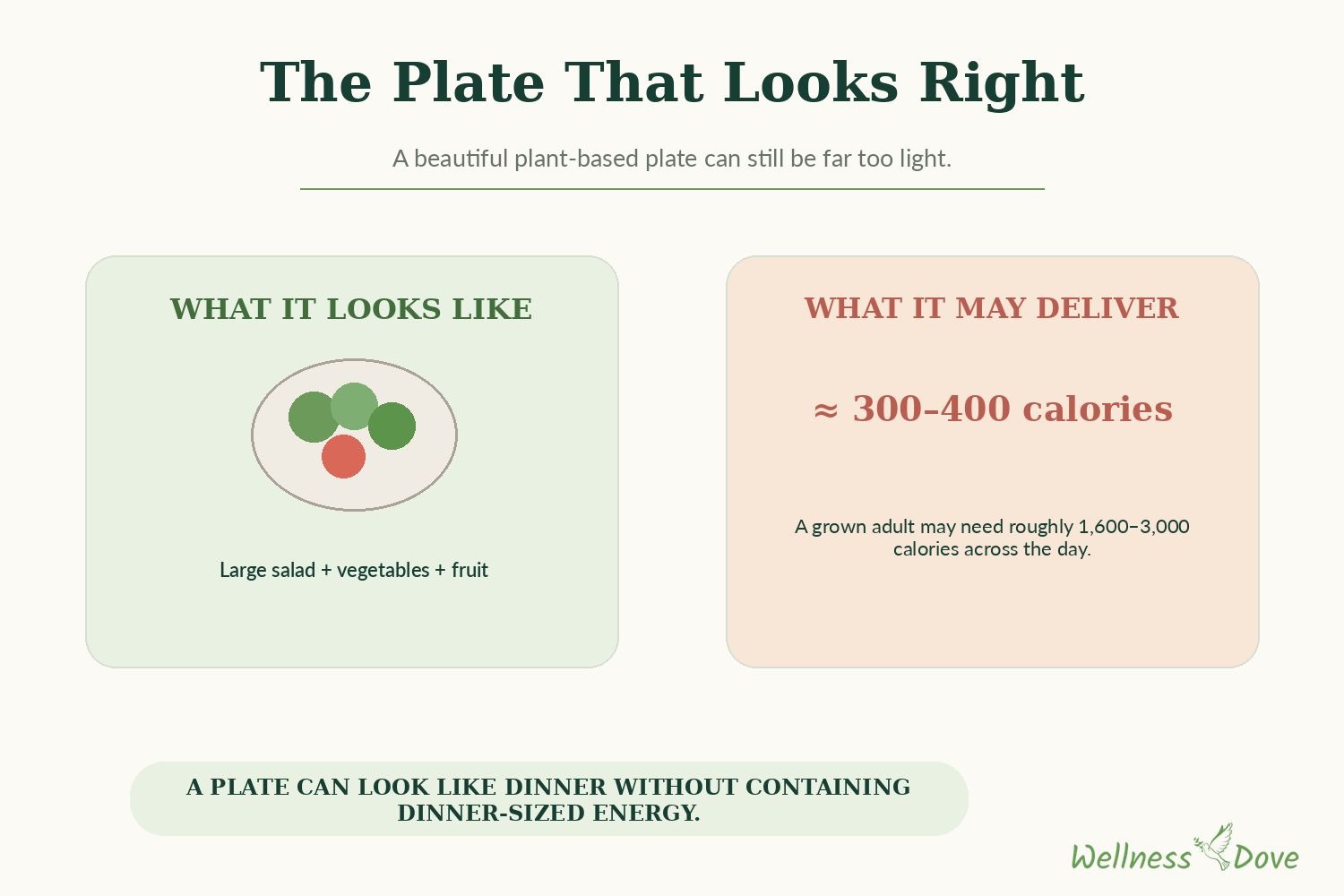
A pound of vegetables carries about a hundred calories, and a pound of fruit carries two to three hundred. So that generous-looking plate might come to three or four hundred calories in total, and a grown adult needs somewhere between about sixteen hundred and three thousand a day, depending on their size and how much they move. You can see the gap already.
The one-liter ceiling
Here’s the constraint nobody mentions. Your stomach holds about a liter. You can’t solve this by eating more, because there’s a hard ceiling on what will physically fit. Greens run about 100 calories a pound, so getting a day’s food from them would take something like sixteen to thirty pounds. Even spread across three meals, that’s several pounds at every sitting, far more than a stomach that holds about a liter can take. It won’t go in, no matter how hard you try.
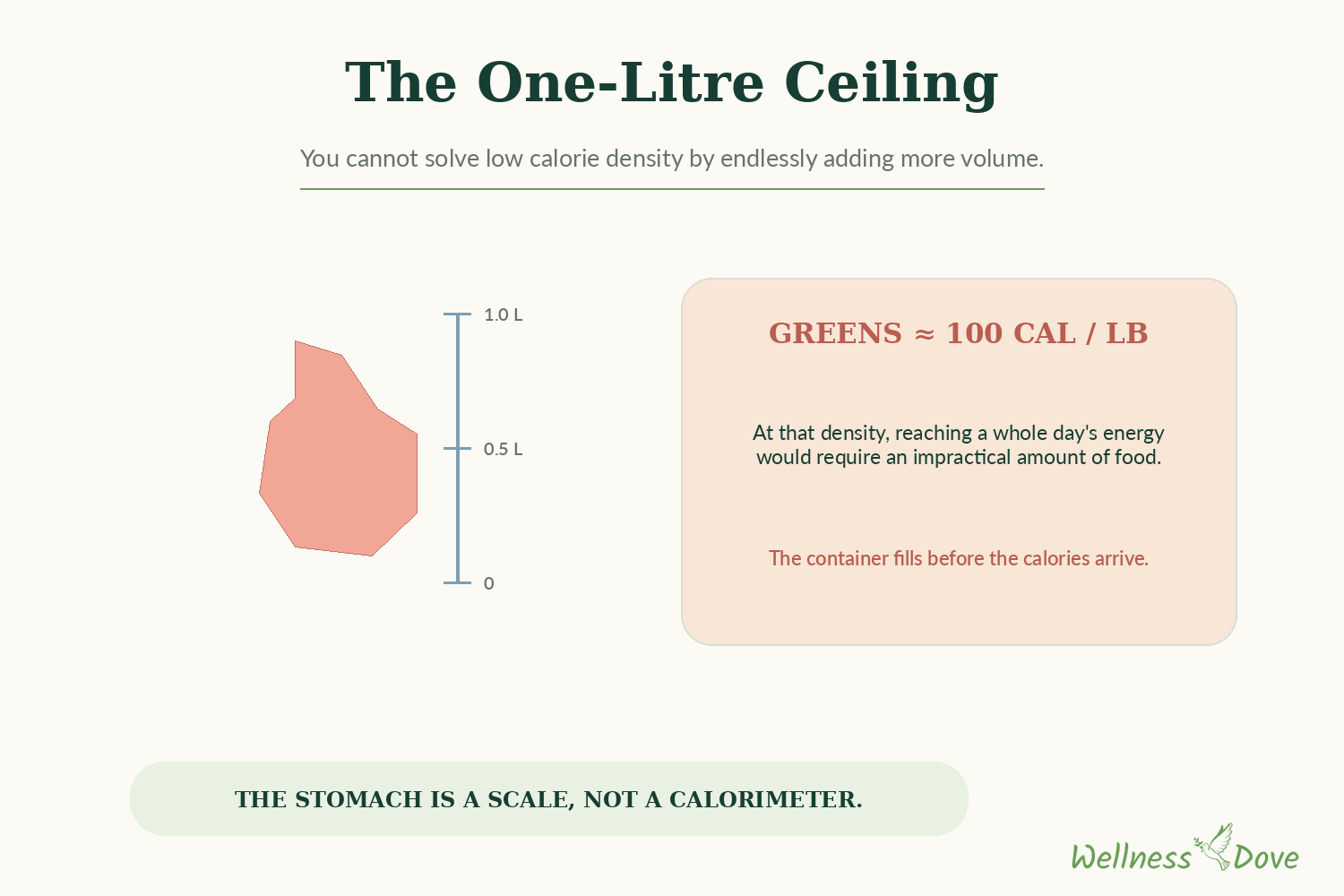
That’s the whole problem in one sentence. The stomach is a scale, not a calorimeter. It measures how much room the food took up, and the vegetables win that contest easily while losing the one that matters by evening. Two hours later you’re hungry again, and somewhere in the back of your mind you decide that this way of eating isn’t for you. You didn’t fail at anything, though. You ate about a third of a meal.
Hunger is not a mood
Hunger is a signal your body is built to make impossible to ignore. It has to be, because an animal that could shrug off hunger didn’t survive long enough to leave descendants. So when you’re properly hungry, your attention narrows and the nearest available calories start to look extremely reasonable. At that point you aren’t choosing between your values and a pastry so much as between food and no food, and nobody wins that argument with willpower.
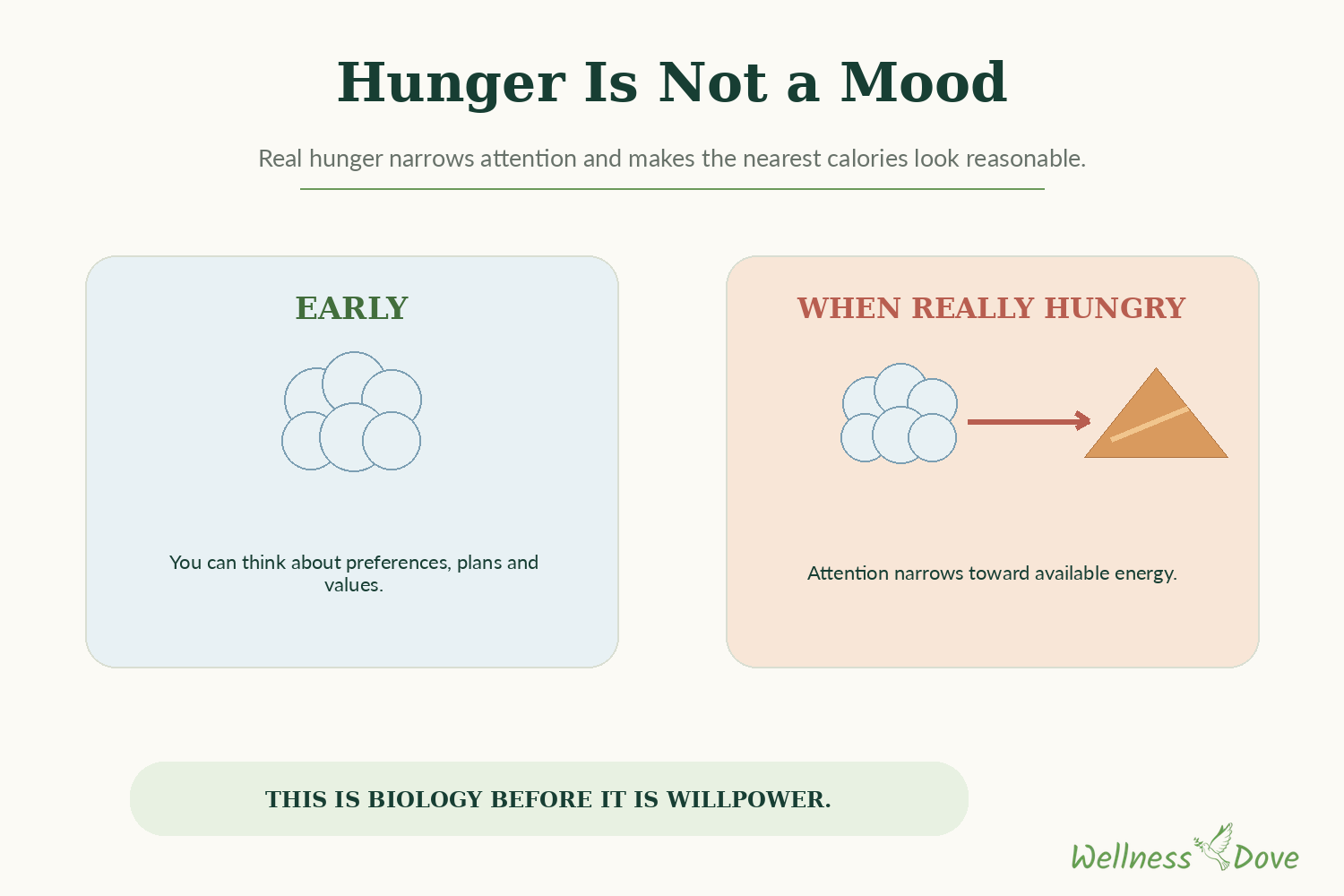
This is the part that so often gets read as weakness. Somebody eats well for nine days, gets truly hungry on the tenth, eats something else, and concludes that the whole business is beyond them. But nine days of eating well isn’t a failure, just nine days of eating well followed by an entirely predictable biological event.
What the healthiest eaters do
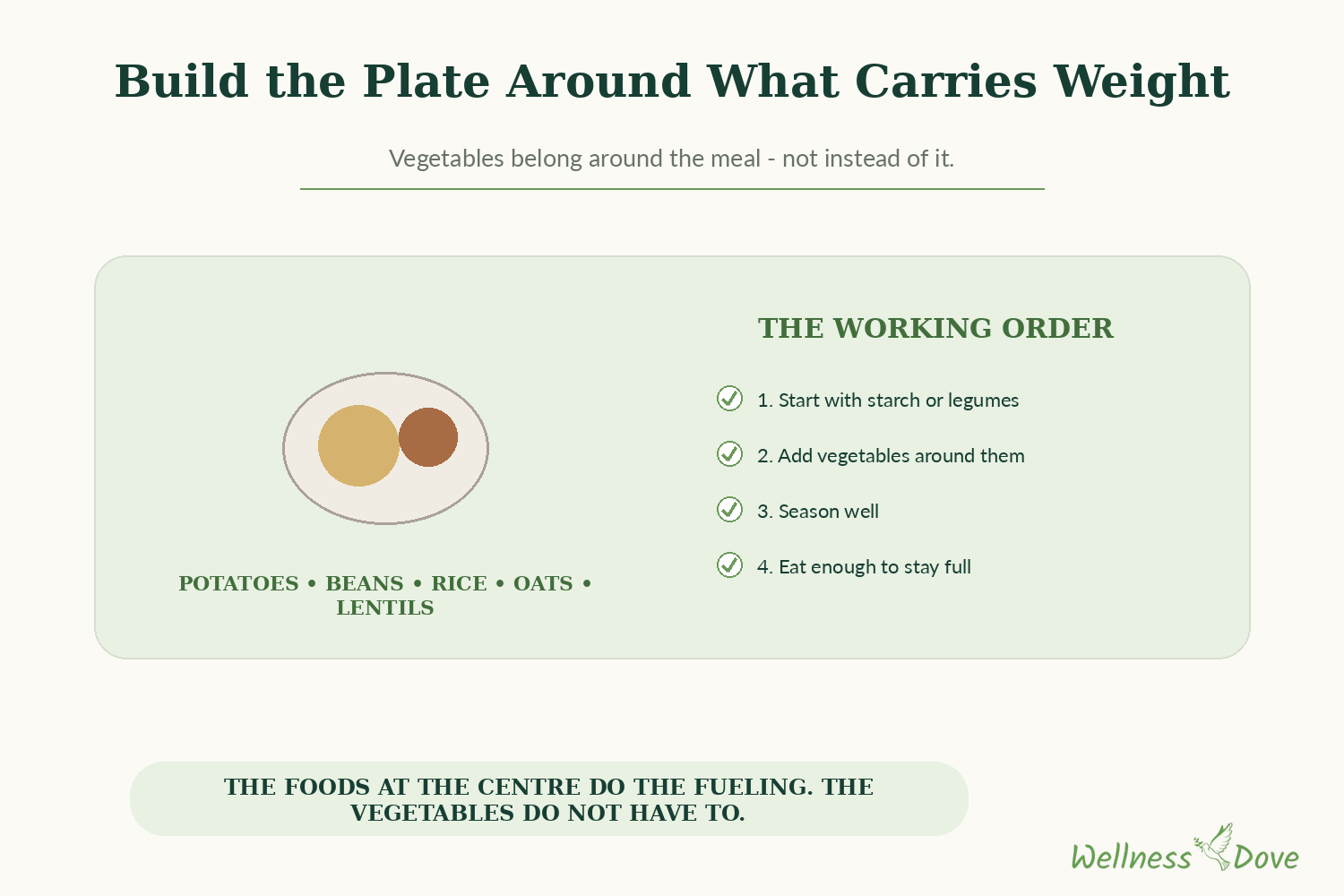
The people we know who have eaten this way for years aren’t more disciplined than anybody else. They eat differently, that’s all. Their plates are built around potatoes, beans, rice, oats and lentils, with the vegetables arranged around them rather than instead of them. Those foods carry roughly three hundred to six hundred calories a pound, potatoes and oats at the lower end and rice, beans and lentils at the top, so three to six times what the vegetables carry.
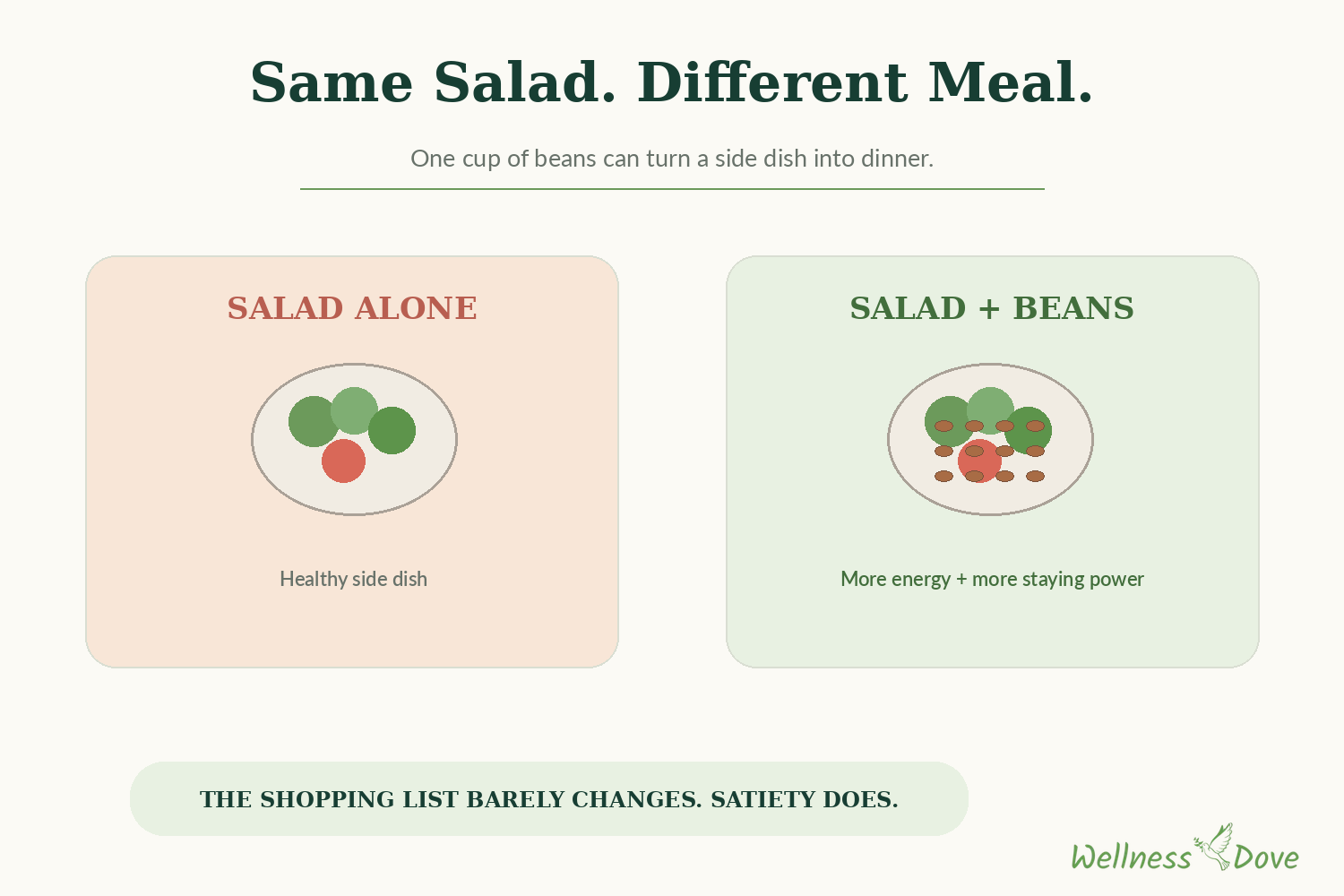
The same salad, with a cup of beans stirred into it, stops being a side dish and becomes dinner. Nothing else about it has to change, not the ingredients you buy, not the time you spend, not how healthy it is. The only difference is that you stop being hungry at nine in the evening.
Why we begin here
There’s a great deal of advice out there about staying motivated on a plant-based diet. Almost none of it helped us, because motivation was never the thing that broke. Satiety was.
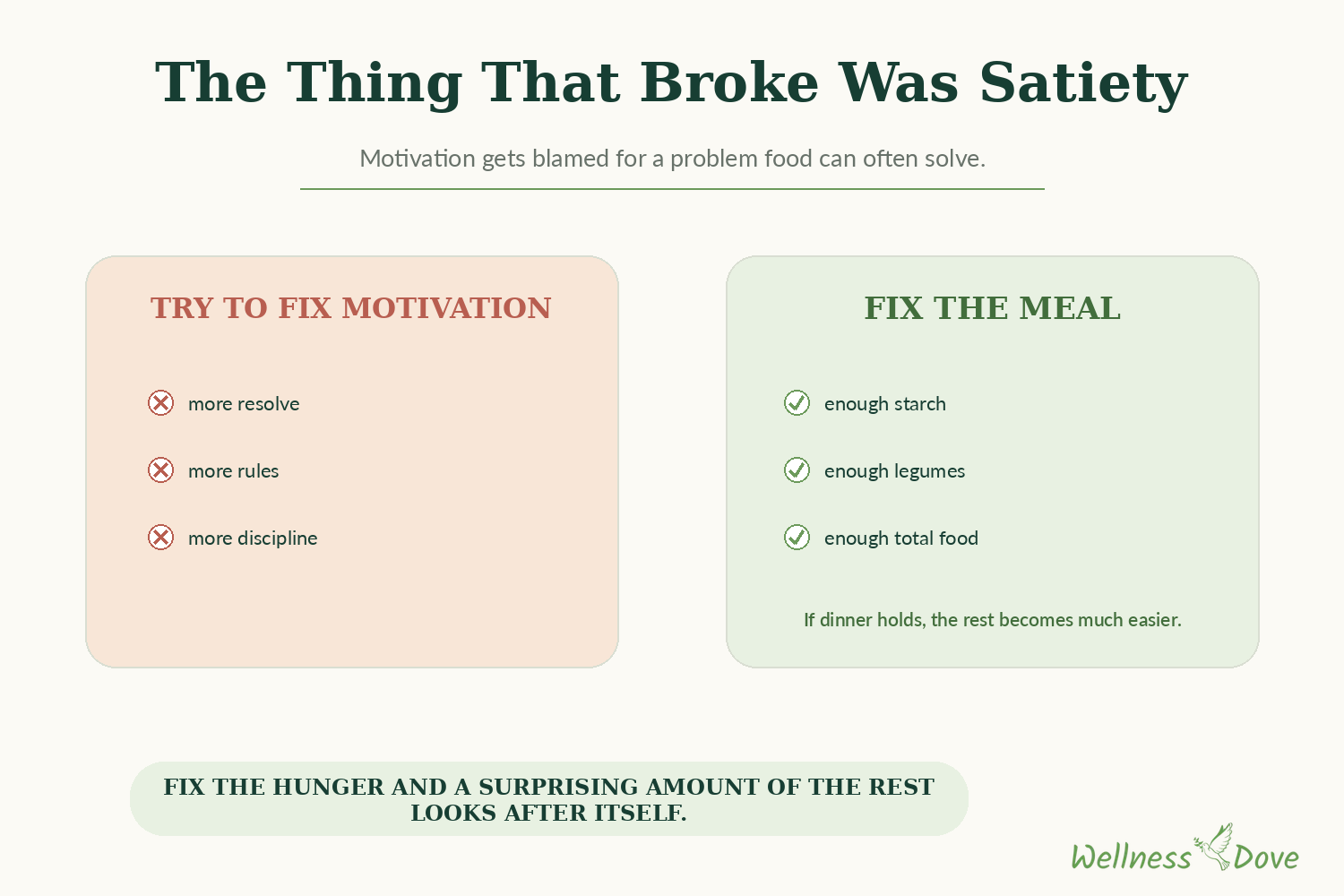
If your meals leave you full, you’ll carry on eating this way without having to think about it much at all. If they leave you hungry, no amount of resolve will hold, and you’ll spend the next year believing the problem was you. Fix the hunger and a surprising amount of the rest looks after itself. We had to learn this slowly, over several months in the kitchen, mostly by getting it wrong.
In the end it comes down to four numbers, and we’ll go through them next.
And, always, seek health consciously.