

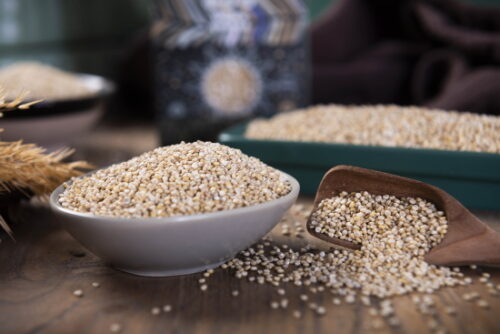
Quinoa is a great food for people who are trying to lose weight.
It provides fiber, protein, and lots of other nutrients without the calorie count that many other foods have.
Eating quinoa will help you feel full faster, which can lead to eating less overall.
If you’re looking for recipes with quinoa in them, we’ve got some below!
Why quinoa is so healthy
Quinoa is a plant grown for its edible, starchy seeds. Quinoa can be used in salads, side dishes like quinoa pilaf or casseroles and to replace pasta or rice in many recipes.
Quinoa runs around 14 to 15 percent of its calories as protein, which is respectable for a grain-like food. It is not higher than lentils or beans, which are 20 to 30 percent, and we would rather say so than repeat the usual claim.
Quinoa is naturally gluten-free and contains all nine essential amino acids making it a complete protein food.

A cooked cup carries around five grams of fiber, which is more than white rice and comparable to most whole grains. That is useful rather than remarkable, and it is part of why a bowl of it holds you better than a refined grain does.
A cooked cup also gives you more than a quarter of the day’s magnesium, along with good amounts of iron and folate.
You will see claims that quinoa has more calcium than milk and is the only grain containing vitamin C. Neither is true, and quinoa is a seed rather than a grain. It does not need the exaggeration.
It has a nutty, slightly sweet flavor to it that makes quinoa easy to eat without adding additional seasonings or spices.
Quinoa is good to lose weight because it’s satisfying, healthy, and filling.
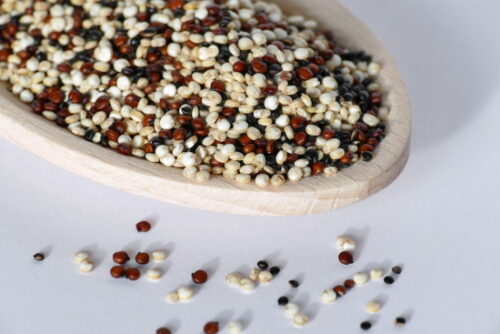
Quinoa can help you lose weight by giving you the nutrients you need without adding extra calories in comparison to other types of food.
Cooked quinoa is around 70 percent water by weight, which is what gives it bulk for relatively few calories. That is the actual mechanism: people tend to eat a fairly steady weight of food at a meal, so foods full of water fill you up on fewer calories.
Its starch and fiber come packed in a lot of water, and that is what makes a bowl of it so filling.
It is also low glycemic and rich in complex carbohydrates, which are slow to digest and will provide you with clean energy for longer periods of time.
Since it’s a whole plant food, quinoa keeps its fiber, about 5 grams in a cooked cup. Fiber slows down digestion and reduces the number of calories that you are eating.
Overall, quinoa will help you feel fuller for longer periods of time, prevent overeating, and help you with weight loss
How to Eat More Quinoa
Quinoa can be used as a substitute for rice, couscous or pasta in many dishes.
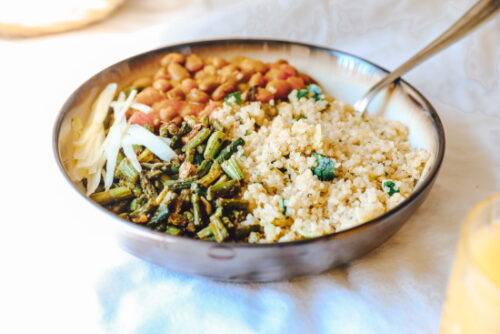
There are several ways you can include quinoa in your diet:
- Cook quinoa as the base for salads, soups, or entrees
- Substitute quinoa for rice in your favorite dish
- Use quinoa flakes to make a breakfast cereal. Add your favorite flavorings like cinnamon and vanilla extract. You can also add fruits (bananas are great!) if you want something sweeter tasting.
- Use quinoa flour in baked goods like pancakes, waffles, muffins, or breads. The quinoa will give the food a chewy texture which is different from regular wheat flours and gives these foods an interesting twist!
- You could also add quinoa to dishes like stir-fries or pasta sauces for a quick, filling meal.
There is no one right answer when it comes to eating quinoa because there are so many ways quinoa can be included in your diet.
Check out our whole food, plant-based quinoa recipes for further inspiration!
One honest caveat, because it is the thing this article was originally built to sell you: no single food causes weight loss, quinoa included.
What changes body composition is the density of what you eat across the whole week. Quinoa is useful because it sits in the right part of that range, alongside rice, oats, potatoes and beans, at roughly three to six hundred calories a pound, against about a hundred for vegetables and four thousand for oil.
The four numbers behind that are here, and they matter far more than any individual ingredient does.
Venny is a medical doctor and a specialist in Nutrition and Dietetics; Andy holds a master’s degree in psychology. This is general information rather than medical advice.
And, always, seek health consciously.