

Plastic packaging is a necessity when it comes to preserving and protecting our food during its long journey from the manufacturer to our plates.
At the same time, plastic is known to leach toxins into the food that comes into close contact with it, especially when the plastic is heated or scratched.
Even more, usually the time our food spends in its packaging throughout the distribution chain is a lot longer than the time it spends in our homes.
Therefore, we need to choose those foods that have had the least contact with synthetic packaging.
Check out our 6 Health Considerations to Bear in Mind about Food in Plastic Packaging for more information.
Here follow our considerations about packaging when buying certain types of food.
Buy fruits and vegetables that are sold loose:
The simple logic is that the lesser the contact between the food and the plastic, the better. Therefore, we prefer buying produce that is sold loose.
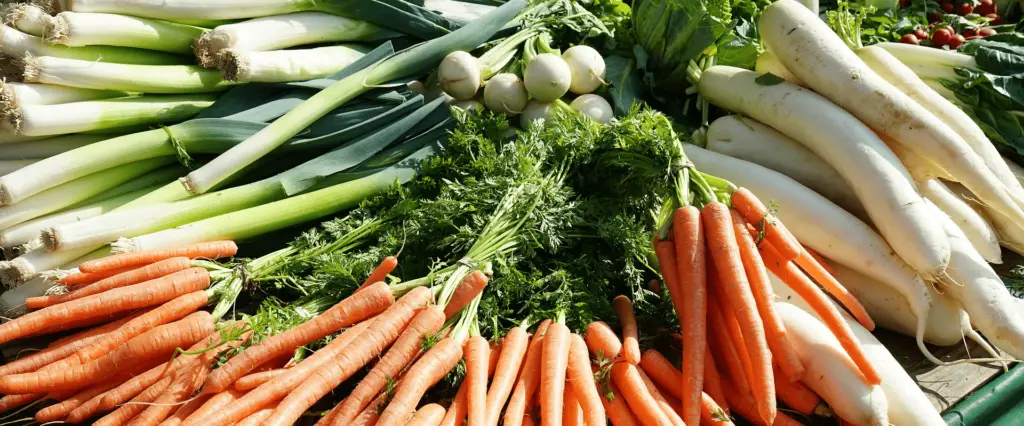
Here are some extra reasons, though, to choose loose:
- Perishable foods such as fresh fruits and vegetables are consumed relatively quickly after we buy them. In many cases, however, they are harvested green and transported/stored for a considerable amount of time before they reach the market stand.
- So much produce is sold in plastic bags and marketed as fresher and of higher quality. In practice, the contrary might be true as plastic packaging really does help produce to stay fresher for longer periods. So those wrapped cucumbers may well be older, though better looking, than the loose ones right next to them.
- When produce is stored in plastic bags, in many cases condensation forms on the inner side of the bag. That keeps the produce in constant contact with wet plastic, which is exactly the kind of contact we try to avoid.
- More often than not, there is no indication of the type of plastic that is used to make the bag. Produce bags are almost always polyethylene, one of the lower-risk plastics, but the bag rarely tells you.
And do not forget, if we need to carry it in plastic bags, in order for it to get weighed, we remove the plastic bags immediately upon returning home.
Buy plant yogurt in glass jars, or at least polypropylene
Plastic tubs are the norm today for plant-based yogurt and cream cheese.
These tubs aren’t all made from the same plastic, and some are better than others.
Avoid tubs which are made from Polystyrene (PS).
Polystyrene can release styrene into the food it holds, and the World Health Organization’s cancer agency classes styrene as probably carcinogenic to humans. That’s reason enough for us to skip it. While we find many tubs to be made out of PS, there are equally good products in tubs, made from polypropylene (PP). PP is one of the safer plastics, though not perfect: heated polypropylene baby bottles have been shown to shed huge numbers of microplastic particles.
The best option, however, is to look for such products in a glass jar. Glass jars can cost two to three times as much, but glass is about as inert as packaging gets.
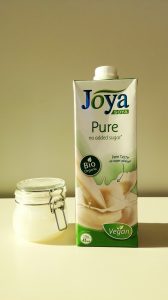
Buy plant milk in cartons
Plant milk is usually sold in cartons, with a few brands in plastic bottles.
Those plastic bottles are usually HDPE (#2) or PET (#1). Both are among the lower-risk plastics, and PET was never made with BPA.
Cartons are the easier choice anyway, since that’s how most plant milk is sold.
Cardboard boxes also contain plastic lining on the inside to waterproof the bottle. Most commonly, it is polyethylene (PE) plastic, which, like PP, is one of the more stable plastics used for food.
Buy canned food in glass jars
Cans are made out of metal. Therefore for a long time, we considered these safe.
Unfortunately, for decades can linings were made with BPA, a hormone-disrupting chemical, and in a Harvard trial, eating canned soup for five days raised people’s BPA levels more than tenfold. Europe has since banned BPA from food packaging, after its food safety agency cut the safe daily dose about 20,000-fold, and US can makers say almost all food cans now use BPA-free linings. The catch is that the replacement linings have been studied far less.
Today most US brands have switched to BPA-free linings, and many say so on the label.
You can’t tell by looking: linings made with and without BPA look the same. If it matters to you, check the label or the brand’s website, or choose glass.
The best option though is to buy glass jars, wherever it is possible.
What are your considerations when buying food?
Do you think that plastic should be the dominant form of packaging?
Read next
- Why we want to be plastic free: why we bother with any of this, in one place.
- Practical tips for clean drinking water: the single largest source of packaged consumption in most homes.
- Non toxic kitchen utensils: what your food touches after the packaging comes off.