

Packaging plays an undeniably important role to protect and preserve our food, to keep it fresh, clean and safe.
There are different kinds of packaging such as paper or plastic. But which material is predominantly used? We all agree here: plastic.
If you look around in every shop, all you see are plastic wrappings. Be it fruits and vegetables, meat, cheese, bread, water… Even hot coffee, tea and other drinks for on the go are served oftentimes in plastic cups.
At the same time, the plastic packaging contains a number of chemicals that can be harmful to our health if they leach into the food we eat.
Some of these chemicals, such as BPA and certain phthalates, act on the hormone system, and the Endocrine Society’s scientific review says exposure in the womb and in early childhood is the biggest concern. Phthalates in household dust have also been linked with asthma and allergy symptoms in children, though those studies show a link, not proof of cause.
Therefore, though the plastic packaging our food comes in is ubiquitous and many times necessary, we should always consider the adverse effects on our health that such packaging poses.
Here comes the question what can we do about it?
Just thinking about these consequences is the first step in preventing them.
It is that simple!
When we are conscious about the issue, it is fascinating how quickly our minds can come up with solutions.
Since food in plastic packaging can be dangerous, avoid plastic! Consciously seek alternatives, where possible. Paper isn’t automatically plastic-free. Paper cups are lined with a thin plastic film, and in one study a paper cup of hot water released about 25,000 microplastic particles in 15 minutes. For hot drinks and takeout, bring your own steel or glass cup or container when you can.
You can follow our considerations about packaging when we buy food:
1. Check how long has it stayed in the packaging before you buy it
Check when the food was produced.
Shops usually have different batches in stock at any given time. They also put the oldest products at the front to make sure these do not expire.
Look around. Take the freshest one from the back.
The expiration date can be a double-edged sword.
Logic dictates that the farther away into the future the expiration date is, the fresher the food is. Different producers, however, treat the food in a number of ways to make it last as long as it can.
This means that two apparently identical products from different brands can have different shelf lives.
In such case, a food that is about to expire sooner can actually be fresher and with fewer additives/treatments to prolong its shelf life.
One way to see which one is fresher is to see when it was produced. Often it is not specifically said on the packaging but you can decode it from the lot/batch number next to the best before date.
2. A note on liquids

Liquids facilitate the possible transfer of toxins from the packaging into the food.
Liquids touch the whole inside of their container all the time, so anything that can move out of the plastic has the best chance to. Fatty, acidic and alcoholic liquids pull out more than plain water does, which is why food safety labs test plastics with oil, vinegar and alcohol.
It is best to avoid buying liquids in plastic packaging altogether. We prefer buying them in glass bottles or jars, whenever it is possible.
For example, we buy vinegar in glass bottles rather than plastic ones. We also buy jarred peas, beans and pickles. We avoid buying in cans, as the inside lining is oftentimes made from plastic as well.
3. It matters if the food is stored at cold or warm temperature
Higher temperatures make plastic more prone to leaching toxins into the food that is in contact with it.
Therefore, for food that is kept cool, there is a smaller risk for toxins to leach from the packaging.
When you have the choice, buy those packages that are stored at lower temperatures.
For example, a shelf-stable carton of plant milk can sit at room temperature for months, while a refrigerated one is kept cold the whole time and has a much shorter shelf life.
4. Some food has its “inbuilt” protection to separate it from the plastic wrap
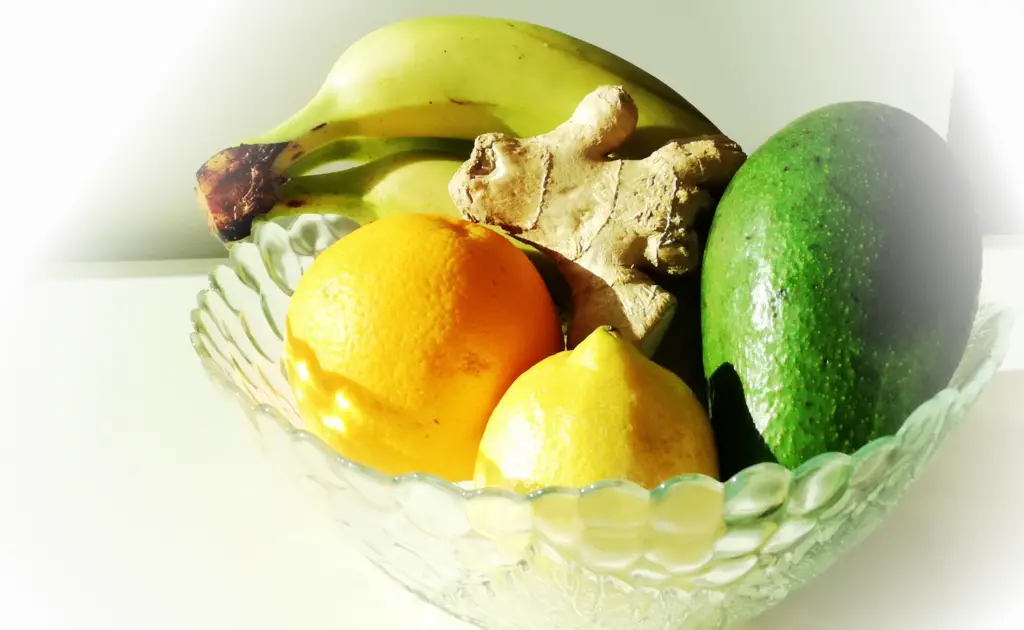
We can peel many foods before eating them, such as cucumbers, carrots, bananas and onions.
If anything has moved from the wrap into the food, the peel is where most of it would be.
Such foods we are more likely to buy in plastic wraps. At home, we can store them without their packaging.
5. It is important to what degree the food is in contact with the packaging
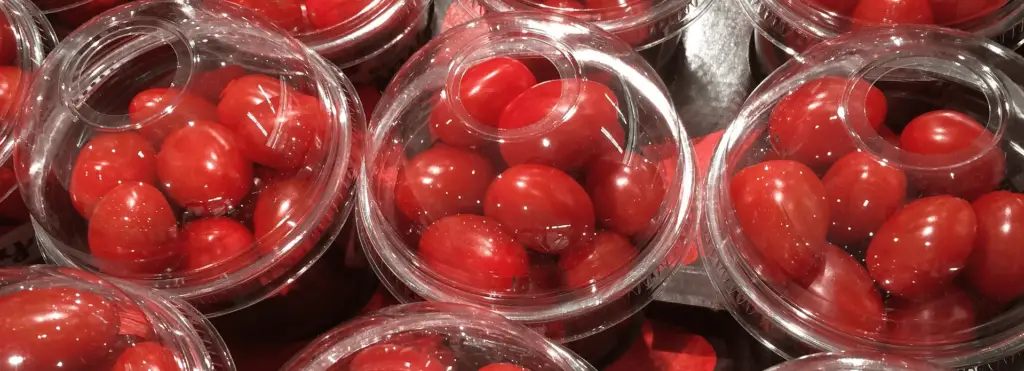
In other words, how much of the surface of the food is actually touching the packaging and with what force.
Compare a bunch of spinach squashed into a small plastic bag to some loose tomatoes in a hard plastic box.
The tomatoes are only lightly touching the box, there are only a few contact points and there is rarely moisture inside. The spinach, on the other hand, is compressed and in close contact with the plastic wrap.
We would avoid buying spinach in such packaging but the tomatoes are not that much of an issue in this case.
6. What type of plastic the packaging is made out of

There are safer, sort of OK and outright dangerous types of plastic.
If we have no choice but to buy food in plastic packaging, we always choose the one that is made out of “good” plastic.
If you have to buy food in plastic, PET (#1), polyethylene (#2 and #4) and polypropylene (#5) are the better choices. Avoid PVC (#3) and polystyrene (#6).
Do not reuse the packaging, though.
More info on the plastic types here
Do you have other considerations, regarding the packaging of food?
Share your tips about food packaging in the comments below.
Read next
- Four common types of food packaging: what each material does once it meets fat, acid or heat.
- Non toxic kitchen utensils: same problem, once the food is out of the packet and in your kitchen.
- Practical tips for clean drinking water: bottled water is packaging too, and the most easily avoided kind.